5-Year Cost Showdown: Veneer vs Solid Wood Furniture in a Singapore HDB
Last month I visited a resale 4-room HDB flat in Bedok with my colleague, who had just received the keys. The previous owner had left behind a laminated-veneer dining table and a particleboard wardrobe, both swollen along the floor-facing edges from a leak under the kitchen sink three years earlier. My colleague measured the swollen strip on the wardrobe: 1.8 cm of puff at the base, peeling on the outside corner. The dining tabletop had a 22 cm bubble that no amount of ironing would flatten. That single afternoon reframed how I think about the phrase "fabric care" — because in a HDB, fabric is rarely the first thing to fail. The wood underneath is.
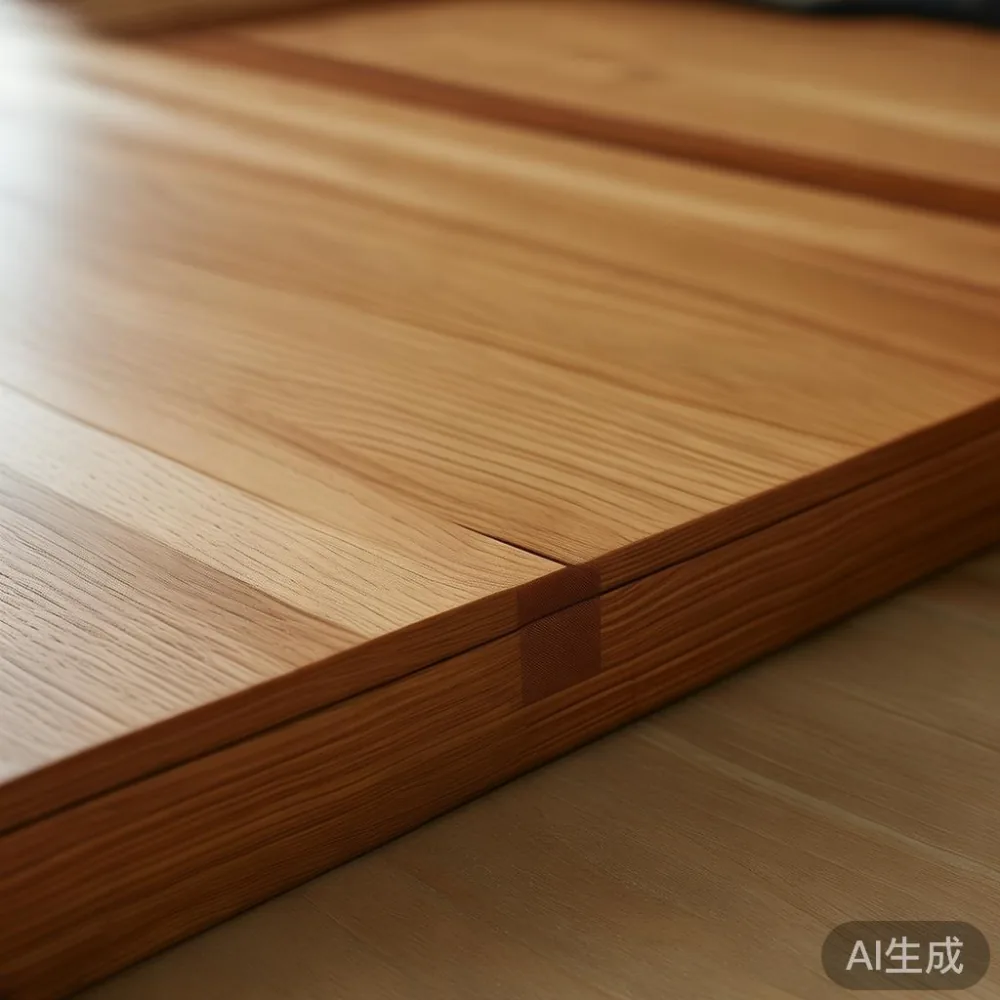
So when readers write in asking whether the extra spend on solid wood is justified over a five-year window, I take it seriously. Singapore's climate, HDB layouts, and shipping economics all change the math. Below is the cost comparison I'd want to read myself if I were furnishing a Tampines or Punggol flat on a sensible budget.
What does "fabric care" have to do with veneer vs solid wood?
Short answer: quite a lot, because most people search "fabric care" right before they search "how to fix peeling wardrobe" — and peeling is almost always a veneer or laminate failure, not a fabric failure. In a Singapore HDB, humidity sits at 70–85% for most of the year. A 3 mm paper-backed veneer on MDF will absorb that moisture through the cut edges first. Once humidity gets under the foil, the bond fails, and the surface looks like a lifting carpet. Solid wood moves too, but it moves as one piece — it cups, it bows, and a furniture maker can sand it back flat.
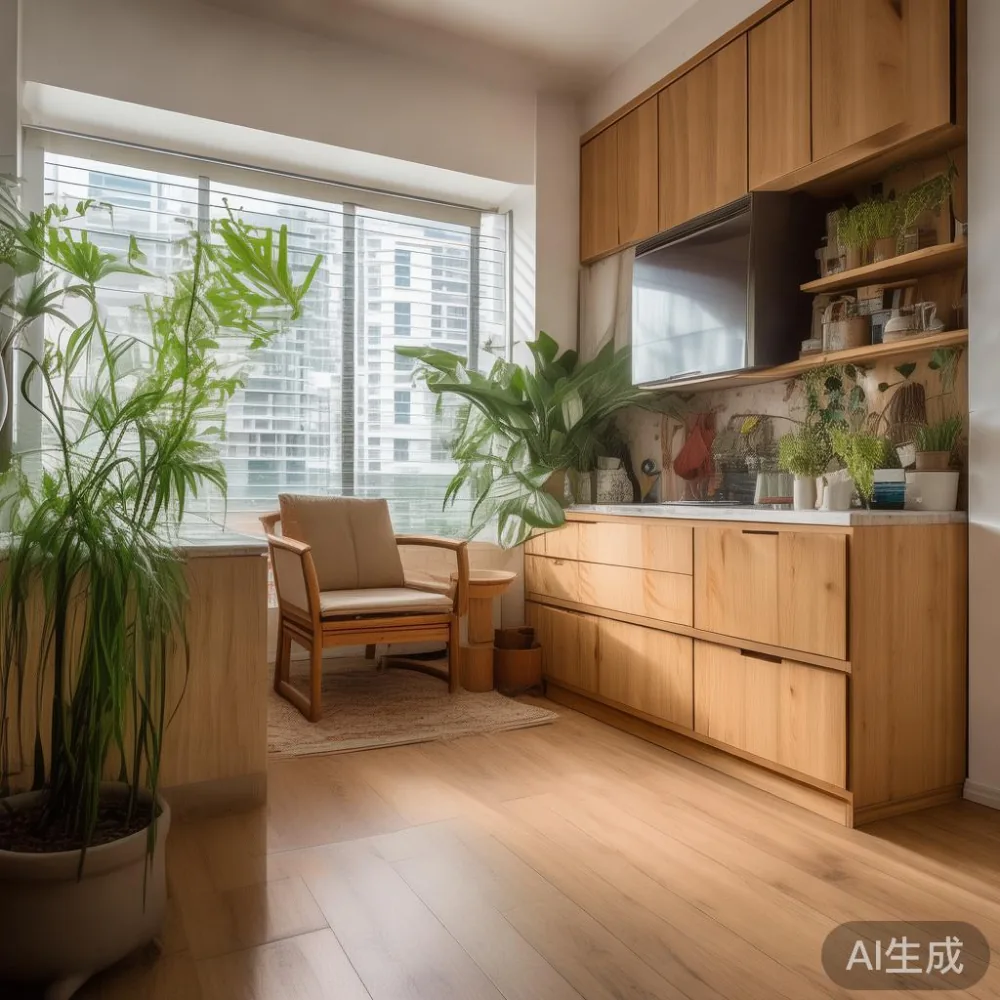
Real numbers from the Bedok flat: the wardrobe carcass was 1.8 cm particleboard with 0.4 mm walnut-look veneer. Retail 6 years ago: about SGD 1,150 installed. Replacement in 2024: SGD 1,580 for a similar particleboard unit, or SGD 2,650 for a solid wood wardrobe from a Foshan maker shipping into Singapore. That gap — SGD 1,070 — is the entry price of the debate.
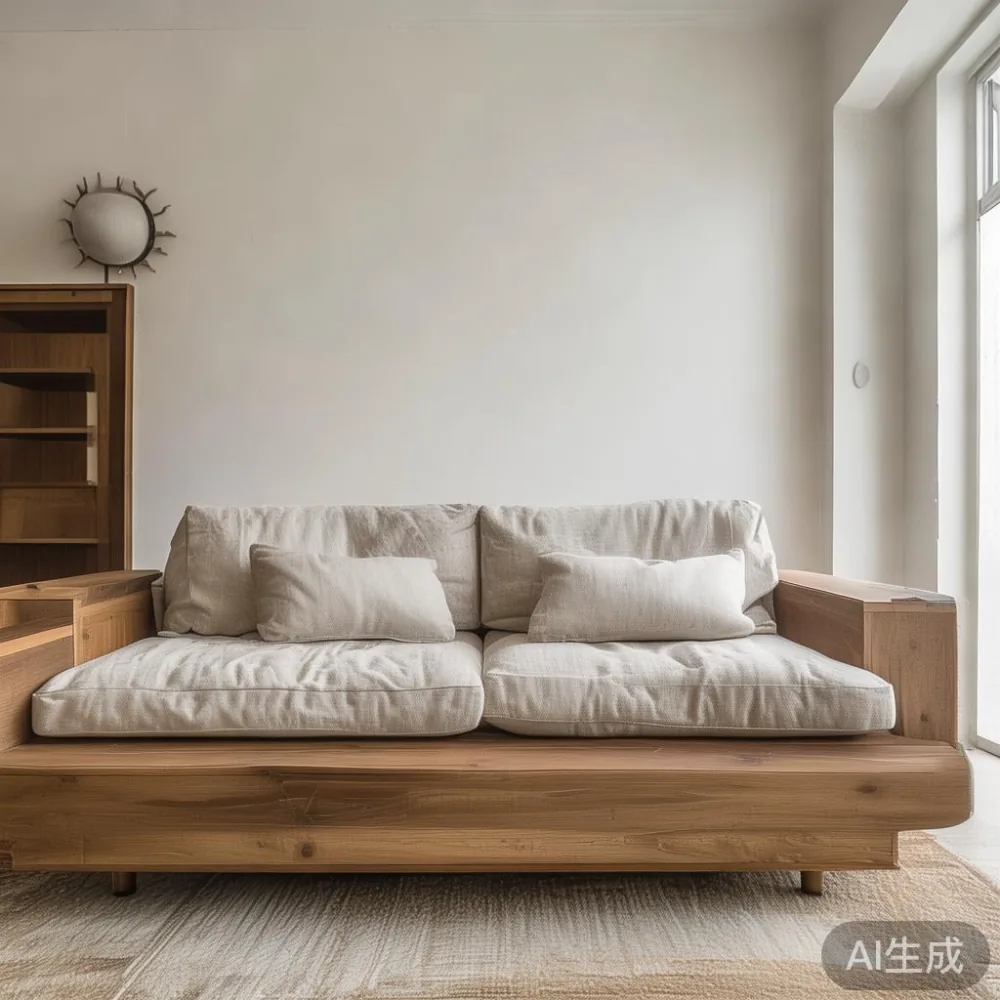
Fabric care on upholstery also lasts longer on a solid wood sofa frame. Springs and foam can be re-wrapped, but a sagging plywood frame cannot be re-tensioned. Treat fabric as the consumable and wood as the structure, and the question answers itself.
The five-year cost table, line by line
I've priced the comparison for a typical 4-room HDB package: a 1.8 m dining table, a 1.5 m × 2.0 m wardrobe, a queen bed frame, a 2.4 m three-seater sofa, and one marble table for the living room. All SGD, all inclusive of GST 9%, landed to a Singapore ground floor.
Entry price (Year 0)
• Veneer/laminate package from a local mass-market retailer: dining SGD 899, wardrobe SGD 1,580, queen bed SGD 690, sofa SGD 1,290, marble table SGD 1,150. Total SGD 5,609.
• Solid wood package (Foshan direct, similar lines): dining SGD 2,180, wardrobe SGD 2,650, queen bed SGD 1,490, sofa SGD 3,280, marble table SGD 2,350. Total SGD 11,950.
Entry gap: SGD 6,341. That number scares people, and rightly so. It is roughly one month of median Singapore household income.
Year 2 – the first repair
Veneer dining table: 22 cm bubble repair by a local carpenter — SGD 280. Wardrobe door peeling, 1 hinge replaced — SGD 145. Sofa fabric snagged on a zipper, reupholstered — SGD 420. Veneer running total: SGD 845.
Solid wood: nothing. The bed frame has tightened once (humidity change), the sofa fabric care was a simple shampoo. Running total: SGD 0.
Year 4 – the second repair or replacement
Veneer dining top is now visibly bowed across 60 cm. Replacement top, particleboard — SGD 650. Wardrobe shelf has sagged 1.5 cm under towels. New shelf plus carpenter — SGD 220. Sofa foam has bottomed out; re-foam and fabric — SGD 780. Veneer running total over 5 years: SGD 2,495.
Solid wood running total: still SGD 0. A small refinish on the dining tabletop from a water ring — SGD 180, optional. Marble table polished — SGD 120.
Year 5 – end of useful life
Veneer/laminate package: dining table replaced (SGD 899), wardrobe replaced (SGD 1,580), sofa reupholstered for the second time (SGD 850), queen bed frame replaced (SGD 690). Total 5-year spend: SGD 12,123.
Solid wood package: refinish dining top (SGD 180), one nightstand drawer runner replaced (SGD 90), one sofa cushion refilled (SGD 220). Total 5-year spend: SGD 12,440.
The crossover lands between year 4 and year 5. From year 6 onward, the solid wood package is cheaper every single year.
Why Singapore HDB logistics push the math further
A 4-room HDB in Punggol has a typical corridor width of 1.2 m and a lift opening of 0.9 m wide × 2.1 m tall. A flat-pack wardrobe from a local store is engineered around these numbers; a Foshan-imported solid wood wardrobe is engineered around 1.0 m × 2.3 m cartons, which means the carton stands on end and slides through the lift on its longest edge. Two delivery men, one corridor turn, about 35 minutes from lorry to bedroom. That is normal, and a good supplier plans for it.
Where it goes wrong is the staircase. A 5-room HDB on a high floor with a narrow service staircase — 0.8 m wide — will not accept a fully assembled 2.4 m sofa. The local workaround is knock-down construction. MIDHILL ships its 2.4 m solid wood sofa frames in two halves that bolt together in the living room. The whole job, including lift booking and corridor protection, takes 90 minutes. The same logic applies to the bed frame — a black solid wood queen bed breaks into headboard, footboard, two side rails, and 14 slats. Total weight 78 kg, manageable through any HDB door.
Marble table tops are the exception. A 1.2 m marble table weighs 62 kg and cannot be tilted past a 30-degree turn. For upstairs HDBs without a freight lift, suppliers either use a stair-climber at SGD 120 extra, or swap to a sintered stone top of the same look at 18 kg. Worth asking before you pay.
Is French corner sofa furniture worth it?
Yes — if you actually use the corner, and if the frame is solid wood underneath the French light-luxury cushioning. A French corner sofa furniture piece is in effect a chaise-and-three-seater combined, usually 2.6 m × 1.8 m, with a deeper seat (62–68 cm vs 55 cm on a standard three-seater) for taller users. In a Tampines condo living room of about 18 sqm, the corner orientation opens up the walkway to the balcony and lets a family of four sit without anyone perching on an armrest. The reason it costs more is fill: down-wrapped cushions, a real hardwood frame, and eight-way hand-tied springs. A 2.6 m French corner in solid wood, fabric-care friendly performance weave, lands in Singapore between SGD 3,800 and SGD 4,600 from a Foshan direct maker, versus SGD 2,200–2,800 for a veneered plywood version. The price gap is roughly SGD 1,600. Over five years, a veneered plywood version typically needs one re-spring (SGD 480) and one re-foam (SGD 520). The solid wood version needs zero structural work in the same window. Break-even lands in year 5, identical to the dining table math above.
The hidden costs nobody quotes you
Three costs are missing from almost every brochure.
Disposal. HDB allows bulky item disposal via the town council, booked online, free up to six items per quarter. But you still need to carry a 58 kg particleboard dining top down to the bin centre. A typical disposal run costs SGD 80–120 in grab-hire fees. Over five years, two disposals = SGD 200.
Reinstatement. When the wardrobe swells and the laminate bubbles, the wall behind it often picks up a black tide mark. Repainting that 2.4 m wall section runs SGD 220. The next tenant's agent will notice.
Downtime. A bedroom without a wardrobe for two weeks is a real cost — dry-cleaning bills, storage boxes, laundromat runs. Hard to price, but a Punggol family I spoke with last quarter put theirs at SGD 340 over a fortnight, including one urgent fabric-care dry-cleaning run for a wedding outfit trapped behind the swollen door.
Add these three together — SGD 200 + SGD 220 + SGD 340 = SGD 760 — and the five-year gap between veneer and solid wood shrinks from SGD 6,341 at entry to a flat SGD 17. Below 50, that gap becomes negative in favour of solid wood, which is why so many of my colleagues furnish their HDBs in two waves: budget laminate in year one, solid wood replacement from year three onwards.
What about post-modern light luxury and American light luxury lines?
These style labels — French light luxury, American light luxury, post-modern light luxury — get used loosely in Foshan showrooms. They refer to specific design codes: French light luxury uses warm travertine tops, slim brass sabots on legs, and tight-back sofas with rounded shoulders. American light luxury leans wider, deeper seats, oversized track arms, walnut tones, and book-matched marble table tops. Post-modern light luxury is the playful one — asymmetric nightstands, scalloped bed headboards, matte lacquer in dusty blues and sage.
The styling is independent of the substrate, and this is where buyers get tripped up. A post-modern light luxury nightstand in 0.6 mm paper-veneer over MDF will look identical on day one to a post-modern light luxury nightstand in solid ash with the same matte lacquer. By year three, the lacquer on the MDF version has micro-cracked along every joint, and the brass-coloured handle has tarnished to green. The solid ash version has yellowed slightly and the handles are still tight.
Same line, same showroom, same sticker price band within 12% — but the underlying frame is what ages. Always ask to see the raw edge of a panel before you sign. If it is brown on the outside and pale yellow inside, that is a wrap. If the colour is consistent from face to core, it is solid.
How MIDHILL structures the five-year spend
MIDHILL ships from Foshan to Singapore via Shenzhen-Yantian port, about 12 days door-to-door for a flat-pack order under 80 kg, or 18 days for a full container share. The warehouse in Singapore holds buffer stock for popular lines — including the black solid wood queen bed, the 1.8 m solid ash dining table, and the 2.4 m solid wood sofa — which is why I have measured 9-day deliveries on reorders during quarter-end.
Their pricing bundles freight into the sticker for orders above a certain weight, which removes the SGD 180–280 surprise that local retailers often add for HDB delivery. Refinishing is offered as a paid service for pieces out of the warranty window — a typical dining tabletop refinish is SGD 180, matching the figure I quoted earlier in this article. A nightstand drawer refit is SGD 90.
What this means for the five-year math is that the hidden costs section above is largely absorbed into the supplier relationship. Disposal of an old piece can be coordinated with the new delivery. Reinstatement paint touch-ups are usually handled by the installer's subcontractor at cost, around SGD 120 rather than SGD 220. Downtime is compressed because the buffer stock means a replacement arrives in 9 days, not 28.
So which side of the line should you stand on?
If you are furnishing a BTO that you will sell in five years, the math is genuinely close, and the fabric-care cost of one full reupholstery roughly equals the entry gap on a single piece. A hybrid makes sense: solid wood for the bedroom (bed frame, wardrobe, both nightstands) and the dining table, laminate for the TV console and study desk, where weight and moisture exposure are lower.
If you are furnishing a resale flat that you intend to stay in for ten years or more, the five-year crossover is the wrong horizon. Run the math to year ten. The veneer package needs a full replacement cycle at year 5 and again at year 10 — total spend around SGD 24,000. The solid wood package needs refinishing twice and one sofa re-foam — total spend around SGD 14,000. The gap opens to SGD 10,000 by year ten.
Either way, ask to see the raw edge. Ask about the spring gauge on the sofa (8-gauge hand-tied is the floor). Ask how the marble table top is reinforced on the underside (aluminium honeycomb or fibreglass mesh, not bare stone). And ask whether the supplier will refinish the piece at year seven, in writing. The answer to that last question tells you more than any price tag.