Humidity in Southeast Asia: A Solid Wood Furniture Owner's Practical Guide
If you live in a Singapore HDB flat in Tampines, a condo in Punggol, or a walk-up in Bedok, you already know the feeling: you open your wardrobe in the morning and the air feels heavier than it should. The whole island sits roughly one degree north of the equator, and the average relative humidity hovers between 75% and 90% for most of the year. That single number — RH — explains more about why your solid wood furniture behaves the way it does than any sales brochure ever will. This guide is written for households that have invested in solid wood pieces — a solid wood sofa frame, a dining table, a bed frame, a wardrobe, a nightstand, even a marble table with a wooden base — and want those pieces to look the same in year ten as they did on delivery day.
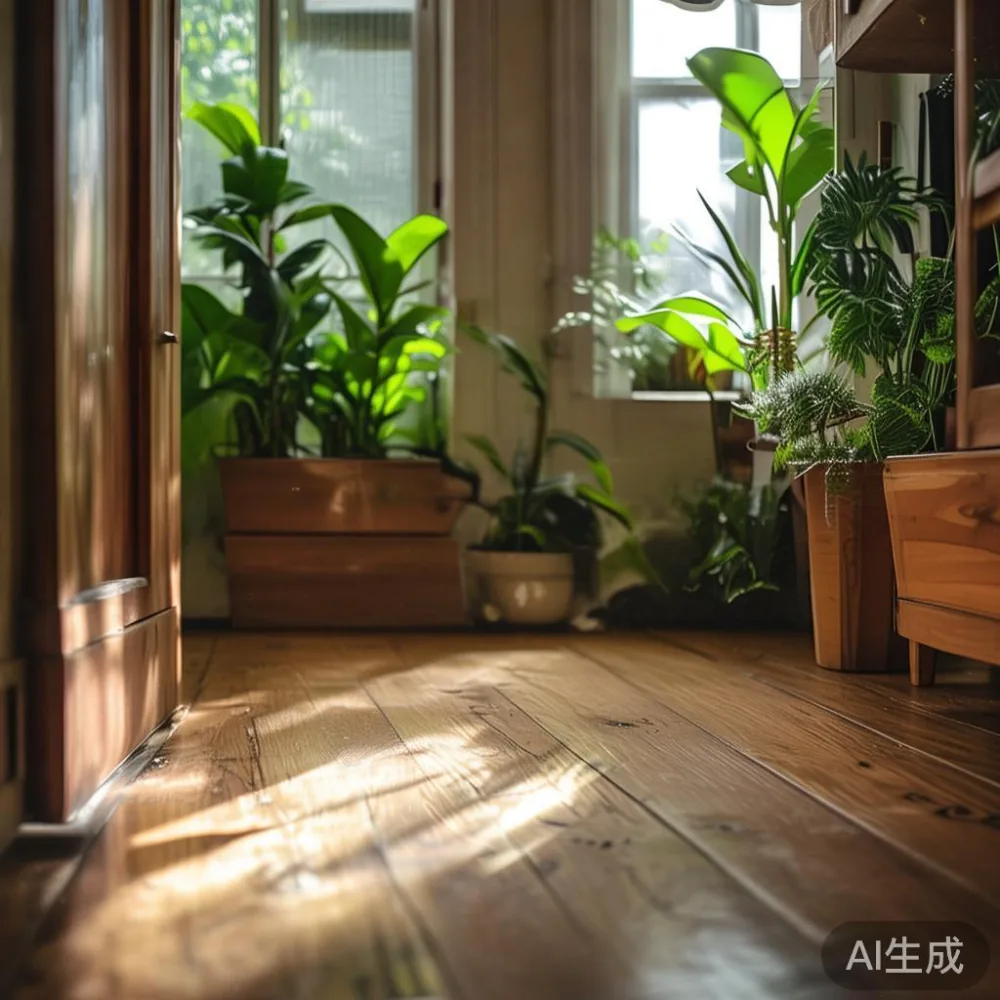
Wood is hygroscopic. That is not a marketing word, it is a physical fact: solid wood exchanges moisture with the air around it, and it never stops doing so. When the air is wet, the wood swells. When the air is dry, the wood shrinks. In a climate like Singapore's, where RH swings from 95% during a December monsoon to 55% during a dry air-conditioned afternoon, the wood in your bed frame or dining table is quietly moving every single day. Understanding that movement is the first step toward caring for fabric upholstery, leather, and timber surfaces that sit on top of that wood — which is, at its heart, what fabric care really means in a tropical home.
What does humidity actually do to a solid wood dining table or bed frame?
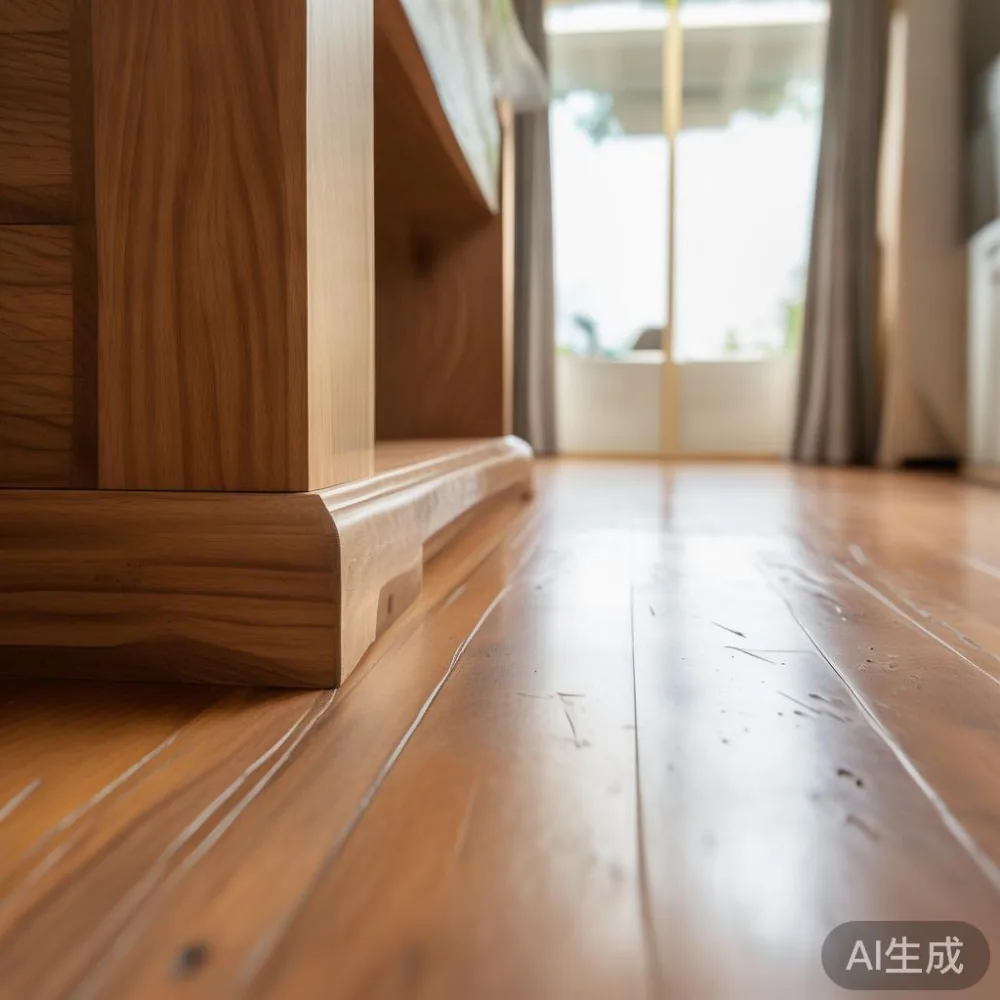
Think of a solid wood dining table 180 cm long as a stack of millions of microscopic straws. Each straw fills with water when humidity rises and empties when it falls. A 180 cm oak or ash plank can change dimension by 4–6 mm across its width between Singapore's wet season and a 24-hour air-conditioned stretch. That movement is not a defect — it is the nature of solid timber. The defect shows up when the movement is uneven: when one edge of a wardrobe door is near an open window and the other is against a condo wall, the door cups. When a nightstand sits directly under a constantly running air-conditioning vent, the side facing the vent dries faster than the shaded side, and you get a slight twist over 12 to 18 months.
Last month I visited a four-room HDB flat in Bedok where the owner had placed a 200 cm rubberwood dining table right next to the service yard door. After 14 months, the tabletop had developed a 3 mm bow across the width — still flat enough for daily use, but noticeable if you put a marble table runner across it. The fix was not a replacement; it was relocation, plus a 48-hour equilibration with a dehumidifier running at 45% RH. That kind of call is something the team at MIDHILL handles routinely through their lifetime refinishing service, which exists precisely because solid wood is a living material, not a static one.
Is a French light luxury bed frame safer in Singapore than a basic modern bed?
The honest answer is: the style label matters far less than the joinery and the finishing. A French bed vs Modern bed comparison in our showroom usually comes down to three things — whether the headboard is solid hardwood or engineered veneer, whether the slats are solid pine or laminated softwood, and whether the drawers ride on wooden slides or metal ball-bearing runners. In a Singapore context, the French light luxury pieces tend to use thicker (22–25 mm) panels with traditional mortise-and-tenon corners, while many lighter modern frames use dowel-and-glue construction for cost. Neither is wrong, but thicker solid panels tolerate humidity swings with fewer visible cracks at the joints.
For buyers comparing a light luxury bed vs Nordic bed, the practical difference is usually the wood species. Nordic-style frames from this region tend to lean on pale oaks and oiled finishes that show every moisture ring. French light luxury frames more often use stained beech or ash with closed-pore lacquer, which hides minor movement and is friendlier to fabric care routines because spills stay on the surface instead of soaking into open grain. Either way, ask the seller for the moisture content at the time of manufacture — a responsible exporter targets 8–12%, and MIDHILL ships from Foshan at 10%, which sits comfortably in Singapore's indoor range.
How wide are HDB lift and corridor doors — and will my new solid wood sofa even fit?
This is the question that saves the most money. Standard HDB passenger lifts in blocks built from the 1990s onward measure roughly 1.1 m wide by 1.4 m deep, with a door opening of about 0.9 m. Newer BTOs in Punggol have wider lifts, but many older Tampines blocks still use the tighter spec. Corridor doorways into the unit are typically 0.9 m to 1.0 m wide. A solid wood sofa with a 220 cm three-seater frame, fully assembled, will not make it through that 0.9 m opening on a diagonal either.
The practical workaround is to order modular pieces. A solid wood sofa split into a 140 cm two-seater plus a separate 90 cm armchair weighs about 38 kg per module, well under the 120 kg single-piece lift limit, and each module clears a 0.9 m doorway with 5–8 cm to spare. Delivery teams from Foshan-based exporters like MIDHILL usually pre-confirm the lift opening, the corridor turning radius, and whether a stair carry is needed (adds SGD 80–120 per floor above the fourth). Allow 4 to 6 weeks from order to delivery for in-stock configurations, and budget around SGD 2,400–3,800 for a complete light-luxury solid wood sofa set including a coffee table.
Why is fabric care the real hero in a humid bedroom?
The frame is the skeleton, but the fabric — linen, velvet, boucle, leather — is what touches your skin, and fabric care in the tropics is its own discipline. Relative humidity above 70% for sustained periods creates the conditions that dust mites and mould spores need to colonise a headboard or mattress border. A light luxury bed frame upholstered in a performance linen-blend (typically 60% linen, 40% polyester, 280 g/m²) will outlast a 100% cotton velvet by years, not because the cotton is worse fabric, but because the blend dries faster once air-conditioned air returns.
For daily fabric care, vacuum the headboard and seat cushions weekly with a soft brush attachment. Rotate cushions on your solid wood sofa every two weeks so the central sag from your usual sitting position migrates evenly. For a wardrobe interior, a small rechargeable dehumidifier box (SGD 35–60 from any Tampines mall) pulling RH down to 50% will protect both the cedar lining and any stored wool or cashmere. None of this is glamorous, but it is the difference between a piece that looks good at year five and one that still photographs well at year fifteen. If you ever notice a musty smell on a velvet cushion, do not spray it with water — brush it with a dry microfiber cloth, then run the air-conditioner for 24 hours at 24°C with the fan on low.
How much humidity can a marble table or a nightstand really take before it cracks?
Marble behaves differently from wood, but not in the way most owners expect. Marble does not swell and shrink with RH; it reacts to temperature swings and to direct contact with wet objects. The real risk in a Singapore condo is the bathroom-to-living-room habit: you set a cold glass straight onto a marble table top, condensation forms, and over months the surface etches. Use coasters, every time. For a marble table with a wooden pedestal or cross-base, the wood part still moves with humidity even though the top does not — which is why solid wood and marble combinations sometimes develop a 1–2 mm shadow line at the joint. It is cosmetic, not structural, and a refinisher can fill and re-stain it in under an hour.
Nightstands take the worst beating because they sit next to the bed, where the air is warmest and wettest (breath, sweat, open windows). A 55 cm tall, 45 cm deep solid wood nightstand in ash will gain about 0.4% in moisture content across a normal December week. Over a year, that cycling can loosen drawer joints. Tighten the corner braces once a year with a manual screwdriver — do not use a drill, you will strip the wooden threads. The same applies to wardrobe doors: budget five minutes per hinge, once a year, every year. If you have lost the original tools, MIDHILL ships a small care kit with every Singapore order, including a wax stick for filling micro-marks and a microfiber cloth rated for oiled finishes.
What about Japanese-style furniture under SGD 2,000 — does the lower price mean worse humidity tolerance?
Not necessarily. The phrase under 2000 Japanese furniture usually points to minimalist frames in beech or white oak, often with oiled finishes and finger-jointed corners. These pieces are deliberately light — a typical platform bed frame weighs 28–34 kg — which makes them easier to carry up a fourth-floor walk-up in Bedok. The price is lower because the designs are simpler and the panels thinner (18–20 mm versus 25 mm on a light luxury bed frame), not because the wood is poorly dried. Properly kiln-dried beech at 10% moisture content handles Singapore's climate just as well as heavier European oak, provided you oil the surface every 9 to 12 months.
For households weighing Italian light luxury accent chair options against Japanese stools, the climate calculus is roughly equal — both will survive, both will move a little, neither will fall apart. What you are really paying extra for with the Italian piece is the upholstery work and the curved joinery, not humidity resistance. If your budget stretches to a full set, an Italian light luxury accent chair paired with a Japanese platform bed reads as a deliberate design choice rather than a compromise, and both will quietly do their job in a Tampines condo for 12+ years.
How does a French sofa vs Nordic sofa comparison play out in a Singapore context?
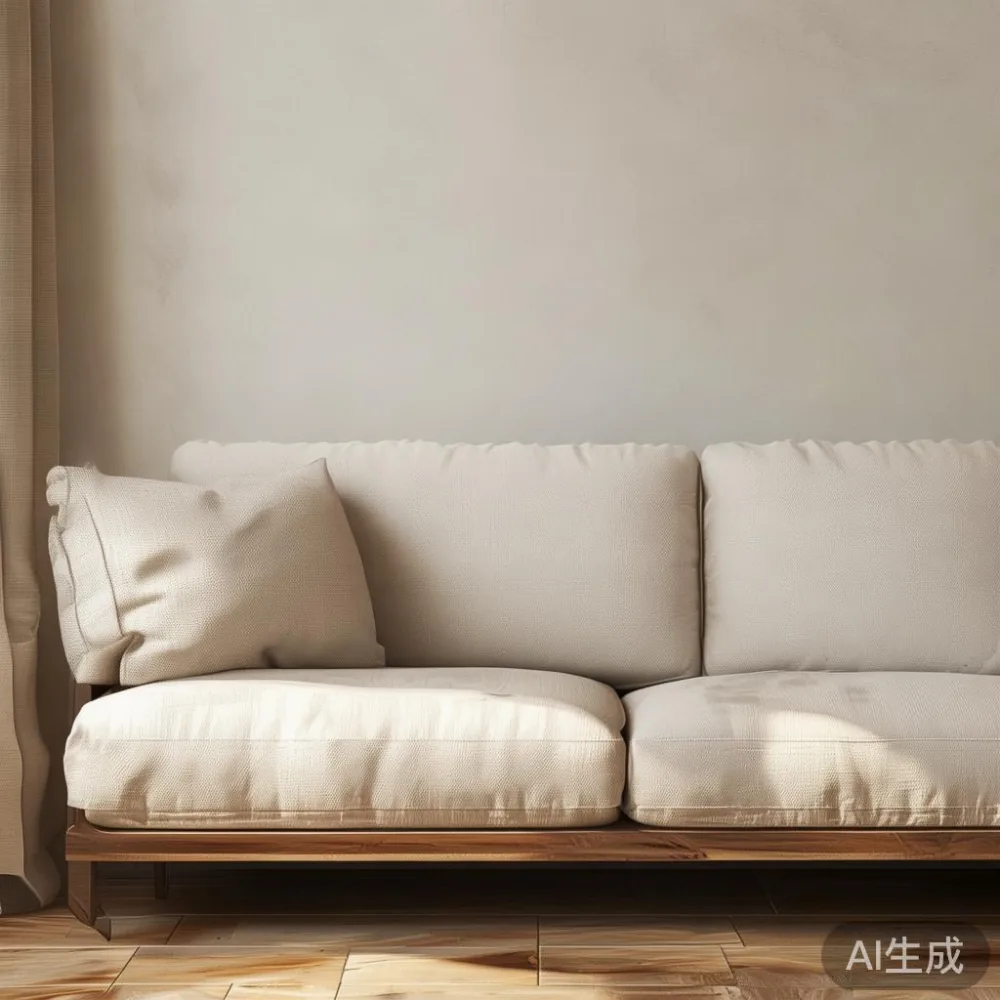
A French sofa vs Nordic sofa question usually comes down to silhouette and upholstery weight, but in our showroom we walk customers through the climate angle as well. French light luxury sofas tend to use deeper seats (60–65 cm), tighter back cushions, and woven performance fabrics in the 350–450 g/m² range. Nordic-style sofas lean toward shallower seats, loose cushions, and lighter textiles around 220–280 g/m². In a 75–85% RH apartment, the heavier French fabric dries more slowly after a spill, but it also resists pilling and holds its shape through more humidity cycles. The lighter Nordic fabric breathes better and feels cooler against bare skin, which matters when your bedroom air-conditioner cuts off at 3 a.m.
Neither is wrong. For a living room that faces west and gets afternoon sun through floor-to-ceiling glass, I usually steer owners toward the heavier French-style cover. For a naturally ventilated balcony sofa or a reading nook by an open window, the Nordic cover wins on comfort. As for cheap Mid-century modern furniture options that occasionally come up on marketplace apps — they often use rubberwood with a 3 mm veneer of walnut or teak. The veneer is fine; the issue is that the substrate is sometimes dried to 14–16% moisture content at the factory, which means it will visibly shrink in your air-conditioned living room within the first six months. Stick with exporters who publish moisture data on the spec sheet.
Can I just run the air-conditioner all day and solve humidity for my solid wood furniture?
Running the air-conditioner 24/7 in a 90 sqm condo will pull RH down to 40–50%, which is great for your solid wood wardrobe and bed frame, but expensive — figure SGD 220–320 per month on a typical inverter unit, before GST. The smarter move is targeted dehumidification. Place a small desiccant dehumidifier in the wardrobe, a thermo-hygrometer next to the dining table, and let the air-conditioner handle the rooms you actually use. Aim for 50–55% RH as a steady state; below 45% you risk the opposite problem, which is over-drying and surface cracking on an oiled nightstand.
One more practical point. Solid wood furniture that ships from Foshan to Singapore spends roughly 12–18 days in a 20°C reefer container at 55–65% RH. When it arrives at your door in Tampines and meets 85% ambient air, the surface fibres absorb moisture within hours while the core stays dry. That is why the first week matters: keep the piece in its most-used room, leave the air-conditioner on at 24°C, and avoid placing fabric throws or rugs directly on the timber for the first 14 days. If you want to confirm anything before delivery — moisture readings, lift access for your block, or fabric care guidance for a specific cover — the MIDHILL team is reachable on +86 188 2788 2512 during business hours and they will pull the spec sheet for your exact order.
A simple weekly routine that protects fabric, frame, and finish
Once a week, spend ten minutes. Vacuum every upholstered surface on your solid wood sofa and bed frame with a soft brush. Wipe timber panels with a dry microfiber cloth, never a wet one. Check that wardrobe doors still close flush, and adjust a hinge if they do not. Once a month, run a dehumidifier in the wardrobe for 48 hours after a heavy rain. Once a year, oil or wax the timber depending on the finish — oiled surfaces every 9 months, lacquered surfaces every 18–24 months. That is the whole routine. There is no secret product, no expensive tool, and no app that will replace it.
The pieces in your home — a solid wood sofa you sink into after work, a dining table where the family gathers, a bed frame you trust with eight hours of your night, a nightstand that holds a glass of water and a book — are not disposable. They are the kind of objects that, with a little humidity awareness and steady fabric care, will outlast two lease cycles and probably three. That is what solid wood is for. Treat the moisture in the air as a daily variable rather than a problem, and the wood will reward you with the kind of patina that no factory finish can fake.