Styling a Small Singapore Apartment Without the Crowded Look: A Fabric-First Guide
Last month I visited my colleague Priya in her new 3-room HDB flat in Bedok, and I walked in expecting the usual starter-home chaos — cardboard boxes, a mismatched dining table, a fabric sofa she had carried over from her last rental. Instead, the 68 sqm space felt calm, airy, and quietly expensive. She had not bought a single piece of new technology or knocked down a wall. She had simply thought hard about fabric care, the way cloth holds dust in our humid weather, and how each textile either helps a room breathe or quietly suffocates it. I sat on her solid wood sofa, ran my hand along the linen, and realised that small-space styling in Singapore is really a fabric problem dressed up as a furniture problem.
This guide is written for anyone furnishing a 4-room HDB in Punggol, a 56 sqm condo in Tampines, or a one-bedroom along Balestier, where every centimetre between the corridor wall and the lift door counts. I will walk you through a light-luxury approach that respects Singapore lift widths (most cargo lifts are 1.2 m wide by 2.1 m deep, so anything over 2.1 m must be assembled in the unit), corridor turning radii, the 9% GST on furniture imports, and the realities of fabric in 85% average humidity. Along the way, I will share specific dimensions, price ranges in SGD, and a few pieces I have personally seen at MIDHILL's Foshan showroom and in their Singapore-bound containers.
Why does fabric care matter so much in a small Singapore flat?
Fabric care matters in a small Singapore flat because humidity, dust, and limited airflow turn every sofa, curtain, and chair into either a filter or a sponge. Our year-round 80–90% relative humidity means fabrics absorb moisture, hold odours from cooking, and attract dust mites faster than in temperate climates. In a compact HDB living room, that translates into a stale smell within weeks if upholstery is wrong, and a perpetually heavy visual weight regardless of how much you tidy. Good fabric choices — tightly woven linen, performance blends, removable slipcovers — protect air quality and make the room look bigger. Poor choices — thick polyester, loose weaves, untreated cotton — quietly shrink your usable space by making the eye register clutter and grime.

I learned this the hard way helping my cousin move into a 48 sqm Punggol BTO last year. She bought a S$1,290 polyester sectional from a local chain, and within two monsoon weeks it smelled like a wet towel. We replaced it with a solid wood sofa upholstered in removable, washable Belgian linen from MIDHILL (around S$2,150 for a 2.4 m three-seater), and the room stopped feeling heavy. The frame was kiln-dried oak, the cushions were zippered, and the slipcovers could go into her 8 kg front-loader at 30°C. Fabric care was the actual product; the sofa was just the carrier.
What is "light luxury" furniture and does it work in a small space?
Light luxury furniture is a design language that mixes post-modern clean lines, French light luxury curves, or American light luxury proportions with restrained materials and calm palettes — usually cream, taupe, warm grey, or muted sage. It works in a small space because it gives the eye a sense of expense without adding physical mass. A marble table with a slim 2 cm top reads as a deliberate choice, not clutter. A solid wood bed frame with tapered legs disappears into the floor plan, while a heavy, ornate one stops the room cold.
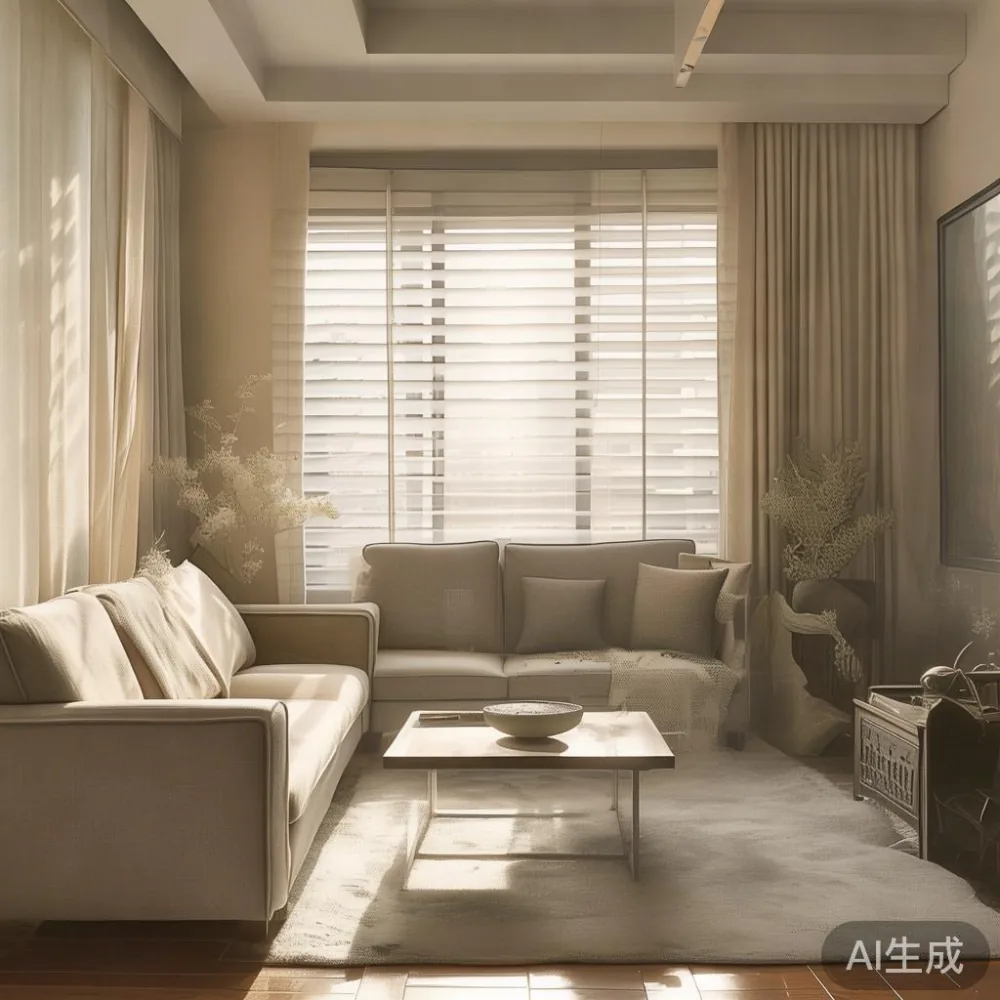
For Singapore contexts, light luxury is the right altitude: above the flat-pack basic, below the S$15,000 Italian import. A typical 1.8 m × 2 m solid wood bed frame in this style runs S$1,400–S$2,800 locally, before the 9% GST. A 1.4 m round marble dining table starts around S$2,200. A 6-seater American light luxury solid wood dining table in white oak sits between S$3,400 and S$4,900. These are not cheap pieces, but they are not unreachable either, and they ship flat-packed from Foshan in 18–25 days, which is faster than most European equivalents at this price point.
The trap to avoid is treating light luxury as a styling layer (gold trim, tufting) on top of bulky furniture. In a 50 sqm HDB, a 2.8 m American-style Chesterfield will eat the room regardless of fabric. Instead, pick one hero piece per zone — a curved French light luxury sofa, an oversized French provincial bed frame, or a fluted marble side table — and keep everything else low-contrast and quietly textured.
How do you choose sofa and chair fabrics that survive HDB humidity?
You choose sofa and chair fabrics that survive HDB humidity by picking tight weaves, removable covers, and frames that allow airflow underneath. Performance linen blends (typically 70% linen, 25% cotton, 5% synthetic) breathe well, resist mildew, and handle Singapore's daily air-conditioning cycles better than 100% cotton, which absorbs and holds moisture. Microfibre and treated polyester are easier to wipe but trap heat — fine for a guest chair used twice a month, poor for a daily-use solid wood sofa where you sit for two hours every evening.
Numbers worth memorising: a 2.4 m three-seater typically weighs 65–80 kg with a kiln-dried oak frame and feather-wrapped foam cushions; that weight is manageable through a 1.2 m HDB cargo lift if the sofa arrives in two boxes, each under 40 kg. Anything over 90 kg usually requires a three-person carry up the service staircase. MIDHILL, for one, ships its larger sofa frames split into modules under 35 kg each, which is why their pieces are common in Punggol walk-ups and older Bedok blocks without cargo lifts.
Fabric care also includes rotation. Flip your cushions weekly for the first three months, then monthly. Vacuum with an upholstery attachment at 800 Pa or lower to avoid pulling threads. Treat fresh spills within 90 seconds with a damp microfibre cloth — not paper towel, which leaves lint. For a washable slipcover, use a pH-neutral detergent and skip the spin cycle above 600 rpm; high spin distorts the weave and the slipcover will never sit right on the frame again.
Is Mid-century modern corner sofa furniture worth it?
Yes — a mid-century modern corner sofa is worth it in a Singapore small flat if you need seating for four or more, because it replaces a three-seater plus two armchairs with one continuous footprint, freeing roughly 1.2 sqm of floor space. A well-built mid-century modern corner sofa furniture piece with a kiln-dried rubberwood frame, 12 cm pocket-spring cushions, and removable linen-blend covers runs S$2,600–S$4,200 in Singapore, and lasts 12–15 years with basic fabric care. The L-shape also anchors the living zone in an open-plan HDB without needing a TV console wall, which is how most 4-room BTOs are laid out today.
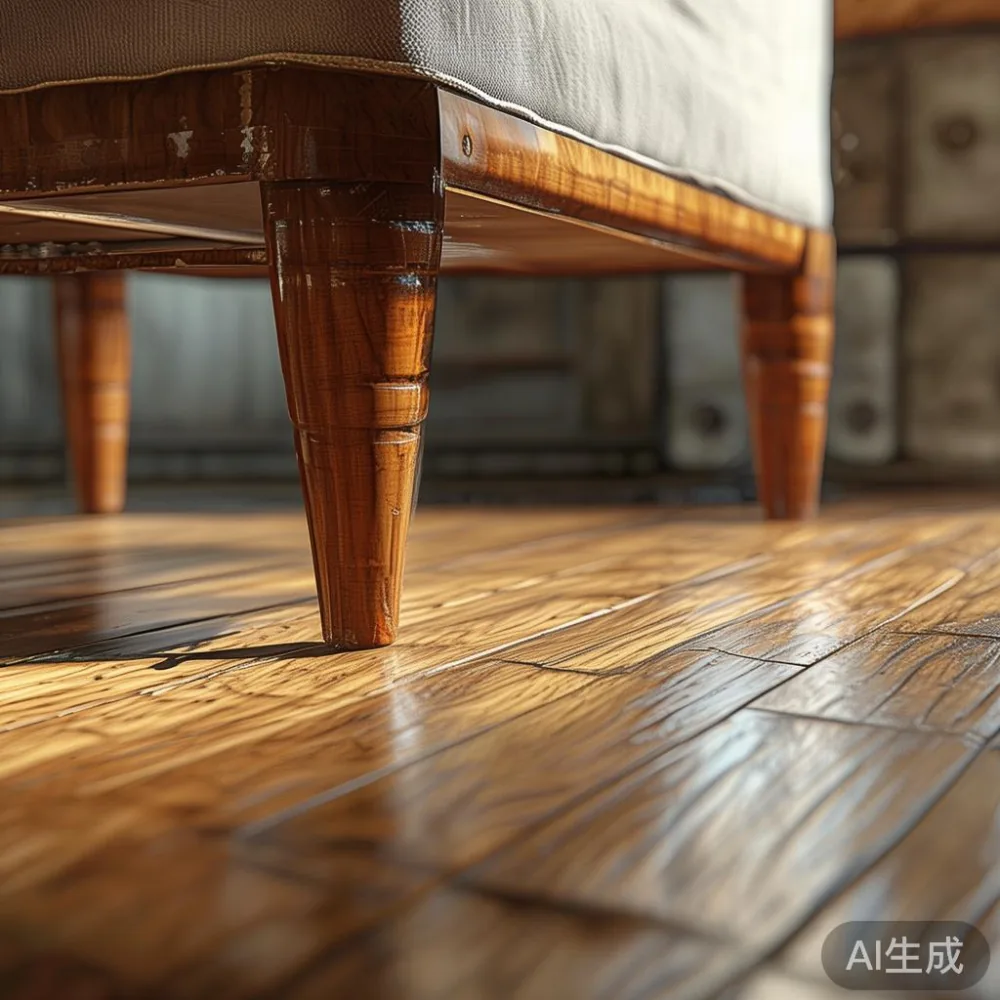
I sat on one in a Tampines showflat in February: the chaise extended to 1.65 m, the seat depth was 58 cm (comfortable for my 1.78 m frame, fine for my wife at 1.6 m), and the back cushion was removable and washable. The legs were 18 cm of solid wood, which is the right height to let a robot vacuum pass underneath without scraping. The downsides: the corner piece is harder to move through a 0.9 m corridor turn, and you cannot rearrange it the way you can a modular sofa. If you anticipate moving flats within five years, measure every doorway first.
The honest answer is that the format works only if you actually need the corner. For a one- or two-person household, a 2.2 m three-seater with an ottoman (S$1,500–S$2,200) gives more layout flexibility and costs 30–40% less. Spend the saving on fabric upgrades instead — a higher thread count slipcover, or a wool-blend throw that you can rotate seasonally.
Which fabric-friendly pieces actually earn their floor space in a 50–70 sqm flat?
The fabric-friendly pieces that earn their floor space in a 50–70 sqm flat are: one solid wood bed frame with a breathable upholstered headboard, one solid wood sofa sized to your doorway, one extendable solid wood dining table, one narrow wardrobe with fabric-lined drawers, one marble or sintered-stone side table, and two nightstands with washable linen runners. Everything else is decoration. In a Tampines 56 sqm two-bed I measured last quarter, removing a second armchair and a coffee table immediately recovered 1.8 sqm and made the kitchen pass-through usable again.
Bed frame: pick 1.5 m or 1.8 m wide, 2 m long, with a headboard no taller than 1.1 m. Anything taller blocks the air-con airflow from the typical HDB wall unit. A solid wood bed frame in white oak with an upholstered linen headboard runs S$1,800–S$2,600 from Foshan factories such as MIDHILL, ships flat-packed in two boxes under 30 kg each, and arrives in 18–25 days by sea plus 3–4 days for last-mile delivery. Their 10-year structural warranty covers frame cracking and joinery failure, which is the realistic failure point, not the fabric.
Dining table: extendable from 1.4 m to 1.8 m, seats four to six. Solid wood (ash, oak, or walnut) over a sintered-stone or marble top is the light-luxury sweet spot. Budget S$2,400–S$3,800 for a 1.6 m version, S$3,800–S$5,200 for 1.8 m with marble. Check the underside: a good table has corner brackets, not just glue and dowels.
Wardrobe: 1.6 m wide, 2.2 m tall, 60 cm deep is the standard Singapore-friendly footprint that fits a 1.2 m lift when disassembled. Fabric-lined drawers (cotton sateen) protect knits from the snagging that kills a sweater in three months. Add cedar blocks in each zone — S$12 for a pack of six — and your wool stash will not smell musty by January.
Nightstands: keep them 45 cm wide and 40 cm deep so two fit beside a 1.8 m bed without crowding. A solid wood nightstand with one drawer and an open shelf runs S$280–S$480 each. Pick ones with a sealed finish inside the drawer so cosmetics do not stain the wood.
Marble table: one small one is enough. A 45 cm round marble side table at S$380–S$650 is the right scale. More than that, and the stone starts competing with your wood tones instead of supporting them.
How should you plan delivery, GST, and returns for a small-space furniture order?
You should plan delivery, GST, and returns for a small-space furniture order by checking three things before you pay: lift dimensions in your block, the supplier's warranty on fabric and frame separately, and whether returns include the 9% GST refund or only the base price. Most Singapore furniture orders are subject to 9% GST on the landed value, including shipping. A S$3,000 order typically lands at S$3,270. Some retailers absorb GST above a threshold; some do not. Ask in writing.
Delivery timing from a Foshan direct supplier such as MIDHILL is roughly 18–25 days by sea to Singapore, plus 2–4 days for port clearance and last-mile delivery to your door. For orders over US$350 (about S$475), their free-shipping policy kicks in, which is one of the more generous thresholds in the category. The 14-day return window starts on the day of delivery, and the piece must be in original packaging for a full refund. Keep the foam corners and the inner carton for at least 15 days, just in case.
Lift math worth doing on paper before you order: measure the cargo lift in your block (commonly 1.2 m × 2.1 m × 2.3 m tall), then add 15 cm clearance for maneuvering. Anything longer than 1.95 m disassembled, or 2.1 m assembled, will not fit. Most light-luxury pieces from MIDHILL are designed under this ceiling — their longest sofa frame module is 1.9 m — which is why they show up in so many Punggol and Sengkang BTOs that other suppliers refuse to deliver to.
Returns also matter for fabric care. If a slipcover arrives with a dye lot you dislike, you want a 14-day window to swap it. If a solid wood dining table arrives with a cracked stretcher, you want a 10-year warranty that covers the call-out and the replacement, not just the part. Read both documents before you confirm the order, not after.
What is the realistic weekly fabric-care routine for a small Singapore home?
The realistic weekly fabric-care routine for a small Singapore home is 25 minutes total: 5 minutes vacuuming the sofa with an upholstery tool, 5 minutes wiping the marble and wood with a dry microfibre, 5 minutes rotating cushions, 5 minutes airing the bed linens, and 5 minutes checking the wardrobe for moisture spots. Add one monthly deep task — washing slipcovers or steam-cleaning the headboard — and one quarterly task — re-oiling the solid wood dining table with a food-safe hardwax oil, around S$28 a tin.
Humidity is the invisible enemy here. Run a dehumidifier in the wardrobe zone for four hours a day during the December and June monsoon windows. A 12 L/day unit costs around S$229 and pays for itself by preventing one mildew event on a S$2,000 upholstered headboard. Air the bed for 15 minutes every morning by folding the duvet back to the foot of the bed — this single habit extends the life of mattress fabric by 2–3 years.
For the sofa, rotate which side you sit on weekly for the first six months. This sounds fussy, but it lets the cushions settle evenly, and it is the difference between a sofa that still looks good at year eight and one that sags by year three. Spot-clean within 90 seconds, blot — never rub — and air-dry with a fan pointed at the damp patch for 20 minutes.
If you follow this routine, your light-luxury pieces will look new at year five and still respectable at year ten, which is the point of buying solid wood and good fabric in the first place. The cheapest piece of furniture is the one you do not have to replace.