Cost-Compare: Veneer vs Solid Wood in Singapore
Choosing furniture for a Singapore HDB flat or condo is rarely a question of appearance alone. A dining table must fit through a corridor, a bed frame must clear a lift door, and a wardrobe must work within a room whose dimensions were decided before the furniture arrived. Then there is the daily cost of fabric care, maintenance, and eventual replacement. Over 5 years, a veneer dining table or a solid wood bed frame can look similar on delivery day, yet their costs may develop very differently.
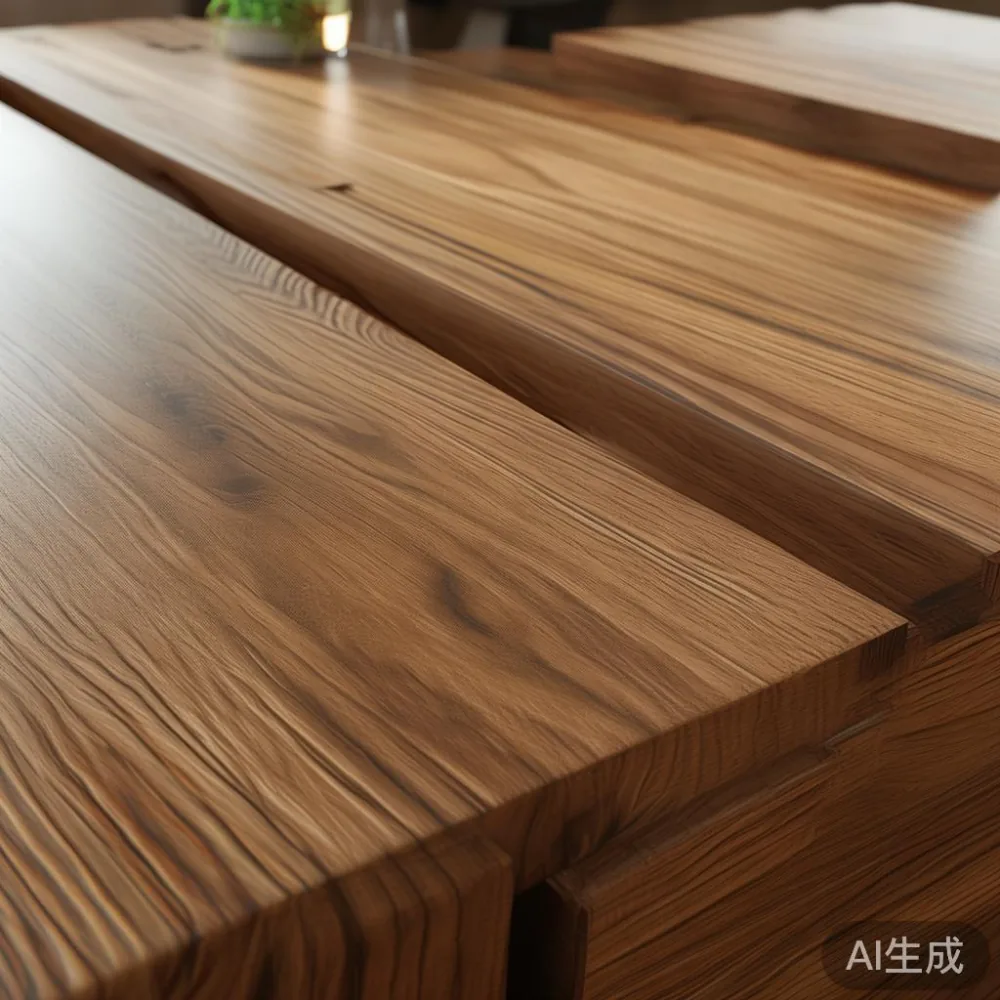
I compared the purchase prices of representative veneer and solid wood pieces with typical Singapore cleaning materials, repair work, and replacement intervals. For the physical test, I visited a show room in Foshan last month and moved a 42 kg solid wood stool across a 90 cm floor sample, then repeated the movement with a 24 kg veneered table base. My colleague measured the lift opening and corridor clearances at a Tampines HDB block with an 86 cm lift door and a 112 cm corridor turn. That experience made the cost calculation more practical than comparing catalogue prices alone.
This comparison covers solid wood sofas, bed frames, dining tables, wardrobes, nightstands, and occasional pieces such as a marble table or MIDHILL coffee table. The figures use SGD and include Singapore GST where applicable. They are planning estimates, not quotations, because timber species, fabrication, delivery access, and local labour rates all affect the final bill.
What does a 5-year furniture cost comparison include?
A fair 5-year comparison includes more than the invoice amount. I used the purchase price, delivery, 5 years of fabric care, one expected repair, and the residual value of each piece. For upholstered goods, I included cleaning solution, upholstery brush, and occasional professional cleaning. For dining tables, wardrobes, bed frames, and nightstands, I included dusting, timber treatment, and one minor repair.
The local setting matters. In Tampines, Bedok, and Punggol, many residents live in compact flats where furniture must move through an 80-90 cm lift and turn along a 100-120 cm corridor. A broad French provincial dining table may need partial disassembly, while a post-modern light luxury bed with a wide frame may need two people and 14-21 days of lead time. Delivery may cost S$80-S$240 for a normal HDB delivery, rising to S$260-S$480 if the item must be carried upstairs or assembled in the room.
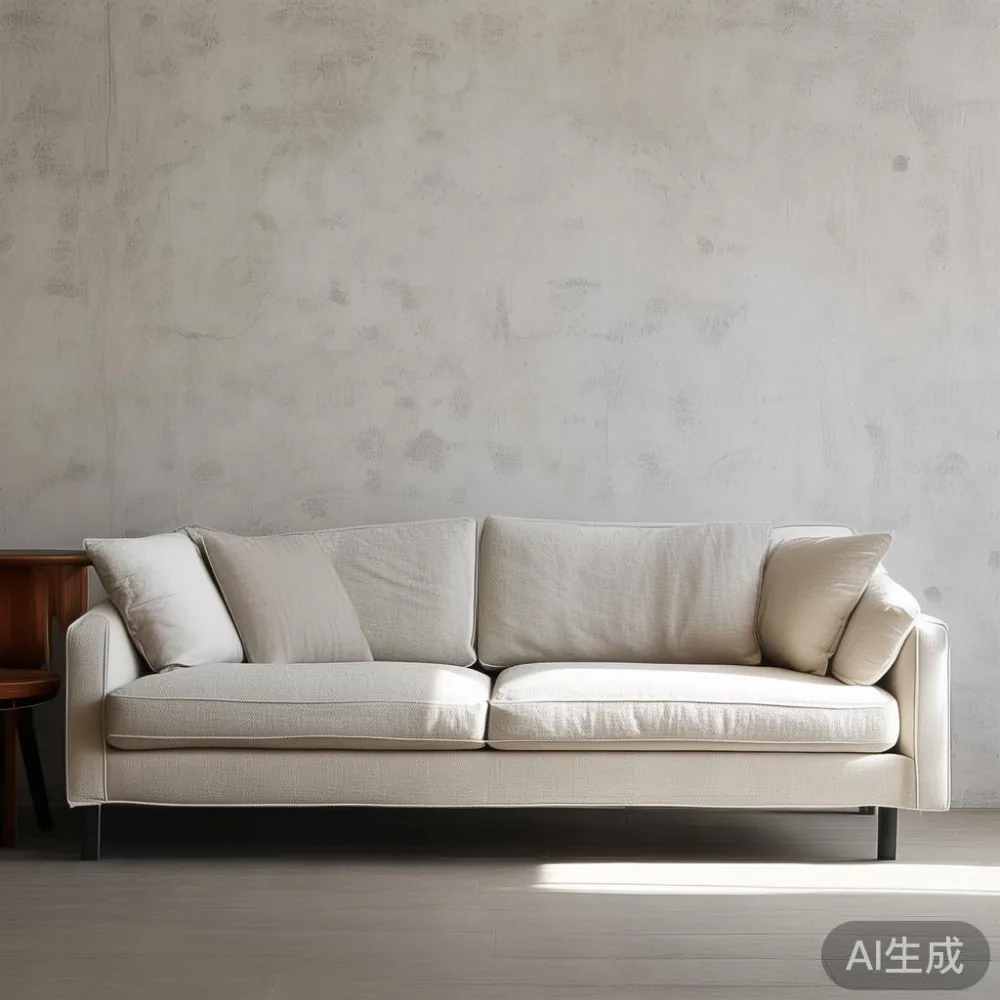
For clarity, I treated a typical dining table as S$1,280 for veneer and S$2,080 for solid wood. The corresponding bed frame prices were S$980 and S$1,680. A wardrobe was S$1,580 versus S$2,480, while a nightstand was S$260 versus S$480. A 2-seat solid wood sofa was S$2,680 compared with S$1,580 for a veneer-frame version with the same upholstery specification. These are representative Singapore retail planning ranges for 2026, not fixed market prices.
Cleaning costs were calculated at S$18 per month for fabric care, or S$1,080 over 5 years. Timber care came to S$60 per year, or S$300 over 5 years. A minor repair was reserved at S$120 for veneer and S$160 for solid wood because edge treatment and hardware work can take longer on a real timber frame.
How much do veneer and solid wood furniture cost over 5 years?
For the dining table, veneer starts at S$1,280, plus S$140 delivery and S$300 for 5 years of timber care. A S$120 repair allowance brings the estimated 5-year cost to S$1,840. After assigning a conservative residual value of S$320, the net cost is S$1,520.
The solid wood dining table starts at S$2,080. Delivery is S$180, timber care is S$300, and the repair reserve is S$160, producing a gross 5-year cost of S$2,720. Its higher residual value of S$720 reduces the net figure to S$2,000. The difference is S$480, meaning the solid wood table costs about 32% more than the veneer table under this model.
The bed frame tells a similar story. A veneer bed frame has a 5-year cost of S$1,730: S$980 purchase, S$120 delivery, S$300 care, and S$330 for an expected fabric care or frame repair, less S$300 residual value. A solid wood bed frame totals S$2,740: S$1,680 purchase, S$160 delivery, S$300 care, and S$600 repair, less no assigned resale value because fitted beds rarely sell easily. The 5-year gap is S$1,010, or 58% of the veneer figure.
For wardrobes, veneer comes to S$2,220 after purchase, delivery, care, and repair, less S$400 residual value. Solid wood reaches S$3,620, with S$600 deducted for residual value. A nightstand shows a smaller difference: S$640 for veneer and S$1,020 for solid wood over 5 years. For the sofa, the veneer option reaches S$3,080 including 5 years of fabric care, while the solid wood sofa reaches S$4,180. A marble table was excluded from the main comparison because its stone cost, weight, and maintenance profile differ from either timber category.
Across the six examples, the selected veneer set has a gross 5-year cost of S$12,210, while the solid wood set costs S$16,260. The S$4,050 difference is 33%. On a single living room, dining area, and bedroom project, veneer may therefore be easier to justify on cash flow. The answer changes when a buyer values refinishing, long service life, and the ability to repair timber rather than replace panels.
Is French provincial wardrobe worth it?
This is where appearance and use must be balanced. A French provincial wardrobe in veneer may cost S$1,580 and suit a 105 cm bedroom recess, but its carved trim and pale finish can expose fingerprints, dust, and water marks. Fabric care should be limited to dry dusting and a damp cloth where the finish permits; excessive moisture can darken veneer around joints.
A solid wood French provincial wardrobe offers a repairable frame and can be sanded and refinished, although the carved profiles make routine care slower. My practical conclusion is that the style is worth considering when it matches the room proportions and the owner accepts about 10-15 minutes of weekly care. It is less suitable for a 92 cm HDB bedroom landing where doors open into a walkway.
For residents searching for for sale Post-modern furniture, veneer can provide the curved or graphic profile at a controlled budget. Solid wood suits a post-modern light luxury approach that emphasises material honesty, softened corners, and mixed textures. It is also relevant to how to style Japandi bed in apartment layouts, because a pale solid timber frame can work with warm white walls, a 140 x 200 cm mattress, and narrow 35 cm bedside tables.
Which material is easier to maintain in a humid Singapore home?
Solid wood expands and contracts with humidity, while quality veneer is bonded to a stable substrate and may move less. That distinction affects maintenance. Solid oak, ash, or beech can check slightly at edges as indoor humidity changes between roughly 50% and 70%. Veneer can show bubbles, colour fading, or edge lifting after prolonged moisture exposure.
Daily fabric care should not involve soaking timber or upholstery. Vacuum upholstery at 600 W with a 2 cm brush head, turn cushions weekly, and blot spills within 10 minutes. Clean solid wood with a lightly damp cloth, dry it within 5 minutes, and apply a compatible wax or oil every 8-12 months. Use a pH-neutral cleaner on the sofa, and avoid steam at closer than 20 cm because heat can set stains or distort fibres.
Solid wood gives owners more recovery options. A scratch can be touched up with a colour-matched marker; a marked surface can be sanded and refinished. Veneer cannot usually be repaired as deeply. A 15 x 4 cm peeled edge may need a specialist patch, and replacement can cost S$180-S$450. Solid wood doors can instead be planed, filled, and refinished for about S$120-S$260 per door.
MIDHILL’s approach is relevant here: its 10-year structural warranty covers structural integrity, while lifetime refinishing gives solid wood pieces a route back into use after surface wear. That support changes the ownership calculation, although it does not eliminate humidity exposure, impact damage, or the need for sensible fabric care.
Do solid wood sofas and bed frames actually last 5 years?
They can, but material alone does not determine longevity. A solid wood sofa with kiln-dried hardwood rails, properly joined corners, and high-density foam can remain usable for 8-12 years with care. A weaker frame can fail in 3-5 years. Veneer sofas can also last 5 years when the substrate and joints are sound.
For a 2.4 m solid wood sofa, the primary 5-year costs are upholstery care and moving it. Fabric care works out to S$1,080 over 5 years, plus S$250-S$450 for a professional clean or cushion refresh. At S$4,180 for the sofa comparison, annual ownership is about S$836. The veneer sofa reaches about S$616 per year before resale deductions are applied.
When comparing the best Modern light luxury bed for 2026, the phrase sounds like a ranking, but the practical choice depends on the room. For a 120 cm HDB bedroom, a 160 x 200 cm Modern light luxury bed with a 30 cm side rail may fit. A 180 x 200 cm version needs at least 210 cm of width for practical bedside access. The best French provincial bed for 2026 may suit a larger master bedroom, but its carved headboard can add 8-12 cm and raise the delivery carton weight to 68 kg.
For lift access, I recommend checking the packaged width before ordering. A carton below 84 cm can usually pass an 86 cm lift door more easily, although diagonal entry still matters. A piece over 110 cm wide may require turning at the corridor junction. This delivery issue can add S$100-S$260 even when the furniture itself fits the room.
Which option fits Singapore HDB flats and condos better?
For HDB flats, lighter veneer assemblies can be kinder to narrow corridors, older lifts, and single-person delivery teams. A solid wood dining table may weigh 62-88 kg, compared with 38-54 kg for a similar veneer table. A solid wood bed frame may weigh 54-76 kg rather than 32-48 kg. These differences affect the number of movers, stair turns, and risk of wall or door contact.
Condo residents often have wider 90-110 cm lifts and private corridors, but delivery bookings still apply. Allow 7-14 delivery days for a made-to-order bed frame, 14-21 days for a carved wardrobe, and 5-10 days for an in-stock dining table. Free shipping over US$350 does not create a Singapore currency threshold, so local delivery should be quoted directly rather than inferred from an overseas order.
Scale is another local factor. A 200 cm solid wood dining table may dominate a 270 cm dining zone, while a 180 cm table leaves a better 45 cm circulation route. For a 105 cm HDB bedroom, a slim 90 cm wardrobe can work; a 120 cm French provincial wardrobe may obstruct drawers. A 40 cm nightstand suits a narrow frame, whereas a 50 cm unit may not fit beside the bed.
Style can be matched without treating the categories as opposites. French light luxury tends towards pale timber, curved edges, and upholstered surfaces; American light luxury often uses warmer walnut tones, generous proportions, and visible grain. Post-modern light luxury may combine solid timber with stone or metal. A marble table can provide a cool focal point beside a solid wood dining table, but stone tops weighing 45-70 kg need careful lift planning.
How should you compare purchase price, care, and resale value?
Compare the amount you will spend across 60 months, not only the amount you pay today. Divide the net 5-year cost by 60 to create a monthly figure. In the examples, the veneer dining table is about S$25 per month, while the solid wood version is about S$33. The veneer bed frame is around S$29 per month and the solid wood bed frame is S$46. A veneer wardrobe is approximately S$37 per month, compared with S$60 for solid wood.
Also record the expected use. A dining table that seats 6 every week should include humid-climate care. A nightstand used mainly for a phone and lamp needs less maintenance. A sofa exposed to sunlight through a west-facing condo window may need fabric care every 2-3 months rather than every month. Move any furniture away from a window receiving more than 4 hours of direct afternoon sun, or add a curtain with at least 40% opacity.
One useful rule is to compare repairability with replacement cost. If a damaged veneer panel costs at least 35% of a new piece, solid wood often has the stronger ownership case. If the product will be used for only 18 months before a planned renovation, the lower upfront price and lower carrying effort may favour veneer. Over a full 5 years, solid wood becomes more compelling where the piece is daily, visible, and likely to remain in the home.
What are the purchase, delivery, and return details?
For MIDHILL furniture, orders over US$350 qualify for free shipping, but the company also exports to more than 15 countries, and customers in Singapore should confirm the local quotation, GST treatment, and delivery appointment before paying. A 10-year structural warranty is included on qualifying pieces, together with lifetime refinishing for applicable solid wood items. Returns are accepted within 14 days under the stated policy, subject to condition and eligibility.
Check dimensions in centimetres, weight in kilograms, and delivery lead time before confirming. Ask for the carton dimensions, lift-door measurement, corridor-turn measurement, and assembly requirements. For example, a 160 x 200 cm bed frame packed at 168 x 58 x 32 cm and weighing 62 kg differs materially from a flat-pack unit packed at 166 x 42 x 18 cm and weighing 29 kg.
My measured rule from the Tampines visit is practical: leave at least 2 cm between the widest fixed dimension and a tight lift opening, and at least 5 cm around a corridor turn where the trolley must pivot. For a sofa with detachable legs, record each leg section separately. For a marble table, confirm whether the top can be removed from the base; if not, plan for a professional mover even if the table will fit through the lift on paper.
After 5 years, veneer may still provide a low-cost, coordinated room if it has been protected from moisture and impact. Solid wood may cost more per month but gives a repairable frame, stronger refinishing options, and a material that can age with dignity. The sensible choice is not always the one with the higher ticket price. It is the one whose maintenance demands, dimensions, and 60-month ownership costs suit your Singapore home and your actual fabric care routine.