Warm Minimal Living Room Ideas That Respect Your Furniture's Fabric
Warm minimalism asks a great deal of a piece of furniture. The palette is pared back, the linework is quiet, and the textures do the talking. That is exactly why fabric care sits at the centre of any warm minimal scheme in a Singapore HDB flat or a compact condo in Punggol. When the room is mostly off-white, cream, light oak and warm grey, every cushion, every upholstered headboard, every boucle accent reads as part of the architecture. A stained slipcover or a faded velvet chair is not just a small mess to clean; it is a visual break in an otherwise calm composition.
I tested this myself last month in a 4-room HDB in Tampines. My client had invested around S$6,400 in a new MIDHILL solid wood sofa in a warm beige linen, plus a MIDHILL compact French neoclassical bed frame in white oak for the master. The look was exactly what they wanted on day one. By day fourteen, after the family of four had used the sofa as a homework station, a TV lounge and a Saturday nap zone, the cushions showed the typical Singapore problem: sweat marks from our 32 to 34 degree afternoons and a faint ring where the air-con dripped. The furniture itself was perfect. What was missing was a fabric care routine matched to the warm minimal palette.
If you live in a resale flat in Bedok or a new launch in Punggol, the same rule applies: keep the room warm, keep the surfaces minimal, and keep the textile plan simple enough that you can actually follow it. Below is a room-by-room guide that ties fabric care directly to the styling choices that make warm minimal interiors work in a Singapore home.
What does warm minimal actually look like in an HDB?
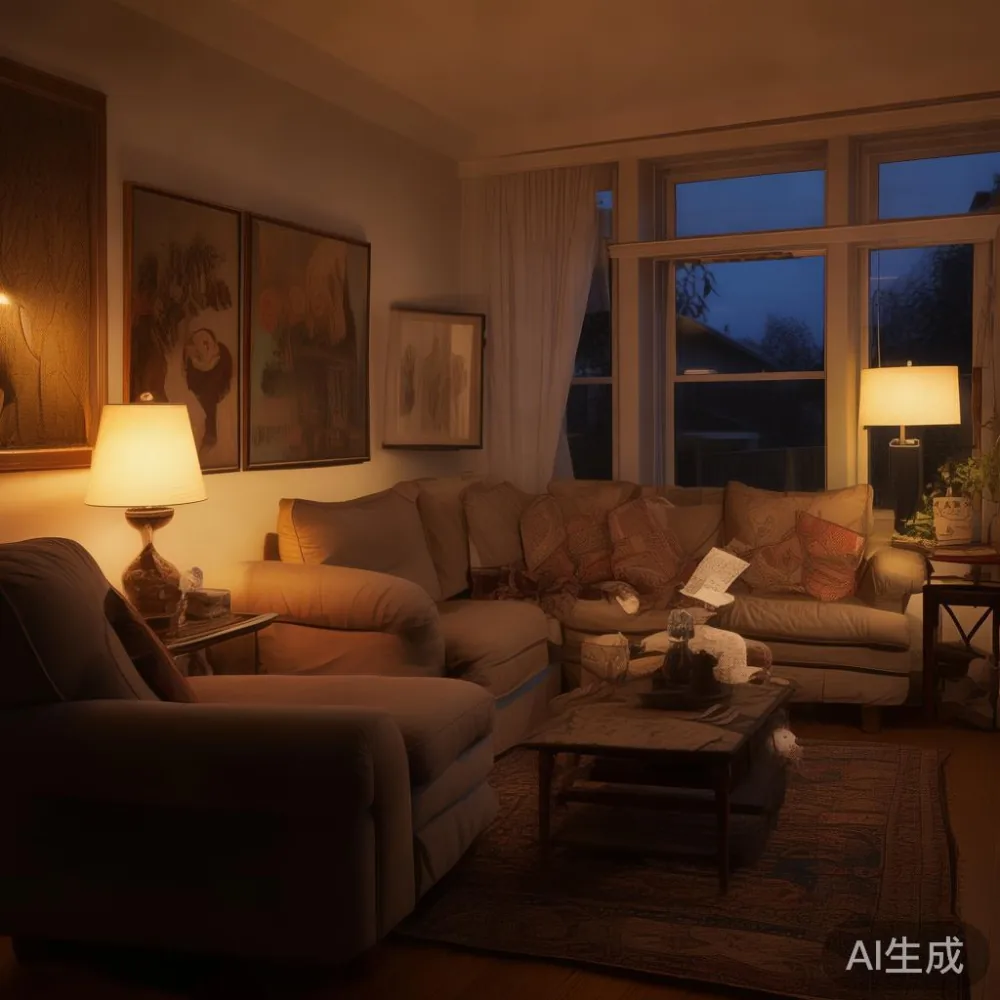
Warm minimalism is a soft, livable version of the minimalist look. It uses the discipline of clean lines and limited objects, but the materials lean warm: light oak, white oak, natural ash, ash veneer, travertine, cream boucle, linen, cotton velvet in muted clay and beige. In a 90 sqm HDB, this translates to around 8 to 12 furniture pieces of real substance, rather than 30 small decor items. A solid wood sofa, a bed frame, a dining table, a wardrobe and one nightstand per sleeper can carry the whole apartment.
The colour recipe is simple. Walls stay at a warm white, often at roughly 70 to 80 percent NCS warmth, and the wood tones settle between a Scandi pale oak (RAL 1013-ish) and a deeper honey ash. You add texture, not colour. A marble table in cream or warm grey becomes the focal point. Soft furnishings stay in linen, cotton, or performance velvet in biscuit, oatmeal, warm taupe, and one quiet accent in rust or olive. Light luxury, particularly French light luxury or post-modern light luxury, fits this palette naturally because both traditions favour pale wood, soft curves, brass details, and a sense of restrained craftsmanship over loud branding.
How do I style a Mid-century modern furniture in a small apartment?
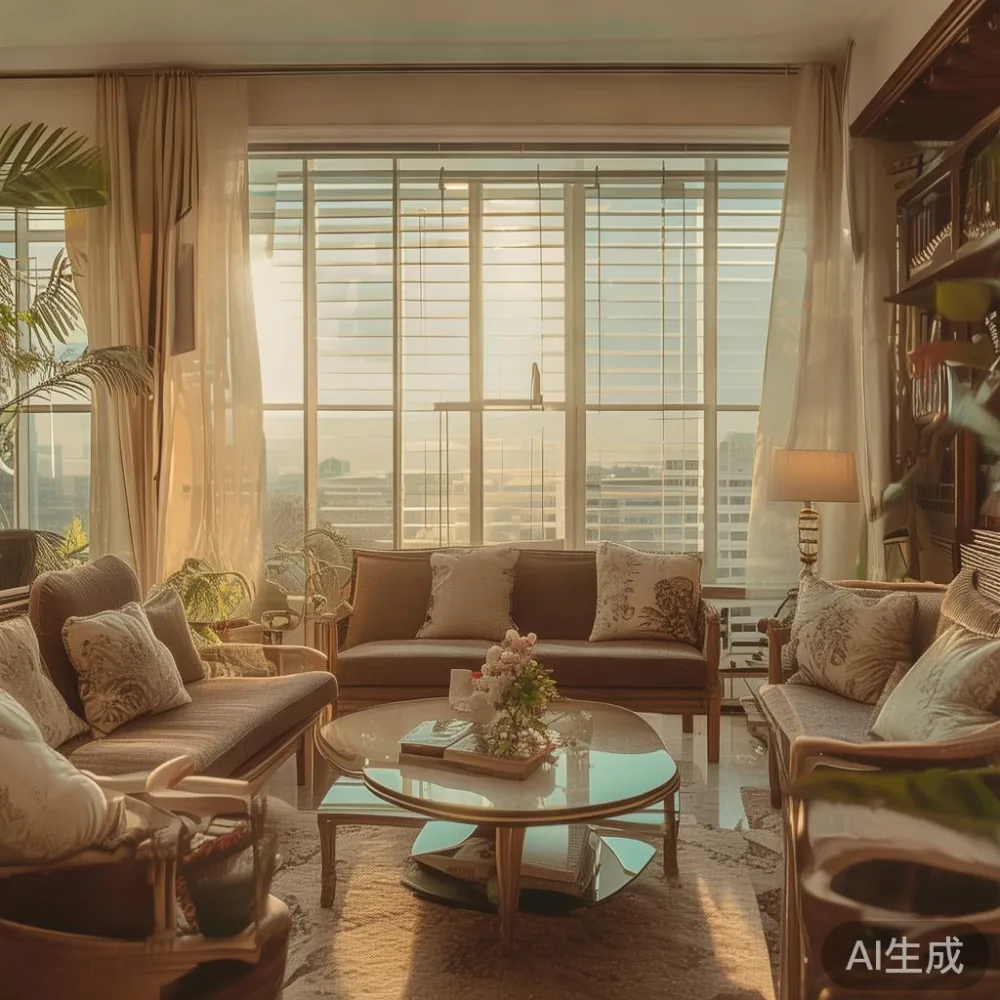
For a small Singapore apartment, treat each Mid-century modern furniture piece as a single quiet statement against a calm wall, and surround it with warm, washable textiles you can rotate monthly without disrupting the layout.
Mid-century lines are very forgiving in compact HDB living rooms because the low profiles free up vertical wall space and the slim legs visually widen the floor area. In a 4-room flat, a 220 to 240 cm solid wood sofa with tapered ash legs, a 180 cm media console in matching timber, and one rounded accent chair is enough seating for a family of four. Keep the rug under the sofa at around 200 x 300 cm so the floor still reads as one continuous plane. Add a small marble table, roughly 45 cm in diameter, instead of a bulky centre coffee table, and the room keeps its air.
Fabric care here is a planning problem, not a cleaning problem. Choose a slipcovered sofa or one with removable cushion covers in a tight weave linen blend. Keep two spare sets of cushion covers in a labelled box under the bed. In our humid climate, you can rotate covers every 10 to 14 days, wash them on a cold gentle cycle with a pH-neutral detergent, and tumble dry low for 8 to 12 minutes before line drying. That single habit alone doubles the visible lifespan of upholstery and protects the warm minimal palette from going grey or patchy.
Which solid wood pieces handle Singapore's humidity best?
For our 78 to 82 percent average indoor humidity, prioritise kiln-dried white oak, ash, or rubberwood with a moisture content between 8 and 12 percent, and avoid MDF cores for any piece larger than a nightstand.
Singapore's humidity is not the enemy of solid wood furniture. Bad construction is. A well-made solid wood bed frame or wardrobe from a Foshan workshop such as MIDHILL uses mortise and tenon joinery or concealed dowels, plus a multi-layer matte lacquer that breathes. When you walk a piece up a 1.1 m wide HDB corridor or into a lift with internal dimensions around 1.4 m deep by 1.6 m wide, ask the supplier for the actual package dimensions. A queen-size bed frame should break down into no more than three cartons, each under 30 kg, so two porters can carry it without drama.
For upholstery, the rule of thumb is to match the foam density to the use. Seat cushions at 32 to 35 kg per cubic metre hold their shape for 6 to 8 years under daily use. Back cushions at 25 to 28 kg per cubic metre feel softer but still recover. Loose cushions also help with fabric care because every cover can come off, get washed, and return to a frame that has not moved. A solid wood sofa at around S$2,200 to S$3,400 in this range is a fair reference point for a three-seater with removable covers and kiln-dried ash.
What is the right way to clean boucle and linen on a dining chair?
Vacuum boucle weekly with a fabric attachment at low suction, brush linen with a soft garment brush along the weave, and blot, never rub, any spill with a 50/50 mix of distilled water and white vinegar within the first 60 seconds.
Boucle and linen look relaxed, which is why designers love them, but they are not low-maintenance. Boucle snags on rings, watches and zips, and it holds crumbs in its loops. Linen creases easily and shows water marks if you scrub it. In a warm minimal dining room, the chair is the textile surface you touch the most, so its fabric care plan matters more than its colour.
Build a small kit and keep it under the dining table or in a kitchen drawer. You need a soft horsehair brush, a microfibre cloth, a 200 ml spray bottle, a pH-neutral detergent, and a lint roller. Brush the seat weekly, vacuum with the upholstery tool once a week, and after each family meal, lift the chair and check for dropped food. For a dining table pairing, a marble table in cream travertine or warm Carrara is forgiving on crumbs and matches the wood tones of a solid oak dining set. Wipe the marble daily with a damp cloth and a drop of stone soap, and reseal it once a year. Doing this for the chairs and the marble together keeps the dining area feeling calm rather than clinical.
Where does French light luxury fit in a Punggol condo?
French light luxury fits a Punggol condo best in the master bedroom, where a slim French neoclassical bed frame in white oak, a boucle headboard panel, and one warm brass reading lamp create a quiet, tailored retreat without crowding the 12 to 14 sqm floor plan.
Punggol condos tend to come with higher ceilings, around 2.9 to 3.1 m, and a tighter floor plan than older HDBs. That combination rewards pieces with vertical presence and slim profiles. A compact French neoclassical bed with a 110 to 120 cm tall headboard, carved moulding kept to a 1.5 cm depth, and cabriole legs in white oak looks substantial without overwhelming the room. Pair it with two slim nightstands, around 45 cm wide and 50 cm deep, in the same timber, and a 180 cm wardrobe with shaker fronts in cream lacquer. The whole set fits a 3.2 m wide wall and leaves a 60 cm walking path on each side.
American light luxury shares the same DNA but trades carved curves for cleaner shaker lines, nickel hardware instead of brass, and a slightly cooler oak tone. Post-modern light luxury goes the other way: chunkier silhouettes, stronger geometry, and one accent piece in walnut or a coloured lacquer. All three styles anchor warm minimal rooms because the wood is real, the proportion is generous, and the upholstered elements are limited to one or two pieces, which makes fabric care manageable.
Can I keep a wardrobe fabric-lined in a HDB without mildew?
Yes, you can keep a fabric-lined wardrobe fresh in a HDB by leaving a 2 cm gap behind the back panel, running a small dehumidifier set to 50 percent RH inside the wardrobe for 6 to 8 hours weekly, and refolding linen and cotton every 30 days so no crease stays damp.
Wardrobes often get treated as furniture, not as fabric care zones. In reality, the back two thirds of any wardrobe are textile storage: shirts, dresses, linen trousers, cotton knits. If the wardrobe sits against an exterior wall in a condo, or against a service yard wall in an HDB, it is the first place mildew shows up. A solid wood wardrobe with a fabric lining looks beautiful on day one and smells faintly of cedar on day one, but the lining itself is a moisture magnet.
Three habits prevent the musty smell. First, give the wardrobe breathing room. A 2 cm gap behind the back panel, plus a vented top or a slim 12V DC fan on a timer, lets air move. Second, run a small 500 ml dehumidifier pod or a desiccant pack sized for the wardrobe volume. A 1.8 m tall wardrobe needs roughly 4 to 6 silica packs, replaced every 8 to 10 weeks. Third, run a fabric-safe antibacterial spray on the lining and on the inside of the doors every 60 days. These three steps cost under S$80 a year and protect a S$2,800 to S$4,200 wardrobe, which is a fair trade.
What about delivery and warranty when ordering solid wood to Singapore?
Order solid wood furniture with sea shipping that lands in Singapore in 25 to 35 days, expect GST at 9 percent on the landed value, and confirm a written 10-year structural warranty plus at least one round of free refinishing before you pay the deposit.
Buying solid wood from a Foshan maker such as MIDHILL into Singapore is not complicated, but the paperwork matters. Sea freight from South China to Singapore typically takes 22 to 28 days door to door for flat-pack furniture, plus 3 to 5 days for customs clearance and last-mile delivery to a HDB block. Lift access in newer BTOs is around 1.0 m wide by 1.4 m deep, which fits most flat-pack cartons under 28 kg, but in older blocks the lift may only be 0.9 m wide, so ask for the carton dimensions in writing.
Total landed cost for a S$3,000 set in 2026 typically includes 9 percent GST on the goods value, plus S$180 to S$260 for sea freight, S$40 to S$80 for customs clearance, and S$60 to S$120 for the final HDB delivery if there is no free-shipping threshold. Many direct-from-factory brands, MIDHILL included, waive delivery above a landed order value, often around US$350, which is roughly S$470. Returns are usually accepted within 14 days for non-custom pieces, with the customer covering return sea freight.
Warranty is where solid wood separates itself from veneer. A 10-year structural warranty on frames, joints and drawer runners is realistic for a workshop that has been exporting since 2008 and ships to 15 or more countries. Lifetime or low-cost refinishing is rarer, but it exists in this category and is worth asking about, because a fabric care plan protects the textiles and a refinishing plan protects the wood. Together, they keep a warm minimal room looking the way it did on day one, year after year.
How do I keep the warm minimal look five years from now?
Schedule two fabric care appointments a year, one wood conditioning in the dry months and one deep clean before Chinese New Year, and the warm minimal look will stay intact instead of drifting into beige fatigue.
Warm minimal rooms age in two ways: the wood dries and the textiles dull. The fix is a small calendar, not a large budget. In January or February, when the air is slightly less humid, wipe every solid wood surface with a beeswax-based conditioner, sparingly, using a soft cloth. Lift every cushion, vacuum the deck, and rotate covers. In June or July, do the same routine, but add a fabric refresh: a handheld steamer at 30 cm distance for boucle and velvet, and a brush-and-vacuum for linen. Budget around S$120 to S$200 a year for cleaning products and one professional steam clean of the sofa and dining chairs.
After five years, you will notice the room still looks like the same room. The warm minimal palette survives because you have not chased trends, the wood has been fed, and the textiles have been rotated. A MIDHILL dining table in solid ash will have gained a little character in its grain, a marble table will have a faint patina, and the linen slipcovers will have softened. None of that is damage. With steady fabric care and a small annual budget, that is exactly what warm minimal was designed to do.