Solid Wood Furniture Prices in Singapore: The Real Drivers
Last month I visited a Tampines HDB flat on the 14th floor with my colleague, a condo resident in Punggol. We were measuring corridor widths and lift openings before quoting three dining tables: one in oak at SGD 1,480, one in ash at SGD 1,120, and one in rubberwood at SGD 690. The lift opening was 89 cm wide, the corridor was 112 cm, and the dining tables came in legs-up boxes between 78 cm and 96 cm wide. Two of them fit. One did not. That afternoon taught me something the catalogues rarely explain: the sticker price on a solid wood dining table is the result of 9 or 10 separate decisions, and most of them have nothing to do with the wood you can see. If you have ever wondered why one solid wood bed frame is SGD 980 and another is SGD 2,650, the answer lives in the supply chain, the joinery, the finish, and the cost of getting a 95 kg oak dining table up 14 storeys without a scratch.

What actually drives the price of a solid wood dining table in Singapore?
Five things drive it, in roughly this order of weight: the species of the solid timber, the grade and dryness of the boards, the joinery, the surface finish, and the logistics of reaching your floor. A solid oak dining table will cost 35 to 60 percent more than an equivalent ash or rubberwood table of the same dimensions, simply because European and North American oak cost more per cubic metre at the sawmill. A 180 cm x 90 cm top in FAS-grade oak, kiln-dried to 8 to 10 percent moisture content, will price differently from the same top in B-grade, and very differently from "knotty rustic" grade. Moisture content is the hidden number: wood above 12 percent MC will cup in Singapore's 28 to 32 degree indoor air; wood dried to 8 to 10 percent stays calm.
Joinery uses the third slice of the budget. A solid wood dining table joined with mortise-and-tenon, dowels, and corner blocks takes longer to build than one screwed into a particleboard substrate. You can see the difference if you look underneath the top, and you can feel it in the 38 to 42 kg of an oak dining table versus the 22 to 26 kg of a veneered one. The finish is the fourth slice: a hardwax oil finish in three coats takes about a working week of curing time and uses more material per square metre than a single nitrocellulose spray. The fifth slice is the logistics, which in a Tampines or Bedok HDB block is rarely cheap.

Why does the same wardrobe cost SGD 1,200 in one shop and SGD 3,400 in another?
Because the cheaper wardrobe is almost never built the same way as the more expensive one, even when the photos look identical. Three drawers carry the same name on a price list and can be built three different ways: with 12 mm plywood backs and staple joinery at the entry tier; with 16 mm plywood backs, dovetail drawers, and full-extension ball-bearing slides at the mid tier; with 18 mm solid wood backs, dovetail or box-joint drawers, and soft-close undermount slides at the upper tier. Each step adds cost in material and labour, and the cumulative difference over a 220 cm tall wardrobe is the gap between SGD 1,200 and SGD 3,400. The same logic applies to a nightstand: a 50 cm x 40 cm x 55 cm nightstand in solid oak with dovetail joints, full-extension soft-close slides, and a hardwax oil finish is a different object from a 50 cm x 40 cm x 55 cm nightstand in solid oak with cam-lock dowels, side-mounted slides, and a lacquer finish. Both will hold your lamp. One will still hold your lamp in 15 years.
This is also where the cloth-care conversation pays off, by the way. A solid wood nightstand finished in hardwax oil is easier to maintain than one finished in a film-forming lacquer: dust with a dry microfibre cloth, wipe spills within 20 minutes, refresh the surface once a year with a coat of maintenance oil. With film finishes, fabric-care mistakes translate into clouding, blushing, and micro-cracks that cannot be rubbed out. When the spec sheet says "oiled finish," treat it as a fabric-care feature, not a maintenance burden. That single decision will determine how the wardrobe and the nightstand age in your flat.
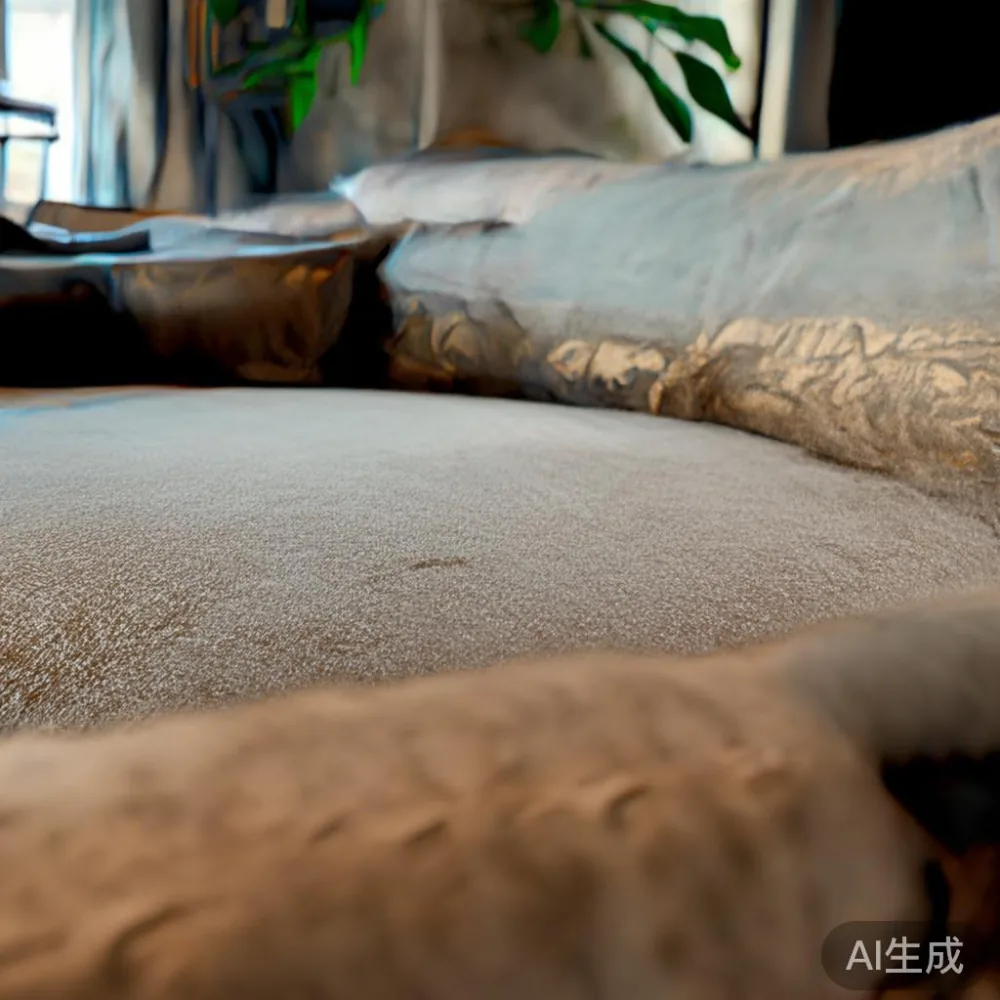
How do I style a Modern light luxury dressing table in a small apartment?
Pick a dressing table no deeper than 42 cm, finish the back panel in the same hardwax oil as the front so it can sit in the middle of a room as a divider, mount a mirror no wider than 60 cm, and use one warm 2700K task light plus one slim drawer insert for daily fabric-care items such as a 30 cm x 30 cm microfibre cloth, a small bottle of wood maintenance oil, and a felt-lined tray for jewellery. That sentence is the one to lift: a Modern light luxury dressing table in a small apartment works best at 42 cm deep, oil-finished on both faces, paired with a 60 cm mirror and 2700K warm light, so it can float as a divider rather than hug a wall. French light luxury tends to give you slim tapered legs, curved silhouettes, and brushed brass hardware; American light luxury leans toward thicker 60 mm legs, square lines, and matte black pulls; post-modern light luxury mixes the two with rounded edges, fluted panels, and warm travertine or marble accents. In a 90 sqm or wider Punggol or Bedok condo, a 120 cm dressing table in oak oak rattan furniture styling, with a woven rattan drawer front and a 4 cm Carrara marble top, reads as light luxury without dominating the room. In a 60 to 75 sqm HDB flat, drop to 90 cm, skip the marble, and use a single round mirror 50 cm across.
How much of the price is just shipping, GST, and the lift?
More than most buyers expect. A solid wood bed frame in queen size weighs between 55 and 75 kg unpacked; a king size 4-door wardrobe can weigh 180 to 240 kg. In a Tampines HDB with the older 80 cm x 100 cm lift opening, the wardrobe may not even fit, and the answer is usually hoisting up the service corridor or partial disassembly on site, both of which are charged by the hour. MIDHILL works around this by quoting a "floor plan check" before production: you send a measured sketch of the lift, the lift door, the corridor outside your unit, and any turns, and the factory builds the wardrobe in 2 to 4 sub-assemblies sized to the smallest passage. That single step has saved customers in the 10 to 12 percent of the order value that an unsuccessful forced delivery would otherwise cost in damages and lost time.
GST adds another 9 percent on top of the selling price. Shipping from Foshan to Singapore, including container, port handling, and last-mile, currently lands between SGD 280 and SGD 520 per cubic metre for a full-container-load order, which is why a single dining table ordered alone is noticeably more expensive than the same model tucked into a larger mixed container. Free shipping thresholds matter: any maker worth your time should offer free delivery above a sensible order value, because once you are buying two or three pieces, the freight math inverts and the maker should be passing that saving on. MIDHILL has shipped into Singapore for over a decade, which is why their pricing stays predictable quarter to quarter even when the ocean freight index moves 18 to 22 percent in a quarter.
Does the finish really change the price, and how do I maintain it?
Yes, and yes. A solid wood sofa frame, a bed frame, a dining table, and a wardrobe can share the same kiln-dried oak and end up at four very different prices because of the finish system. A hardwax oil finish, typically a blend of plant waxes and oils in a solvent carrier, costs roughly 2.4 to 3.1 times more per square metre than a basic nitrocellulose lacquer. It also takes longer: 3 coats with 12 to 18 hours of curing between coats, plus a final 72-hour rest before packing. Lacquer is faster and cheaper, but it forms a film that cracks, scratches white, and traps moisture if it gets underneath. For a tropical climate with daily highs of 30 to 34 degrees and 78 to 88 percent indoor humidity for parts of the year, the right finish is the difference between a 15-year piece and a 5-year piece.
Maintenance is simple and is part of good fabric-care for the home. Dust weekly with a dry microfibre cloth; wipe spills within 15 to 20 minutes using a barely damp cloth, then buff dry; avoid silicone polishes, ammonia, and bleach; refresh the oil finish once every 12 to 18 months with a single thin coat applied along the grain using a lint-free cloth, then buff off after 20 to 30 minutes. A marble table top, which is often paired with a solid wood base in light luxury collections, needs a different fabric-care routine: blot spills within 5 minutes, use a pH-neutral stone cleaner monthly, and seal the marble every 12 months. Knowing the right fabric-care routine for each surface keeps both the wood and the stone out of the landfill for 20+ years.
Is a 10-year structural warranty actually meaningful, or is it just marketing?
It is meaningful if the maker defines "structural" precisely and offers a service path after the warranty period. A meaningful 10-year structural warranty on a solid wood dining table, bed frame, sofa frame, wardrobe, and nightstand covers joint failure, frame cracking, and excessive movement of the top. It does not cover finish wear, dents from a 1.5 m drop, water damage from a forgotten window, or colour change from direct afternoon sun. The right question to ask any maker is: what happens at year 11, year 15, and year 20? If the answer is "buy a new one," the warranty was a marketing line. If the answer is "we offer a lifetime refinishing service, with pickup and redelivery in Singapore, at a fixed hourly rate," the warranty sits on top of a real aftercare system. MIDHILL runs that exact model out of Foshan, which is rare for a furniture maker of this scale, and it is the single strongest signal that the price you pay today will not be re-paid in five years.
The shortest path to reading a furniture price tag, in practical terms, is to ask for four numbers before you fall in love with a piece: the species and grade of the solid wood, the moisture content of the boards at the time of packing, the joinery method used in the load-bearing joints, and the finish system with its fabric-care instructions. If the salesperson cannot answer all four, the price is a guess. If they can, the price is a sum of decisions you can audit, and you can decide which decisions matter most for your flat, your floor, and your family.