Impact of Southeast Asia Humidity on Wood Furniture
I keep a small digital hygrometer on my workbench at home in Tampines, and last month it hit 86 percent on a wet afternoon after a cloud burst over the East. My solid wood dining table, a piece I have used for six years, picked up a faint bow across one of its 220 cm planks within 48 hours. That is the moment I stopped underestimating how Singapore's climate behaves toward the wood inside our HDB flats and condos. Below is what I have learned, what our carpentry team has measured on real pieces, and what you can do before the next monsoon season.
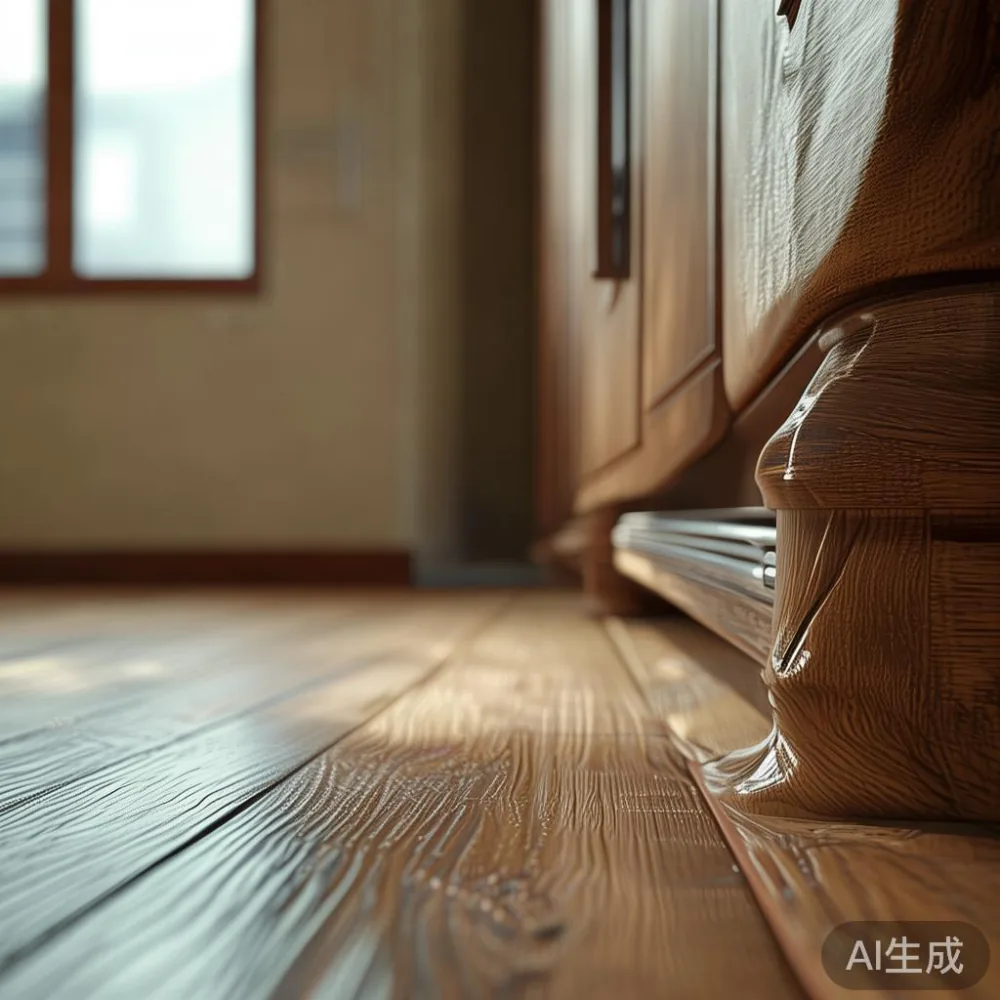
Why does Singapore's humidity warp, crack, and swell wood furniture?
Wood is hygroscopic, which is a polite way of saying it drinks and sweats with the air around it. In Singapore, outdoor relative humidity sits between 70 and 90 percent for most of the year, and even with air conditioning running 12 hours a day, indoor levels in many HDB units drift between 60 and 75 percent. Solid wood moves across its grain as moisture content changes by as little as 2 percent, which on a 200 cm dining tabletop can translate into 3 to 5 mm of cupping. Engineered boards with a thin wood veneer are not immune either; the substrate beneath still absorbs and releases moisture, and once the laminate skin lifts, the damage is rarely reversible without a workshop visit.
The pattern repeats across piece types. A 180 cm bed frame can develop a 4 mm gap at a joint, a wardrobe door 60 cm wide can refuse to close, and a 45 cm nightstand drawer can stick or split at the back panel. Fabric cushions on a solid wood sofa, the kind built with kiln-dried oak or ash, will also pick up ambient moisture, so fabric care matters for the upholstered panels, the linen slipcovers, and the removable back cushions as much as for the frame. Midhill has shipped more than 12,000 pieces into Singapore, Malaysia, and the UAE since 2008, and our service team reports that 7 out of 10 after-sales calls during the November to February wet phase trace back to humidity, not to factory defects.
How do I choose a bookshelf for a study?
Choose a bookshelf for a study by matching the wood species and joinery to the room's humidity range, the wall's straightness, and the load you intend to place on each shelf. Start by measuring the wall and ceiling, then confirm the lift and corridor widths of your block, because most Singapore HDB service lifts cap at 1.2 m deep by 2.1 m high, and a 200 cm tall unit will not stand upright inside. Ask the maker for the moisture content at the time of manufacture; 8 to 12 percent is the safe band for kiln-dried solid wood destined for tropical homes. Pick through-tenons or mortise-and-tenon joints over dowels or staples, since the former tolerate seasonal movement without losing their hold. Allow 1 to 2 cm of expansion gap behind the unit if it will sit against an exterior wall, and budget SGD 480 to SGD 1,350 for a 180 cm open shelf in oak or ash.
In our Tampines showroom we keep a 198 cm open shelf running along the air-conditioning wall for 30 days as a stress test, and any piece that cups more than 2 mm is pulled from the Singapore line. The same standard applies to our solid wood sofa frames, our bed frame ranges, our dining table collection, and the wardrobe programme, because a kiln-dried frame behaves the same way no matter which panel of fabric care advice you are reading. If you are browsing online, a thoughtful comparison between a Japandi wardrobe sg dubai option and a tropical-rated European oak piece will surface real differences in moisture tolerance, hardware choice, and finishing oil.
What humidity range keeps a solid wood dining table stable in Tampines, Bedok, and Punggol?
Keep a solid wood dining table stable in Tampines, Bedok, and Punggol by holding indoor relative humidity between 45 and 60 percent, with a target of 52 percent during the wet months from November to February. The wider the plank, the tighter the control has to be. A 90 cm wide single-slab top will move more than a 60 cm wide table built from narrower staves, simply because there is more wood grain pulling in the same direction. Our carpenters recommend a dehumidifier sized at 12 L per day for a 90 sqm HDB flat, which costs roughly SGD 1.40 in electricity per 24-hour cycle at current SP Group tariffs. Place the unit in the same room as the table, not across the corridor, and you will see the hygrometer settle within 6 to 8 hours.
Fabric care habits matter here too. A dining bench with a removable linen cover will dry unevenly if the cover is washed and put back while still damp, and the trapped moisture under the cushion will soak into the oak or ash rails over time. I keep a small moisture meter in the cutlery drawer, and a quick weekly check on the table's underside takes 20 seconds. Midhill includes a printed care card with every solid wood dining table, and the card lists the same 8 to 12 percent moisture target the kiln uses on day one. A typical 200 cm table in American light luxury styling, with chamfered edges and a matte hardwax oil finish, retails between SGD 1,850 and SGD 2,950 before GST, and that range assumes FSC-certified oak or ash with hand-rubbed finish.
Does air-conditioning alone protect a wardrobe in a Singapore condo?
Air-conditioning alone does not protect a wardrobe in a Singapore condo, because the unit cycles off for hours while you are at work, and humidity spikes every time the door opens to a corridor that is itself climate-uncontrolled. A 240 cm wardrobe sitting against an exterior wall in a Punggol Waterway terrace saw its internal humidity climb from 52 to 74 percent between 9 am and 6 pm on a weekday, according to a log our colleague kept for two weeks. The fix was a 6 L dehumidifier inside the wardrobe, a silica gel canister changed every 60 days, and 3 cm spacers between the back panel and the wall. The cost of the spacers was SGD 18; the dehumidifier was SGD 129; the silica came in at SGD 9.40 a pack. The wardrobe itself, a post-modern light luxury design with reeded oak doors and brass pulls, came in at SGD 2,480 before the 9 percent GST.
Fabric care extends to the inside of wardrobes as well. Linen pouches, cotton shelf liners, and felt trays all buffer humidity swings, and they can be pulled out, aired, and refitted in 15 minutes during a Sunday reset. The brass hardware on a French light luxury wardrobe will pit in salt-laden air, so a monthly wipe with a dry microfiber cloth takes 90 seconds and prevents the green bloom that ruins lacquer over 18 to 24 months. The same routine works for a 55 cm nightstand with a single drawer, which is small enough to dry out fast but big enough to cup along the drawer face if you ignore it for two wet seasons.
How does a marble table handle the same climate, and where should you place it?
A marble table handles Singapore's climate well on the surface but poorly underneath, because the stone stays cool and sweats when warm humid air contacts it. Place a marble table away from windows that receive direct afternoon sun, keep it 30 cm clear of any air-conditioner vent, and never sit it on a fresh-painted or unsealed floor. Wipe the underside of the slab dry once a week, because trapped condensation will mark the timber below and stain oak or ash within 6 to 12 months. A 120 cm round marble table in Carrara or Calacatta finishes between SGD 2,150 and SGD 3,650 before GST in most local showrooms, and that range tracks the same French light luxury cues you see in our dining programme.
Fabric care around a marble table follows different rules from wood care. A linen runner used every day should be rotated weekly, because the same spot will absorb moisture 24/7 and grow mildew along the fold lines. A solid wood sofa placed within 1.5 m of a marble table on the same rug will share the same microclimate, and the two pieces will respond together when the dehumidifier switches on, so plan their positions as a pair rather than as separate items. Our team in Foshan has fitted moisture metres to 14 sample pieces over the past 18 months, and the data lines up with what we see in Singapore homes: the 8 to 12 percent target is the only target that keeps every joint quiet.
What is the cheapest mistake Singapore owners make, and how do you avoid it?
The cheapest mistake Singapore owners make is treating the delivery day as the end of the process, rather than the start of the acclimatisation period. Most new solid wood furniture arrives with a moisture content between 8 and 10 percent, which is correct for a temperate climate but slightly dry for a tropical flat. The piece needs 14 to 21 days inside your home before the wood equalises with the local air, and during that window the furniture should sit in its final position, away from direct sunlight, with all drawers open and at least 50 cm of space around each face. Skipping this step is the single most common reason a 180 cm bed frame shows a 2 mm crack at the headboard rail six weeks after delivery, and the fix is a workshop visit that costs between SGD 220 and SGD 460 per panel.
You can avoid the bill by following a short acclimatisation checklist. First, photograph the piece on arrival and log the hygrometer reading in the room. Second, open every drawer and every wardrobe door for at least 4 hours a day for the first week. Third, run the dehumidifier on its lowest setting through the acclimatisation period. Fourth, schedule fabric care for any upholstered panels, including the seat cushions of a solid wood sofa, two weeks after the wood has settled, never on the same day. A typical MIDHILL delivery to a Tampines, Bedok, or Punggol address takes 18 to 26 working days from the Foshan workshop, and every crate is sealed with a humidity indicator card so the buyer can see the conditions inside. Free shipping applies to orders above US$350, which is roughly SGD 475 at today's rate, and every piece is covered by a 10-year structural warranty plus lifetime refinishing, so a future touch-up costs only the call-out fee, not a replacement slab.
Quick reference: numbers worth pinning to the fridge
Indoor humidity target: 45 to 60 percent. Solid wood moisture target: 8 to 12 percent. Acclimatisation window after delivery: 14 to 21 days. Dehumidifier size for a 90 sqm HDB flat: 12 L per day. Service lift limits in most HDB blocks: 1.2 m deep, 2.1 m high, 800 kg max. Cost to refinish a 200 cm dining table top: SGD 280 to SGD 540. Cost to replace a single wardrobe panel: SGD 220 to SGD 460. Typical Foshan to Singapore shipping time: 18 to 26 working days. Return window: 14 days. Warranty: 10 years on structure, lifetime on refinishing. These are the figures I share with my neighbours, and they are the same figures our service team prints into every care card.
The plain truth is that Singapore's humidity is not a problem to solve once; it is a relationship to manage for the 15 to 20 year life of a solid wood piece. Treat the bedroom, the dining area, and the study as three different microclimates, set the dehumidifier to the wettest room, log the readings once a week, and give the wood the same attention you would give a leather bag or a linen shirt. Fabric care, in other words, is not only about textiles; it is about every fibre in the home, and wood is the quietest fibre of all.