How Southeast Asia Humidity Affects Solid Wood Furniture — And What Singapore Homeowners Can Do About It
Three weeks ago I delivered a six-seat MIDHILL solid oak dining table to a 1,050 sq ft condo off Tampines Street 86. The lift opening measured 1.1 m wide by 2.1 m deep, the corridor outside was 1.5 m, and we still had to remove the table legs before carrying the 96 kg top upstairs. The client asked me a question I now hear almost every week in Singapore: "Why is the wood behaving like this?" The answer is almost always the same — humidity. And once you understand humidity, you understand every scratch, sticky drawer, and stuck door on a wooden bed frame, wardrobe, nightstand, or marble-topped dining table sitting in a HDB flat or a Punggol condo.
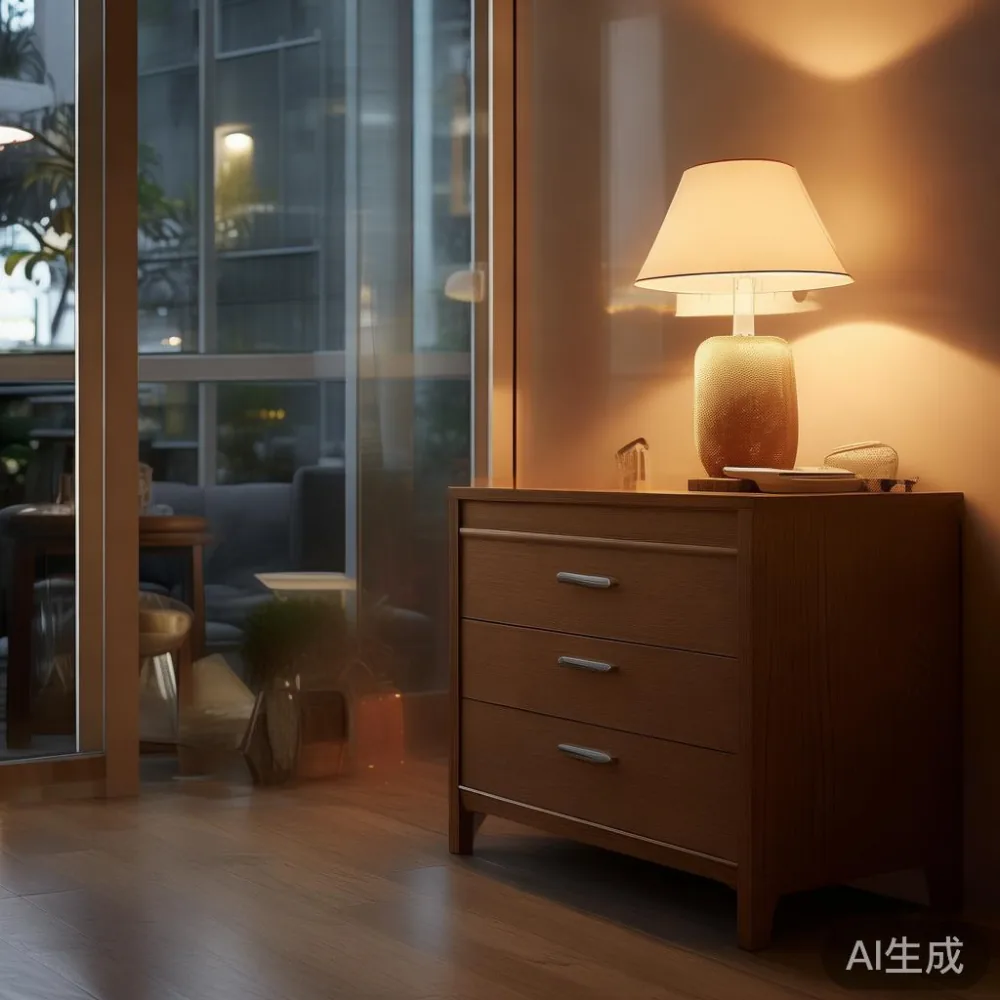
Why Singapore Humidity Is Harder on Wood Than You Think
Singapore sits in a band where the average relative humidity (RH) runs between 78% and 88% for most of the year, peaking during the Northeast monsoon in February and dipping slightly during the drier weeks of late June. Indoor humidity in a Bedok HDB flat with louvred windows and no air-conditioning at night often sits between 75% and 85%. Solid wood is hygroscopic — it absorbs and releases moisture until it reaches equilibrium with the surrounding air. When RH rises, the wood cells swell; when RH falls, they shrink. Over 24 hours, the moisture content (MC) of an unprotected oak tabletop can move from 8% to 16% and back again across the monsoon shift.
For context, furniture makers kiln-dry solid oak to roughly 8% MC for temperate markets and to around 10% to 12% MC for tropical climates like ours. A solid wood sofa frame, a dining table, or a wardrobe that was built for a 9% MC target and then placed in an 85% RH room will slowly absorb moisture until it reaches roughly 17% to 19% MC. That is well past the 14% threshold above which cabinetmakers start seeing joint failure, drawer swell, and surface checking.
What Humidity Actually Does to a Solid Wood Sofa, Bed Frame, and Wardrobe
I keep a small moisture meter in my delivery van, and last month I tested a client's existing teak bed frame in a Yishun condo that had been in place for 14 months. Readings on the side rail were 16.2% MC; the underside of the slats, which had less airflow, read 18.4%. The owner complained that the drawers on his matching wardrobe no longer closed smoothly. That is textbook expansion. Solid wood moves mostly across the grain, not along it, so a 200 cm wide oak panel can gain 4 mm to 6 mm of width when humidity climbs by 20 points — enough to wedge a drawer, bind a door, or push a marble table top off its alignment pins.
Here is what I see most often in Singapore homes:
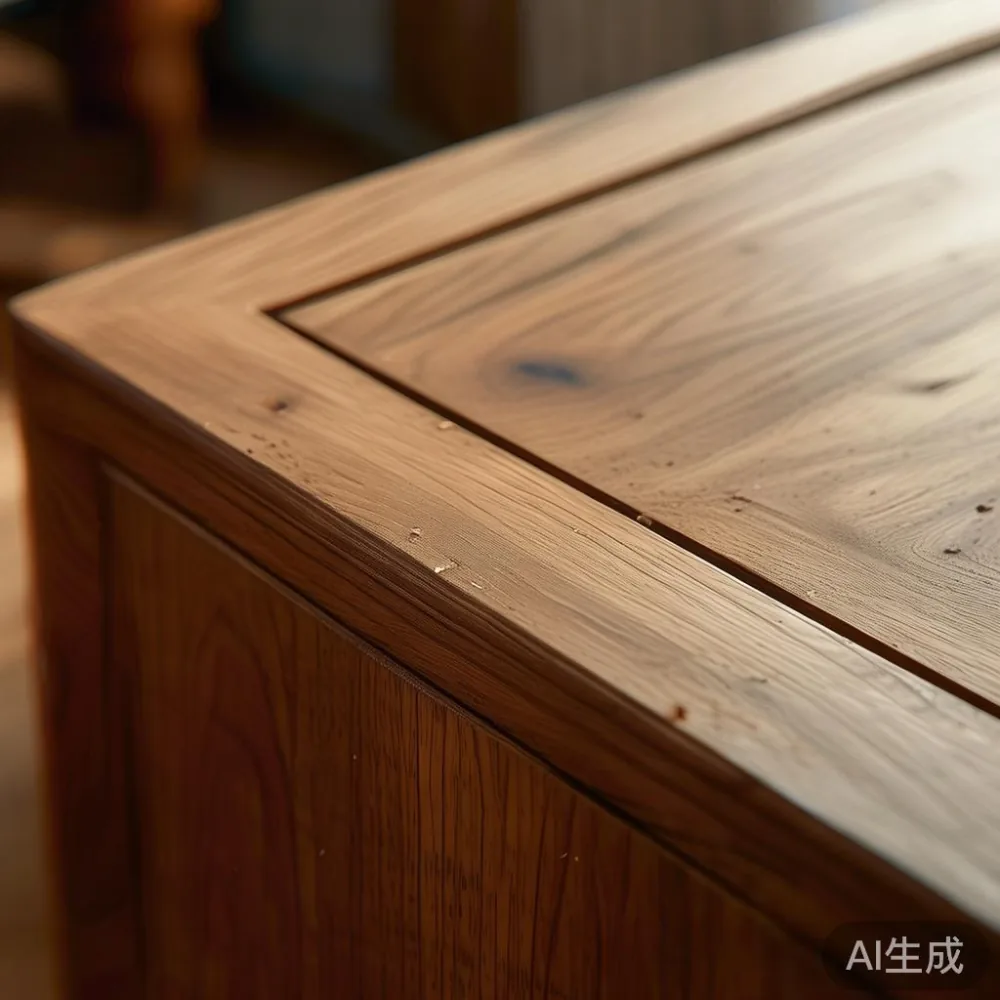
1. Sticking drawers on wardrobes. The side panels swell 2 mm to 4 mm, the drawer face no longer has its 1.5 mm gap, and the drawer has to be planed. This is the most common complaint after the December to February wet spell.
2. Surface mildew on upholstered panels. A solid wood sofa frame with linen or cotton blend fabric cushions sitting in a 80% RH room will pick up surface mildew within 48 hours if a wet towel is left on the arm. Fabric care matters here — cushions need to be rotated and aired weekly, and any spill must be blotted, not rubbed.
3. Hairline cracks on nightstands and table leaves. When a 9% MC piece is delivered into an air-conditioned bedroom set to 24 °C and 55% RH, the top loses moisture too fast. The result is a 0.3 mm to 0.5 mm split along the grain, usually at the breadboard end of a dining table.
4. Veneer lifting on engineered panels. Plywood-backed wardrobe doors and MDF nightstand drawer bottoms are the weakest link. Solid wood tolerates a 6% MC swing; plywood tolerates about 3%.
5. Corrosion on hardware. Singapore's humidity plus salt air from coastal districts like Marine Parade accelerates oxidation on standard zinc hinges; stainless or brass hardware is the only realistic answer for wardrobes and bed frames near open windows.
Is Nordic Bed Furniture Worth It for a HDB Flat?
Yes — provided the wood is kiln-dried to 10% to 12% MC, the slats are at least 2 cm thick with gaps no wider than 7 cm, and the design leaves 10 cm of airflow behind the headboard. Nordic construction philosophy (clean lines, light oak or ash, minimal ornamentation, often labelled as Scandinavian light luxury) lines up surprisingly well with Singaporean condominium interiors because the pale timber reflects light in compact rooms and the restrained proportions suit 1,200 sq ft layouts in Punggol or Clementi. The catch is the moisture content target: a Nordic bed furniture piece built for 7% to 9% MC will move more than a tropical-rated piece during its first monsoon cycle. When buying, ask the dealer for the kiln-dry certificate and the country of origin for the timber. Pieces manufactured in Foshan workshops like MIDHILL are typically dried to 10% to 12% MC, which suits our climate far better than pieces dried for European winters.
How to Control Humidity Indoors — Practical Numbers That Work
Target range for solid wood furniture in Singapore: 50% to 60% RH, with air temperature between 23 °C and 26 °C. That range keeps wood MC stable at roughly 11% to 13%, which is below the swelling threshold and above the cracking threshold.
1. A 12 L/day dehumidifier is the sweet spot. For a 90 sq m HDB flat, a 12 L/day dehumidifier (roughly SGD 220 to SGD 320 at Courts or Harvey Norman) will hold a closed bedroom between 55% and 60% RH during the wet season. Bigger units dry the air too aggressively and pull MC below 8%, which causes shrinkage cracks on dining tables and marble-table stone tops.
2. Run air-conditioning for 6 to 8 hours overnight. A standard 1.5 HP split unit drops indoor RH from 80% to about 60% in 90 minutes. The cheapest insurance against swollen wardrobe panels is to keep the bedroom door closed and the AC running from 11 pm to 7 am.
3. Keep furniture 10 cm to 15 cm off the wall. Airflow behind a wardrobe or a large master bed for balcony units (where one side sits near a sliding glass door) prevents the back panel from trapping moisture. I use a simple 12 mm spacer behind every wardrobe I install; it adds 30 minutes to the job and saves a service call six months later.
4. Use coasters, trivets, and fabric rotation. A cold glass of water left on an unprotected nightstand will leave a white ring within 20 minutes. Linen and cotton blend sofa cushions should be flipped and vacuumed weekly; a basic fabric care routine of brushing, airing for two hours, and rotating every Sunday prevents the musty smell that comes from mildew in the foam core.
5. Avoid placing solid wood furniture directly under ceiling fans. The constant airflow accelerates moisture loss on the top surface and creates a 2% to 3% MC gradient between the top and underside of a dining table — that is what causes cupping.
6. Re-oil or re-wax every 12 to 18 months. A hard wax oil finish (such as Osmo Polyx-Oil, roughly SGD 45 for 750 ml) restores the moisture barrier on oak and ash. French light luxury and American light luxury ranges both lean on oiled finishes rather than polyurethane for exactly this reason — oiled wood breathes with the climate instead of trapping moisture under a film.
The True Cost of Buying Cheap, and What a Real Warranty Looks Like
A flat-pack MDF wardrobe from a local marketplace can be had for SGD 350 to SGD 550. A solid wood wardrobe from a Foshan workshop, shipped by container and including GST 48-piece furniture delivery to your door, lands between SGD 1,800 and SGD 3,400 for a 200 cm three-door configuration. The MDF unit typically fails at the hinge blocks within 24 to 36 months in a Tampines flat. A solid oak or ash wardrobe from a maker with a 10-year structural warranty and lifetime refinishing — both of which MIDHILL offers — has a realistic service life of 25 to 35 years in Singapore. Divide SGD 3,000 by 30 years and you are paying SGD 100 a year for a piece that holds its value; divide SGD 350 by 3 years and you are paying SGD 117 a year for a piece that ends up in a rubbish chute.
Delivery logistics matter as well. A typical HDB corridor is 1.2 m wide; a lift interior is roughly 1.1 m by 1.4 m. A fully assembled 220 cm dining table will not fit in either. The smarter suppliers ship flat-packed with the legs detached, deliver within 48 hours of dispatch for Singapore stock, and include a team that does the on-site assembly in 35 to 60 minutes. Always check whether the quoted price includes lift-access delivery, GST (9% in 2025, moving to 9% again in January 2026 after the budget cycle), and disposal of the packaging.
What I Check During a Site Visit Before Recommending a Piece
When a client messages me about a bed frame or a dining table, I ask for three photos and one measurement before I quote. The floor plan (so I can see the lift, corridor, and door widths), the wall where the wardrobe or headboard will sit, the window orientation (so I know whether afternoon sun hits the piece), and the ceiling height. Standard HDB ceiling is 2.6 m; newer BTOs in Punggol and Sengkang push to 2.8 m. A 220 cm tall wardrobe fits in the older ceiling with 40 cm of clearance; in a 2.8 m ceiling you can go to 240 cm. I also bring a hygrometer to the site visit — a SGD 25 unit from any neighbourhood shop — and log the RH at 9 am, 1 pm, and 9 pm over 48 hours. That data tells me whether the client needs a dehumidifier or whether the natural ventilation in the unit is already managing moisture well enough that an oiled finish will be sufficient.
For dining tables, I always check the distance between the table edge and the nearest wall. You need at least 90 cm for a chair to pull back comfortably; in a compact HDB dining area that often means a 140 cm to 160 cm table for four, or a 180 cm extendable table that seats six when the 50 cm leaf is inserted. Marble tops add weight — a 160 cm marble table weighs 240 kg to 280 kg versus 95 kg for solid oak — so the floor load matters in older HDB blocks where the design load is 1.5 kN/sq m.
Common Questions Singapore Homeowners Ask Me
"Should I oil or wax my new dining table?" Hard wax oil. It penetrates 0.3 mm to 0.5 mm into the oak, lets the wood breathe with the humidity cycle, and is easy to spot-repair. Wax sits on the surface and turns cloudy in high humidity.
"Can I put a solid wood bed frame against the air-con wall?" Yes, but leave a 10 cm gap behind the headboard. Condensation on the back panel of a wardrobe or bed frame is the leading cause of black mildew spots.
"How long does delivery from Foshan take?" For stocked SKUs, 14 to 21 days by sea to Singapore port, plus 2 to 3 days for last-mile delivery and assembly. Custom pieces run 35 to 50 days. Both lead times assume the container is consolidated with a Singapore number — shipping a single 1.2 m wardrobe frame as a full container load is not economical below 8 to 10 cubic metres.
"What about post-modern light luxury styling — does it survive Singapore?" Yes. Post-modern light luxury tends to use mixed metals (brushed brass, blackened steel) with solid timber and marble accents. The metal hardware is fine if it is stainless or solid brass; plated steel will pit within 12 to 18 months in a Marine Parade or East Coast unit.
"Do I need to worry about my fabric sofa in the wet season?" Yes — fabric care on a sofa in Singapore is not a one-time setup. Vacuum weekly with an upholstery attachment, rotate the cushions every Sunday, and run a dehumidifier or air-conditioner for at least 6 hours a day. A linen-blend cover that is left damp for 24 hours in 85% RH will pick up surface mildew you cannot fully remove without professional cleaning at SGD 80 to SGD 140 per seat.
A 30-Day Plan for a New Piece of Solid Wood Furniture
Week 1: Place the piece in its final position with 10 cm to 15 cm of rear clearance. Let the wood equalise with the room for 5 to 7 days before the first oil application. Measure RH at the same hour daily.
Week 2: Apply the first coat of hard wax oil. Buff after 20 minutes, leave 12 hours, apply the second coat. Keep the room ventilated — Singapore's ambient humidity means drying takes 18 to 24 hours rather than the 8 hours printed on European tins.
Week 3: Set up a fabric care routine for any upholstered panels — brushing, vacuuming, airing. Check all hardware for tightness; humidity often loosens dowel joints by a fraction of a millimetre.
Week 4: Re-check RH readings. If you are still above 65%, run the dehumidifier overnight for the next 30 days. By the end of month one, your furniture should be stable, your indoor climate controlled, and your fabric care routine automatic.
Singapore will always be humid. The wood will always move. But with the right kiln-dried timber, the right finish, the right gap behind the wardrobe, and a SGD 25 hygrometer on the wall, you can keep a solid wood sofa, a marble-top dining table, a wardrobe, a nightstand, or a large master bed for balcony living looking the same in year ten as it did on delivery day. That is the quiet value of buying from a maker who understands tropical climate, ships with a proper warranty, and is still around to refinish the piece when you decide in 2035 that you want a different colour.