Furniture Warranty Reading Tips for Singapore Homes
I keep a small stack of warranty cards in my kitchen drawer, and I have read more of them than I would like to admit. Last month I visited a friend in Tampines who had just taken delivery of a 2.4-metre solid wood dining table for her four-room HDB flat. The delivery team carried it up nine floors in the service lift, and the table looked beautiful against her Scandi-grey walls. Two weeks later she noticed a faint crack along one apron. When she reached for her warranty, she found a one-page document that excluded anything that looked like "natural wood movement." That phrase alone wiped out her claim.
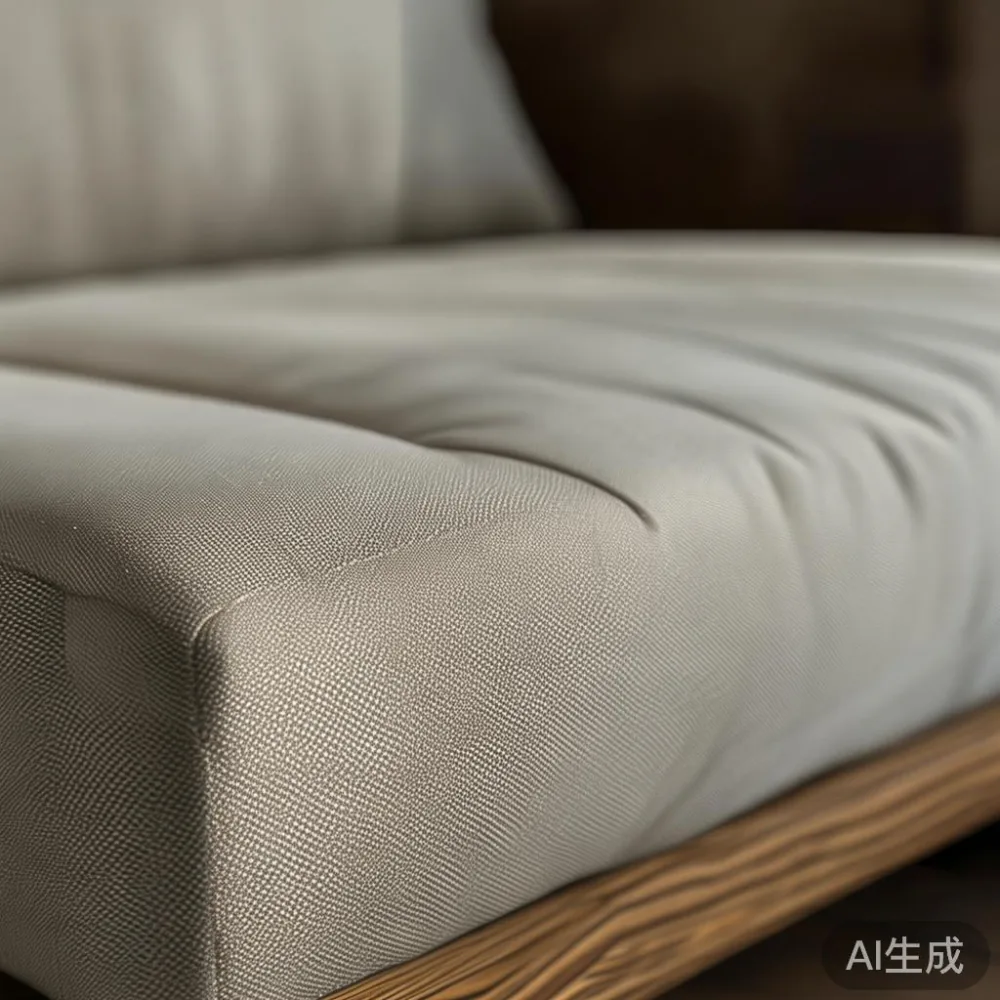
That afternoon, sitting on her new solid wood sofa with a pot of chrysanthemum tea, we went through her warranty line by line. The exercise took 40 minutes and saved her a S$640 replacement. This guide is everything we learned, written for anyone in Singapore buying a bed frame, a wardrobe, a nightstand, a marble table, or any larger piece of solid wood furniture and assuming — incorrectly — that "10-year warranty" means what it sounds like.
What does a furniture warranty actually cover?
A warranty is a contract, not a promise. In practice, a residential furniture warranty covers defects in materials and workmanship under normal household use. "Normal" is the word to watch, because almost every exclusion hangs on it. For a solid wood sofa, that means the frame, the joinery, and the sprung or webbed suspension. It does not mean the cushions softening over time, the cover fading under your east-facing windows in Bedok, or the small splits that appear when the humidity drops from 85% to 60% during a dry February week.

Coverage splits into three layers you should expect to see clearly stated. Structural coverage — frame cracks, joint failures, drawer rails that collapse under load. Finish coverage — peeling lacquer, discolouration not caused by sunlight or cleaning product, and lift on veneer edges. Mechanical coverage — runners, hinges, gas lifts on storage beds, and soft-close mechanisms on wardrobe doors. Read which layer applies to which component, because some Singapore importers offer five years on the frame and only twelve months on everything else.
Why does fabric care matter for a warranty?
Here is the part that surprises most first-time buyers. Fabric care is the single largest source of voided claims on upholstered furniture. A stain on a boucle headboard, dye transfer from a new denim throw, or pet claw damage on a velvet ottoman — almost every manufacturer lists these as non-warranty. If the assessor decides the damage resulted from misuse or improper fabric care, the claim is closed within minutes.
The brands that handle this well spell out an approved fabric care code on the warranty card itself: W for water-based cleaners, S for solvent only, W/S for either, X for professional cleaning only. They also state the cleaning intervals they consider reasonable. Anything outside those intervals, including a one-off bleach accident in your Punggol condo, gives the assessor an exit. Keep your cleaning receipts. Photograph the care code label on the seat cushion before you start using the piece. This is the simplest fabric care habit that protects a warranty.
How long should a warranty really last in Singapore?
Numbers matter, and so does the calendar you measure them on. Most reputable manufacturers offer between three and ten years on the frame of a solid wood bed frame, dining table, or wardrobe. MIDHILL, for example, attaches a ten-year structural warranty to its solid wood collections, which lines up with what you should look for at the upper end of the market. Cheaper imports sometimes quote a "lifetime" figure that is measured against the legal lifespan of the company, not the lifespan of the product. Ask which one applies.
Finish and mechanical components should run at least two years to be considered reasonable for Singapore conditions. Anything under twelve months on a gas-lift storage bed or on a soft-close wardrobe door is a flag. Read the start date carefully. Some warranties start at the manufacturing date stamped on the carton. Others start at delivery. With long sea freight from Foshan, those two dates can sit three months apart, and three months of warranty you did not know you had just disappeared.
What is hidden in the fine print of a furniture warranty?
Five clauses cause 80% of disputes. I have seen each one play out in real Singapore living rooms.
1. The "acts of nature" clause. Covers flooding, lightning, and sometimes humidity above 80%. Singapore averages 75–85% relative humidity year-round, so a clause that voids claims above 80% is, in practice, a clause that voids claims on most days of the year. Push back, or choose a brand that defines humidity ranges based on indoor acclimatised conditions, not outdoor weather data.
2. The "commercial use" carve-out. The moment you work from a Punggol co-living space or run a small homestay from your Bedok maisonette, your residential warranty is gone. If you ever host paying guests at your dining table, declare it upfront.
3. The "transferability" line. Some warranties die with the original buyer. If you move out and leave your solid wood bed frame behind for the next tenant, that next tenant has no coverage.
4. The "freight and labour" gap. A five-year parts warranty that excludes labour is a three-hour callout fee every visit, often S$90 to S$160. MIDHILL's approach of bundling parts, labour, and on-site assessment into the warranty is the cleaner model and worth comparing against.
5. The "pro-rata" trap. Some warranties cover 100% in year one, 75% in year two, and so on. By year five you are paying 50% of a replacement solid wood dining table even though the frame failed.
Are delivery damages covered, and who pays for the lift?
Delivery damage is its own category, and the rules are different. Most Singapore furniture contracts cover transit damage for seven days from delivery. Photographic evidence from the moment of unboxing, with the carton still present, is the standard requirement. I learned this the hard way with a marble table I bought for my own place in 2022: a small chip on the corner appeared on day three, and the courier's insurer only honoured the claim because I had kept the foam wrapping and photographed the unboxing in sequence.
Lift access is the part locals talk about less and regret more. A standard HDB passenger lift in Tampines or Bedok measures roughly 1.1 m wide by 1.4 m deep, with a door opening of about 0.9 m. A 2.2 m solid wood wardrobe will not fit through it assembled. A king-size solid wood bed frame often will not either. Walk-up corridors in older blocks add another 15 cm of turning clearance you may not have. The warranty you read on a laptop will not protect you if the piece physically cannot reach your flat. Measure the lift, the corridor bend, and the front door before you order, and ask the seller for the packed carton dimensions, not the bare furniture dimensions. Reputable Foshan exporters such as MIDHILL publish packed dimensions on request and will flag tight access for you in advance.
How do I style a French headboard in a small apartment?
Pick a low-profile French headboard under 110 cm tall in an upholstery that disappears into the wall — oatmeal linen, soft putty, or warm bone — and your HDB master bedroom will read twice as wide without losing a single centimetre of floor space. That single sentence is the answer, and the rest of this section is the reasoning behind it.
French light luxury styling leans on silhouette and proportion, not ornament. A tall, carved, dark mahogany headboard swallows a small apartment. A low, padded, neutral headboard reads as architecture. Pair it with bedding in two tones, not five. A single marble table or a slim nightstand in raw oak on either side keeps the eye horizontal. One reading lamp with a warm 2700K bulb. One piece of art, hung 25 cm above the headboard, not centred on the wall. That is the whole vocabulary. In a 12-square-metre Punggol bedroom, restraint is what makes the French headboard feel expensive rather than crowded.
Post-modern light luxury or French light luxury — which warranty terms change?
Style choice affects the warranty in two practical ways. French light luxury pieces tend to use more upholstery, more carved trim, and more mixed materials, including marble table tops and brass accents on nightstands. Each material layer adds an exclusion. Marble is excluded for staining and chipping. Brass is excluded for patina, even though patina is what you bought the piece to develop. A French headboard with boucle fabric brings the full fabric care exclusion set into play.
Post-modern light luxury leans cleaner: solid wood frames, low-gloss lacquers, fewer trims. The warranty on these pieces tends to be simpler because the exclusion list is shorter. American light luxury sits between the two, with more engineered components and more mechanical warranty clauses — gas-lift storage beds, soft-close drawers, integrated USB ports. If you want fewer warranty grey zones, post-modern light luxury is the easier category to read.
What is a fair Singapore price for a 10-year warranty on solid wood?
Compare apples with apples. A queen-size solid wood bed frame in rubberwood with a ten-year structural warranty, lifetime refinishing service, free delivery above S$350, and a 14-day return window lands in a S$1,400 to S$2,200 range for landed pieces. Add assembly, and another S$80 to S$150. A solid wood sofa in a similar spec sits between S$2,200 and S$3,800 for a three-seater. A six-seater solid wood dining table in rubberwood with chairs commonly sits at S$2,600 to S$4,200, depending on the marble insert or extension leaves. These figures exclude GST, which is 9% in 2026 and will move — keep that line item on the invoice separate so warranty claims are not delayed by tax reconciliation.
Nordic rubberwood entryway furniture, including slim shoe cabinets and benches, is one of the categories where the warranty language is most often hidden in retailer terms rather than manufacturer terms. Read both. The retailer may add a 7-day exchange layer that sits on top of the manufacturer's structural cover, and that is usually the friendlier of the two for early issues.
What should I do on delivery day to protect my warranty?
Run a 15-minute checklist. Photograph every face of each carton before opening. Open the carton in frame, on video, with the delivery driver present if possible. Count the pieces against the packing list. Photograph the serial number or production date stamp on the underside of the solid wood dining table or inside the wardrobe door. Photograph the fabric care code on every upholstered component before any protective wrap is removed. Keep the cartons for fourteen days, not seven, because most 14-day return windows overlap with the transit damage period and the boxes are your proof.
Retain the delivery order, the GST invoice, and any email confirmation of the warranty start date. File them together in a folder named "furniture — year purchased." Future-you, standing in front of a cracked drawer rail in year six, will be grateful.
Questions buyers forget to ask the sales consultant
Ask who honours the warranty — the Singapore retailer, a local service agent, or the Foshan factory directly. Ask how many claims the brand has processed in Singapore in the past twelve months. Ask whether refinishing counts as a warranty repair or as a paid service. Ask what happens if the model you bought is discontinued in year four of your warranty. Ask whether the warranty travels with the piece if you move to a condo in District 15 or back to a landed house in Bukit Timah. Ask whether weekend and evening callouts are covered or billable.
These nine questions take four minutes to ask and save months of friction later. The sales consultant's answer tells you almost as much as the warranty document itself. Confident, specific answers are a good sign. Vague answers dressed up in long sentences are the same red flag my Tampines friend saw on page one of her warranty and learned to read by page three. 1604