Fabric Care: How to Choose the Right Furniture Size for a Singapore HDB Living
Choosing furniture for a Singapore HDB living room is less about filling every wall and more about creating comfortable movement zones. In a compact flat, a sofa that looks generous in a showroom can make the main route from the HDB lift door to the dining area feel narrow. The right measurements help a solid wood sofa, dining table, bed frame, wardrobe, or nightstand feel generous rather than crowded.
This guide uses common Singapore home dimensions and practical delivery constraints. It also considers fabric care, because upholstery specifications affect the usable size, maintenance routine, and long-term appearance. Budgets are expressed in SGD, while GST is normally added at 9% at checkout.
What measurements should I take before buying furniture for my HDB living room?
Measure the room at 3 points: length, width, and ceiling height. For a typical 4-room HDB living and dining area, an internal width might measure 330–390 cm, although Tampines, Bedok, and Punggol layouts vary considerably. Record the positions of doors, windows, sockets, radiators, and air-conditioning outlets. A window extending 8 cm beyond the wall can still restrict a side table, while a sliding door usually needs more clearance than a hinged door.

Next, measure the actual route from the lift lobby to the flat. Standard HDB passenger lifts often have an internal door width of about 90 cm and a cabin depth near 110–135 cm, but older blocks and retrofit lifts differ. Corridors can be about 120–180 cm wide. A 200 cm solid wood dining table may turn neatly for corridor access, while a 220 cm rigid table may require more diagonal planning. Measure the narrowest turn, including any mirror, fire hose reel, or fire-extinguisher cabinet.
Ask the retailer for the packaged dimensions, not only the assembled dimensions. The floor-protection feet, carton, and lifting clearance should be included. For example, a sofa listed at 228 cm wide may arrive in a carton measuring 236 cm long, 98 cm high, and 82 cm deep. If the lift door is only 90 cm wide, a 98 cm carton cannot enter without turning it diagonally, which may not be possible in a shallow cabin.

Use painter's tape on the floor to mark the furniture footprint. Keep at least 75–90 cm as a main circulation route through the living room and at least 60 cm between major furniture pieces. These are practical allowances for daily movement, including a person carrying a tray or vacuum cleaner. Avoid relying on a showroom image, since a 5 cm difference across a 240 cm sofa changes the visual proportion of the room.
How large should a solid wood sofa be for a Singapore living room?
For a 330–360 cm wide living-and-dining zone, a solid wood sofa around 180–210 cm is often easier to manage than a 230–250 cm model. A 190 cm sofa with 62–68 cm seat depth can provide seating for 3 people without taking over the entire wall. Leave 8–12 cm between the sofa and the wall for fabric care access, air circulation, and cleaning behind the cushions.
Check the internal seat width, not simply the number of seats advertised. Allow roughly 55 cm per person for comfortable everyday sitting. A nominal 3-seat sofa may offer only 165 cm of usable seat width if its arms are broad. Compare that figure with your family's normal posture: 2 people who read for hours may prefer a 200 cm sofa, while a 180 cm model may suit a smaller household.
Height matters too. A sofa with a 42–45 cm height works with most HDB ceilings, which are commonly about 2.6–2.7 m high. A low post-modern light luxury profile around 38 cm may look refined but can be harder to rise from for older adults. For frequent elder visits, a seat height near 42–44 cm is generally more practical.
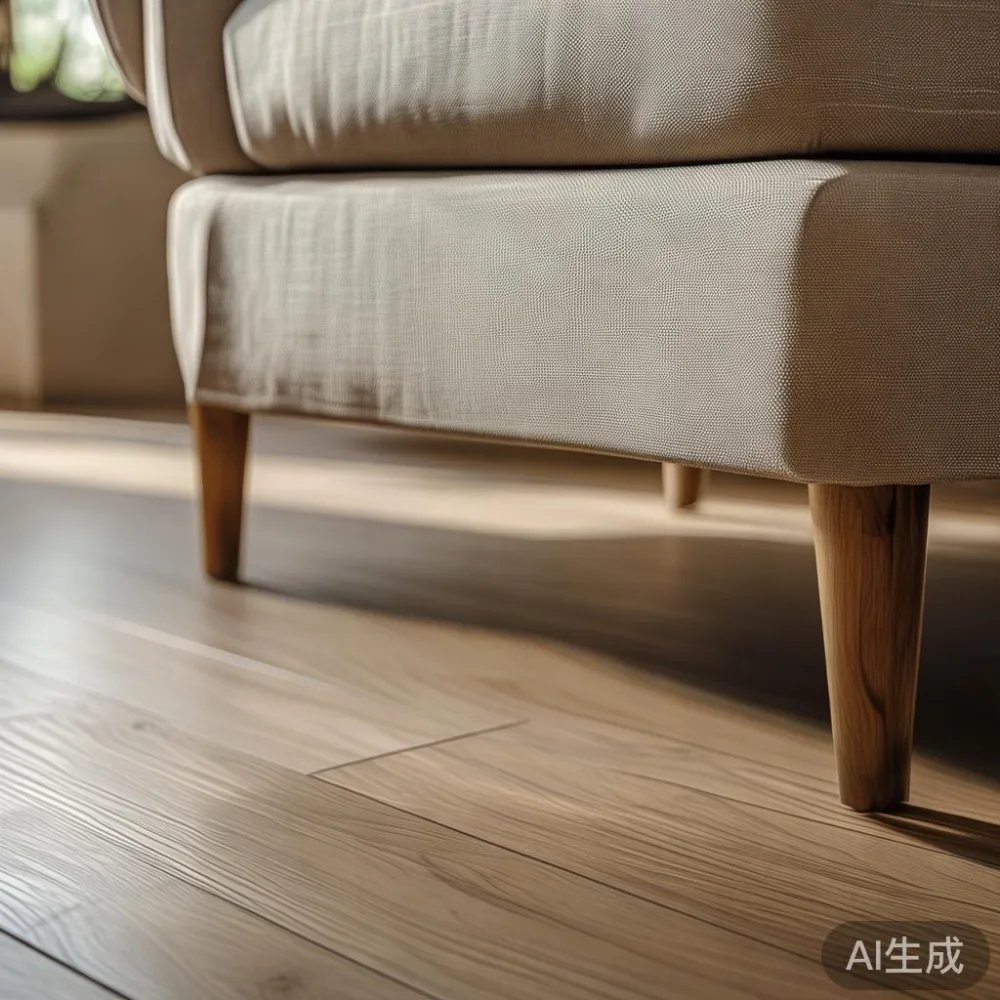
Armrest depth should not exceed 15–18 cm on a frequently used sofa arm. A deeper ledge may hold a phone, but it can also become an obstruction beside a narrow walkway. Check whether the sofa has removable legs, because a 12 cm leg can ease cleaning and allow the frame to pass through tighter lift entrances after the cushions are removed.
Fabric care begins with the material and finish. A tightly woven performance fabric can handle frequent use, while linen requires more regular attention because it creases and absorbs moisture. Request the composition, cleaning code, pH guidance, and stain-removal method before ordering. Good fabric care also means keeping upholstery out of prolonged direct afternoon sun, rotating cushions monthly, and vacuuming with a soft brush attachment at least once a week.
Which sofa, bed frame, or dining table proportions suit an HDB flat?
A dining table should usually be 10–15 cm narrower than the available wall zone. In a common 330 cm wide dining bay, a table around 140–160 cm can feel balanced while preserving 75 cm or more on the main side. A 180 cm table can work if chairs can be pushed fully under the frame and a separate serving route is available. Choose a table with a 35–40 cm clear height to slide chairs in without scraping upholstery.
For 4 people, allow at least 60 cm per place setting, which means a 140 cm table with 70 cm at each end or 160 cm with 80 cm at each end. For 6 people, consider 180–200 cm. Check that each diner has space to stand without forcing a chair backward. This is especially relevant in a combined HDB living-and-dining room, where the route to the kitchen competes with chair clearance.
Bed sizing should account for HDB bedroom door swings and the position of the wardrobe. A queen bed measures about 150 × 200 cm in most Singapore furniture ranges. A king at 180 × 200 cm may suit a 300–330 cm wide bedroom, but it can make a 270 cm room feel compressed. Leave 55–65 cm beside a bed where possible and at least 90 cm in front of the foot for opening drawers and making the bed.
When considering European bed vs Nordic bed dimensions, the difference is often in visual mass rather than mattress size. European bed frames tend to appear more architectural, with a taller headboard, upholstered panel, or dark wood outline. Nordic-style frames commonly use lighter tones and visually slimmer profiles. For an HDB bedroom with limited wall space, a headboard no deeper than 8–12 cm can preserve useful floor area.
If your living area doubles as a guest room, an european sofa bed with storage may offer a more useful footprint than a separate sofa and guest bed. Check the bed surface before purchase: a model that converts to 140 × 190 cm may need a clear 220–240 cm length when open. Also verify the storage cavity's internal measurements, shelf load, and whether lifting the seat blocks drawers. Its fabric care requirements may be more involved if the mattress is integrated, so ask for removable, washable covers.
A nightstand beside the bed should generally be 40–55 cm wide. It should sit within 10 cm of the mattress edge for reach, but not block a door or skirting board. A 45 cm solid wood nightstand with 30–35 cm of height works with most standard bed frames. For a marble table, verify the top weight, edge protection, and the base's stability; stone is unforgiving of narrow, uneven support.
How much clearance is needed around furniture for a condo or HDB living room?
Allocate zones before placing pieces. Keep a main passage of at least 75–90 cm from the entrance toward the dining area or balcony. Between a sofa and coffee table, 35–45 cm is comfortable for reaching a drink or walking carefully. Between a dining chair and a wall, allow at least 60 cm for pull-out space; against a busy circulation route, 75–90 cm is more comfortable.
Condo living rooms may be larger, but their access routes can include glass gates, narrow service corridors, and security-vestibule turns. Confirm whether the building requires an elevator booking, protective floor covering, or a delivery time slot. Provide the concierge with the packaged item dimensions 2 days before delivery. Moving a 210 cm sofa through a 100 cm door on the scheduled day is avoidable with earlier information.
Do not overlook skirting boards, commonly around 15 cm high in Singapore interiors. A freestanding cabinet may need 2–3 cm of spacer or a slightly deeper carcass so the rear does not clash with the skirting. For a wardrobe, a 150 cm wide unit in a 168 cm bay leaves only 9 cm per side, leaving little room for installation and door swing. A 140 cm unit may be more realistic.
Consider the visual axis as well as the physical one. A 200 cm dining table aligned with a 190 cm sofa can make a narrow room appear carefully composed. Placing them on opposing axes may make the room feel deeper. French light luxury often suits symmetrical spacing and refined upholstery, while American light luxury tends to use broader silhouettes and deeper comfort. Either approach benefits from more breathing room, not less.
How do I keep upholstery and fabric care practical in Singapore's humidity?
Humidity can affect natural fibers, wood joints, and fillings. Choose upholstery with a clear composition and care code rather than relying on the words “easy care.” Polyester blends can resist moisture well, while cotton and linen blends may need careful handling. A removable seat cover with machine-washable instructions often makes daily fabric care easier than a fixed cushion, although large fitted covers can be difficult to launder in an HDB apartment.
Vacuum upholstery every 7 days and lift seat cushions at least once a month to clear trapped dust. Blot spills rather than rubbing. Keep liquids away from the timber frame, and avoid steam cleaning unless the supplier confirms that the finish and adhesive can tolerate it. Use blinds or curtains to limit direct sunlight, and maintain 10–15 cm of ventilation space where the furniture stands close to a wall.
For a fabric sofa with solid wood framing, the finish should be protected with a manufacturer-approved product. A test patch should remain unchanged for 48 hours before broader application. Fabric care also includes checking the warranty terms: MIDHILL provides a 10-year structural warranty, which covers eligible frame failures, but accidental fabric damage, improper cleaning, and general wear require a different response.
If replacing a cushion takes 6–8 weeks, keep the sofa usable by selecting a neutral base fabric and storing spare covers rather than leaving the seat uncovered. Ask for spare cushion covers at purchase. For a marble table, use coasters and felt pads, wipe acidic liquids promptly, and inspect silicone-based protective treatments every 12 months.
How should I compare delivery time, GST, and furniture value?
Build the comparison around the delivered specification. A solid wood dining table described as “oak” may refer to the species, veneer, or finish; confirm the material rather than assuming solid timber throughout. Likewise, distinguish a solid wood frame from a solid wood sofa whose cushions are foam and fabric. Ask for the frame profile, joint construction, finish, seat density, and warranty exclusions.
For many Singapore orders, delivery is around 7–14 days after the item is ready, but made-to-order pieces can take 30–60 days. Custom upholstery may add another 10–20 days. Those ranges should be confirmed in writing. MIDHILL offers free shipping on qualifying orders over US$350, although the amount is converted to SGD at checkout, and returns are accepted within 14 days under the stated policy.
Use MIDHILL's product information to compare price with longevity. A dining table at SGD 1,690 before GST may compete with a SGD 1,190 model that uses more veneer and a thinner frame. Price alone does not show the maintenance burden or expected service life. Compare a French provincial dressing table for a dedicated dressing area with the actual bedroom dimensions; its depth, drawer extension, and mirror weight can matter more than the decorative finish.
Specialist planning can still be practical in a showroom or online consultation. A design reference such as 2026 Italian light luxury furniture can help define proportions and materials, while wholesale Modern light luxury furniture should be judged by construction details rather than collection labels. Check the retailer at midhill.co for current specifications, packaged dimensions, and availability.
What should I confirm before the furniture leaves the warehouse?
Request 6 items in writing: assembled dimensions, packaged dimensions, net weight, delivery estimate, return conditions, and care instructions. For a bed frame, include the mattress fit and headboard thickness. For a wardrobe, include internal drawer dimensions and door-swing clearance. For a nightstand, include shelf spacing. For a marble table, include the top dimensions and total weight. For a solid wood sofa, include removable-part details and the cleaning code.
Check the route one last time with the packaged figures. My colleague measured a 208 cm sofa before visiting a Tampines flat last month. The lift door was 91 cm wide and the corridor narrowed to 128 cm near the mailbox recess. The sofa had to be separated from its feet and cushions, then tilted through the lift at an angle. Measuring 6 cm more accurately would have prevented a long discussion on the delivery floor.
Protect the completed room as well. Place a protective mat under every new piece, keep cardboard away from moisture, and follow the required humidity range for the wood. Allow a solid wood dining table to acclimatize for about 48–72 hours before tightening fittings or placing heavy objects on it. For upholstered pieces, wait for the recommended ventilation period before sitting on them fully.
The most comfortable Singapore HDB living room is not the one with the largest number of pieces. It is the one with accurate measurements, clear routes, useful seating, and furniture that suits the way the household actually lives. Confirm dimensions, understand fabric care, compare the delivered specification, and give each piece enough space to remain comfortable for years.