Small Apartment Styling in Singapore: How to Furnish Without Making It Feel Crowded
Last month I visited a 689 sq ft three-room HDB flat in Bedok with my colleague, helping a young couple pick pieces for their new home. The corridor outside measured 1.2 m wide, the lift cabin 1.4 m deep, and the main door 0.9 m wide. Every measurement mattered. Within three hours we had shortlisted a solid wood sofa 180 cm long, a 120 cm round dining table, and a bed frame that raised 28 cm off the floor for hidden storage bins. The flat went from a bare white box to a calm, layered space that breathed. That visit is the basis for everything below, written for anyone furnishing a compact Singapore home and trying to keep it from feeling cramped.
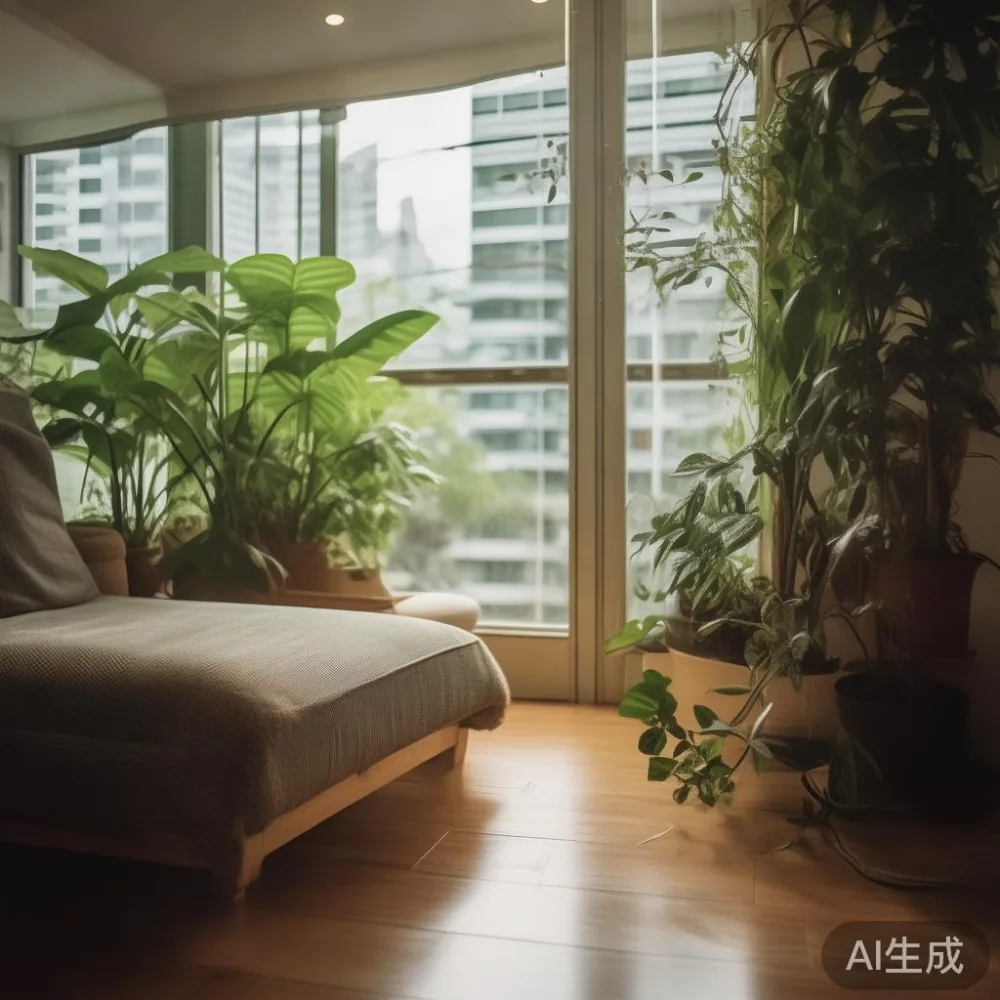
Why "small" in Singapore is a different equation than anywhere else
Singapore HDB flats and most new launch condos sit between 450 and 900 sq ft. A typical three-room layout in Tampines or Punggol leaves you with a living room of about 3.2 m by 3.0 m once the kitchen and a built-in wardrobe claim their share. That is roughly 9.6 sq m of usable living space, and every centimetre competes for attention. Stack that against the items you actually want — a sofa, a coffee table, a television, a dining table for four, and at least one wardrobe — and the math gets uncomfortable.
On top of the floor area, you are working with infrastructure. Service lift openings in many HDB blocks run 0.9 m wide, and the internal lift cabin depth is often 1.4 m. A standard three-seater sofa at 220 cm will not enter through the service lift door diagonally. Even the main lift, where the inner shaft is roughly 1.6 m wide and 1.5 m deep, struggles with anything longer than 200 cm unless the courier tilts it and clears the door swing. Knowing this before you fall in love with a piece on a showroom floor saves you a wasted delivery fee and a 14-day return headache.
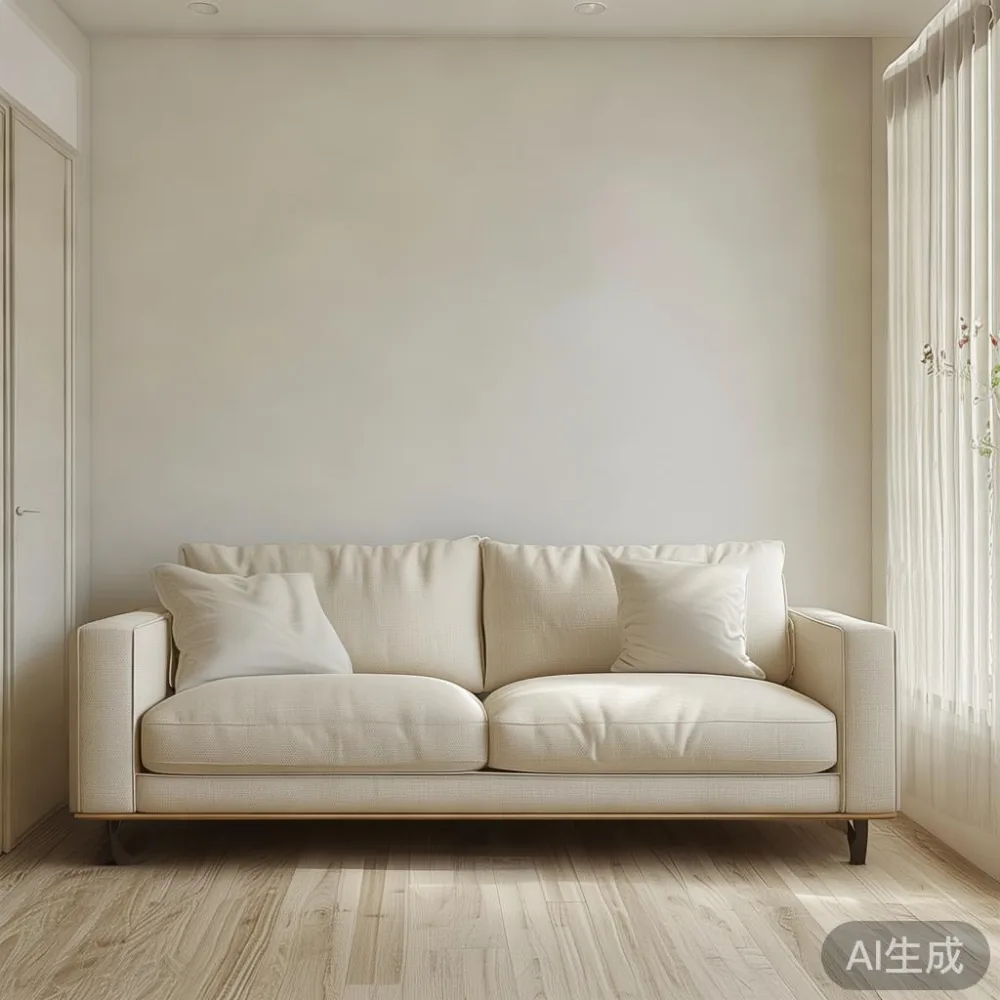
None of this means small homes need to look bare. The trick is to design the negative space as deliberately as the furniture itself. A 90 cm two-seater sofa can feel more generous than a crammed 200 cm one if you leave 60 cm of breathing room on either side and stop the piece at least 10 cm short of the wall.
What "light luxury" actually means in a flat under 800 sq ft
Light luxury is a finish level, not a size. The phrase covers French light luxury, American light luxury, and post-modern light luxury — three design families that share one principle: refined materials used in restrained quantities. Think a slim solid wood sofa frame in white oak with one row of button tufting, rather than a bulky rolled-arm unit dressed in heavy velvet. Think a marble table with a 12 mm sintered stone top on a stainless steel base, not a 90 kg marble slab that requires four men to push across a vinyl floor.
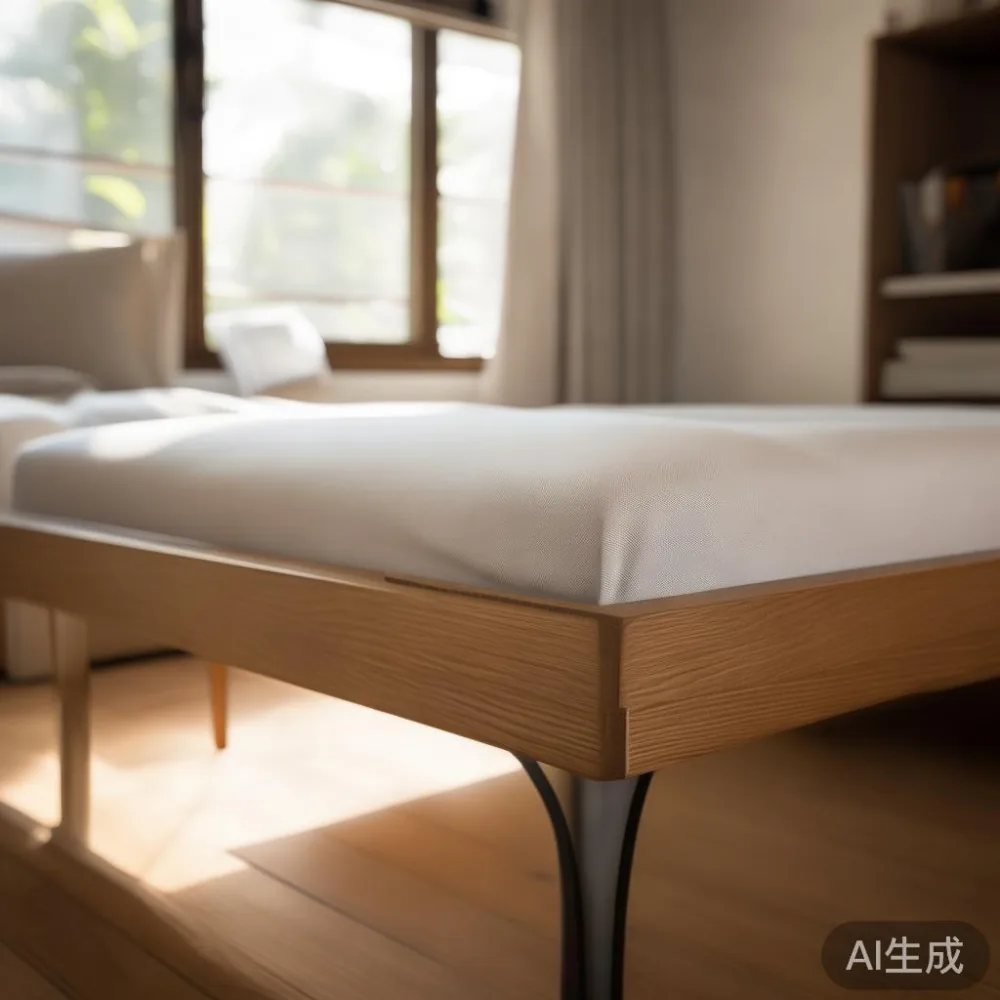
In a compact home, light luxury earns its keep because each piece carries a small number of high-quality details. A light luxury dining table, for example, uses a 4 cm thick ash top with tapered legs at 38 mm diameter — visually quiet, structurally stiff, and light enough at 28 kg to be repositioned by one person during a weekend rearrangement. The same logic applies to wardrobes. A Modern light luxury wardrobe built with 18 mm E0-grade panels and 304 stainless steel handles looks substantial without tipping past 180 cm in height, which keeps it inside the standard 2.2 m HDB ceiling with comfortable clearance for a ceiling fan or pendant light.
If you browse for modern Italian light luxury furniture, you will notice the silhouettes lean elongated and slim. Italian designers work with tight floor plans by trade. Their dining chairs often weigh 4.2 kg, their console tables keep a 30 cm depth, and their coffee tables stay around 90 cm by 60 cm — proportions that slot into Singapore layouts without forcing you to remove a door or accept a constant bruise on your shin.
How do I choose a sofa that won't swallow my living room?
Start with three numbers: the door width, the corridor width, and the lift cabin. Anything taller than 205 cm or longer than 195 cm requires a service lift booking, which in many HDB blocks runs only Monday to Friday 9 am to 4 pm and adds roughly S$80 to a standard delivery. For the couple in Bedok, we picked a 180 cm three-seater sofa in grey performance fabric at 68 cm total depth — small enough to enter the main lift at a 15-degree tilt, deep enough for a 1.78 m adult to sit cross-legged, and shallow enough to leave 90 cm of walking space behind it.
Fabric choice matters more than most people expect. Linen and boucle look soft in showrooms but in a non-airconditioned HDB corridor they pick up dust within 14 days. Performance weaves rated at 40,000 Martindale cycles handle daily use without pilling for around eight years — close to the ten-year structural warranty you get on a solid frame from a proper maker like MIDHILL. Performance fabric also simplifies fabric care: a damp microfibre cloth lifts 90 percent of household stains without specialty cleaners, which matters when you share a flat with kids or a cat that thinks the sofa arm is a scratching post.
Watch for two specific details. Seat height should sit between 42 cm and 46 cm so you can place a dining chair or accent stool flush against the sofa for overflow seating. Arm height should stay under 62 cm so it does not block sightlines across the room — a small thing that makes a 9 sq m living space feel twice the size.
Sizing a bed frame for storage without losing airiness
A queen bed frame at 152 cm by 188 cm is the practical maximum for a 10 sq m bedroom in Punggol or a master in a two-bedder condo. Anything larger eats the wardrobe wall and forces you to side-load laundry baskets through a 30 cm gap. The frame should sit 28 cm to 32 cm off the floor so flat storage bins (60 L each, roughly S$22 apiece at homeware shops) slide underneath.
Headboard height is the second decision. A 95 cm headboard gives you room to lean back with two pillows without touching the wall paint — important because fabric care on upholstered headboards is mostly about preventing head oil from transferring to the wall. If you are not ready for fabric, go with a low 65 cm headboard in solid ash with a 4 cm chamfer on the top edge. It reads as quiet and is wipe-clean.
The nightstand needs to be small. A 40 cm wide unit with one drawer handles a phone, a 250 ml water bottle, and a book — the three things most people actually keep within reach. Two of those versus one wide unit gives you symmetrical placement, even in a 2.8 m wide bedroom. Look for nightstands weighing under 14 kg; heavier units tend to mean cheap MDF with thick paint, and they chip at the corners within the first year. MIDHILL builds nightstands closer to 11 kg with dovetail drawers that survive at least ten years of daily drawer cycles, which is the kind of detail you only appreciate once a competitor's unit starts to sag.
Dining tables and multi-purpose surfaces
For a household of three to four, a round dining table at 110 cm to 120 cm diameter seats four without anyone straddling a table leg. The round shape removes corner trauma in a tight room and improves flow around the edge — children cannot catch their heads on a corner that does not exist. A round light luxury dining table in this size range weighs between 22 kg and 32 kg depending on the base, light enough for one person to flip into a wall corner when the living room becomes a yoga space on Saturday morning.
If you need rectangular seating, keep the table at 130 cm by 70 cm. Two people can sit comfortably on the long side and one on each end, which works for most Singapore families where meals are three-person affairs and guests drop in occasionally. Pair it with dining chairs at 46 cm seat height and 42 cm seat depth — anything deeper pushes the front edge too far under the table when not in use and you lose 10 cm of walkway.
A marble table in this conversation is usually the small coffee table, not the dining table. A sintered stone top at 12 mm thickness on a steel sled base gives you the look of marble without the 80 kg weight that would crack your floor tiles. Coffee tables should be 90 cm to 100 cm long and 50 cm to 60 cm deep, sitting 5 cm lower than the sofa seat, which translates to 38 cm to 42 cm total height. Anything taller reads as a dining table; anything lower feels like a footrest.
Wardrobes, mirrors, and the craft of making a small room read bigger
A wardrobe in a Singapore bedroom usually fights with a wall that already holds a window or an air-con trunking. Floor-to-ceiling is tempting but blocks airflow from the air-con unit at 2.1 m. A 200 cm tall wardrobe leaves a 20 cm soffit that you can use for storing suitcases or as a shadow gap with a hidden LED strip on a warm 2700K setting — the soft uplight doubles the perceived ceiling height after dark.
Depth matters more than most retail listings admit. A 60 cm deep wardrobe fits standard 55 cm hangers with 2 cm clearance at the door. Anything shallower than 55 cm folds your shirts. Anything deeper than 65 cm eats into the room without giving you more usable hanging space, because hangers cannot reach deeper than 55 cm regardless. The best Minimalist wardrobe for 2026 sits at 60 cm deep, 180 cm to 200 cm tall, and 120 cm to 180 cm wide — three sliding doors on soft-close tracks, no external handles to catch on a bedsheet.
Mirrors behave like furniture, not decoration. A 160 cm by 60 cm mirror on the wall opposite a window reflects light back into the room and the eye reads the space as roughly 1.4 times deeper. Place it where it will not reflect a television screen directly, which causes glare, and keep the centre of the mirror between 140 cm and 150 cm from the floor so two adults of average height see themselves head-on. Frameless mirrors avoid the dated look and cost roughly S$90 less than framed equivalents at most local glaziers.
What colour palette and lighting keep a 9 sq m room calm?
Stick to three colours at most. Walls in a warm off-white (Benjamin Moore OC-17 White Dove or any local equivalent at around S$45 per gallon), a soft mid-tone on the largest furniture piece (warm grey, oat, or muted sage), and one darker accent on a side table or pendant. Patterns should appear in two items only — a cushion and a throw — so the eye registers them as one grouping rather than visual noise. This kind of restraint is what people mean when they talk about French light luxury in a small space; it is not about the price tag, it is about the discipline.
Lighting does the heavy lifting after paint and furniture are sorted. Plan three layers: ambient at 2,700K to 3,000K for general evenings, task at 4,000K for the dining table and reading corner, and accent at 2,200K to 2,700K for a corner lamp or a picture light. Brightness should hit around 150 lux at the sofa and 300 lux at the dining table. Lamps with fabric shades diffuse the light and reduce harsh shadows that make compact rooms feel smaller, and they soften fabric care routines because you see the dust on a cushion before guests do.
Storage that earns its footprint in a small HDB or condo
Vertical storage pays back the most square centimetres. A 30 cm deep, 200 cm tall bookshelf at S$220 to S$380 holds roughly 35 kg of books and frees floor space completely. Choose adjustable shelves in 2.5 cm increments so a 28 cm picture book sits next to a 22 cm manga collection without wasted gaps. Anchor the unit to the wall with two L-brackets; an 11 kg unit tipping on a child is the kind of incident that ends a tenancy quickly.
Under-stair storage (if you have stairs) and over-toilet shelving, plus a 180 cm tall storage cabinet at the dining corner, can absorb roughly 60 percent of the clutter that would otherwise collect on surfaces. For households running on a tighter budget, cheap Modern light luxury furniture is no longer the contradiction it once was — Foshan factory direct shipments have closed the gap, with a four-piece dining set starting around S$1,180 landed, and a complete bedroom set (bed frame, two nightstands, wardrobe) around S$2,940 before GST.
GST at 9 percent adds roughly S$106 to a S$1,180 dining set and S$265 to a S$2,940 bedroom package. Factor that into comparisons against pieces imported via showrooms where the markup can climb above 80 percent. Sourcing from a recognised Foshan factory with documented QC reports and a ten-year structural warranty is how a young couple in Bedok furnished a complete three-room flat for around S$9,400 — sofa, dining set, bed frame, two nightstands, wardrobe, coffee table, and a console — including delivery and assembly.
Local delivery logistics that catch people off guard
Singapore delivery is fast on paper and tricky in practice. Standard doorstep delivery from a local distributor runs 3 to 7 working days. Sea freight from a Foshan factory direct shipper runs 25 to 35 days sea transit plus 5 to 7 days for last-mile delivery, so total 30 to 42 days from order to doorstep. The longer timeline buys you roughly 35 to 50 percent savings versus local warehouse pricing on heavy items like wardrobes and dining tables, which more than offsets the wait for households planning ahead.
Free shipping thresholds usually kick in around S$480 for local and US$350 (about S$480 at current rates) for direct shipments from Foshan. Below that, expect a S$40 to S$60 local surcharge or roughly S$75 international surcharge. Always measure your lift before confirming an order — especially in older blocks where the lift opening on the service side can be as narrow as 0.85 m. Reputable sellers like MIDHILL list the carton dimensions and weight per piece in the product sheet, which means you can check against your building's lift before paying a deposit.
Returns are another number worth memorising. Local retailers offer 7 to 14 days; direct-from-factory shipments typically allow 14 days for unused pieces in original packaging, with the buyer covering return freight on bulky items. A 14-day window is plenty for spotting visible damage or a wrong colour, but not enough for a long-term fabric care test. Order fabric swatches first when possible — most Foshan exporters send a 10 cm by 10 cm swatch pack for around S$15 to S$25, refundable against a future order.
Putting it all together for a Tampines or Punggol three-room flat
If your home is roughly 689 sq ft with a 3.0 m by 3.2 m living room, a 2.8 m by 3.0 m bedroom, and a dining nook of around 2.2 m by 2.0 m, the inventory below has been tested in real flats and does not crowd the space. Replace any number based on your actual door width, lift cabin, and ceiling height.
- Solid wood sofa at 180 cm long x 85 cm deep x 68 cm total height, performance fabric, two loose back cushions, one row of seat tufting.
- Coffee table at 90 cm x 50 cm x 38 cm, sintered stone top on a slim steel sled base, 10.5 kg total.
- Round dining table at 120 cm diameter x 74 cm height in ash with a 4 cm top, four chairs at 46 cm seat height.
- Queen bed frame at 152 cm x 188 cm, 32 cm under-clearance, 95 cm headboard in fabric.
- Two nightstands at 40 cm wide x 35 cm deep x 55 cm tall, single drawer with soft-close.
- Wardrobe at 180 cm wide x 60 cm deep x 200 cm tall, three sliding doors, interior layout with two hanging zones and four drawers.
For shoppers comparing European pieces against direct-from-Foshan options, for sale European light luxury furniture tends to start around S$4,200 for a comparable wardrobe; the Foshan equivalent at similar specifications comes in around S$1,180 to S$1,460, leaving budget for a better mattress, professional movers, or three months of fabric care products. Either route works. The trick is matching the pieces to the lift, the corridor, and the daily routine — and accepting that a small home asks for restraint more than it asks for budget.