Styling a Small Singapore Apartment Without Making It Feel Crowded
I live in a 65 sqm two-bedder in Punggol, and last month I watched my colleague try to push a 2.4-metre solid wood sofa through the service door of his Tampines HDB lift lobby. The sofa did not fit. The lobby did fit. The sofa did not. We ended up returning it, losing a S$180 delivery slot, and paying another S$120 to send the replacement upstairs through a window hoist. He now owns a 1.9-metre three-seater, his living room reads 30 percent larger on the floor plan, and the linen cover still looks new eight weeks in. That single decision is the heart of this guide: every centimetre, every kilogram, and every fabric choice has to earn its place when your home is under 80 sqm.
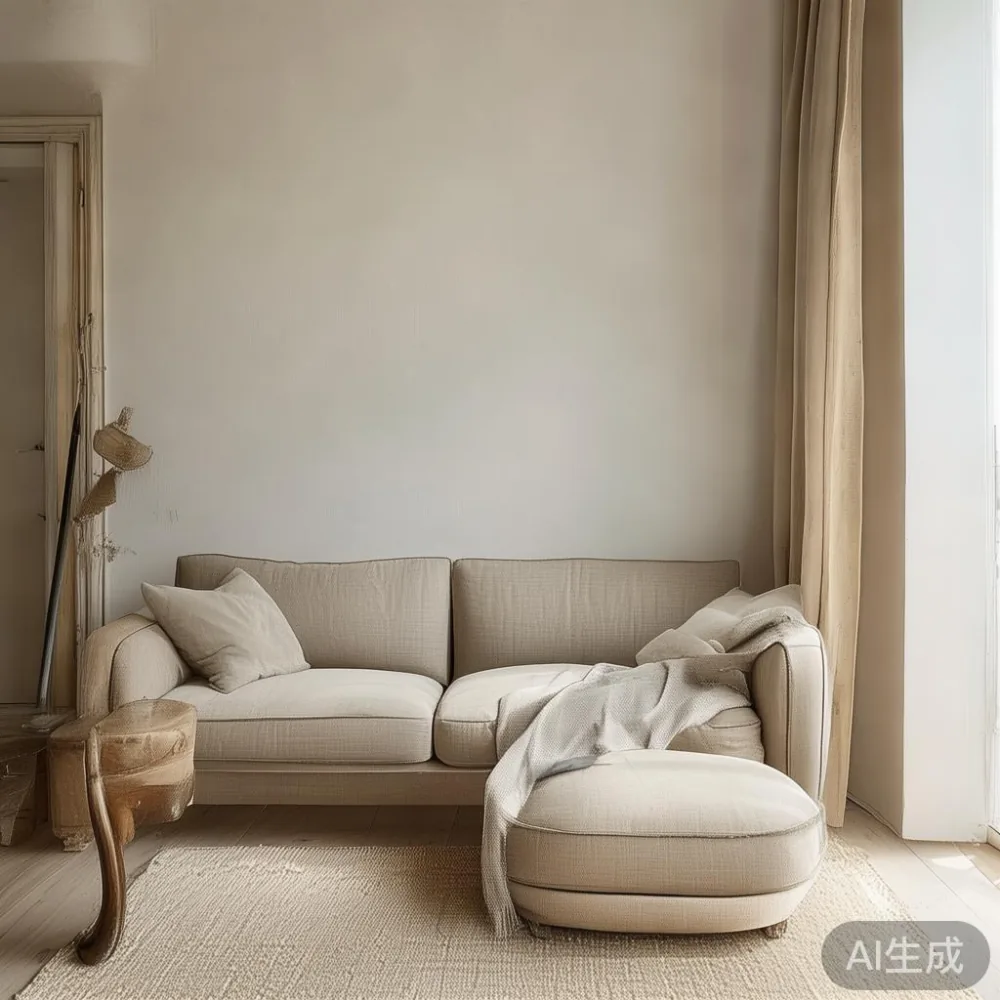
Why does fabric care matter even more in a compact HDB flat?
Fabric care matters more in a compact flat because every square metre absorbs more wear. A 70 sqm unit in Bedok that hosts a family of four will see the same dust, sweat, and body-oil load as a 110 sqm condo in Punggol — except concentrated on half the furniture. Daily vacuuming on a low setting, a weekly rotation of cushion covers, and a quarterly professional steam clean will roughly double the usable life of an upholstered piece. For a solid wood sofa priced between S$1,850 and S$2,400, fabric care is what protects the foam core from breaking down in years three to five, which is when most HDB owners start complaining about sag. Treat the textile as the disposable skin and the wood as the skeleton, and the math suddenly works: replacing a cover for S$220 every six years is cheaper than replacing the frame.
How do I measure before I order anything from Jurong to Tampines?
Grab a 5-metre tape, a notepad, and your HDB floor plan PDF. Write down six numbers before you fall in love with a product photo: door width (usually 90–92 cm for HDB, 82 cm for older Bedok blocks), lift door width (typically 90 cm, sometimes 80 cm in walk-ups), corridor turning radius at your floor, ceiling height (2.6 m standard, 2.8 m in newer Punggol Northshore units), the diagonal of your largest room, and the lift cabin depth. A solid wood dining table for four needs at least 120 cm in length; a six-seater needs 180 cm and will weigh 60–75 kg, which matters when the lift is out and the cargo lift booking costs S$40 per trip. MIDHILL publishes exact carton dimensions for every piece — something I wish more Foshan factories did — so I never have to guess whether the marble table top will clear a 90 cm door.
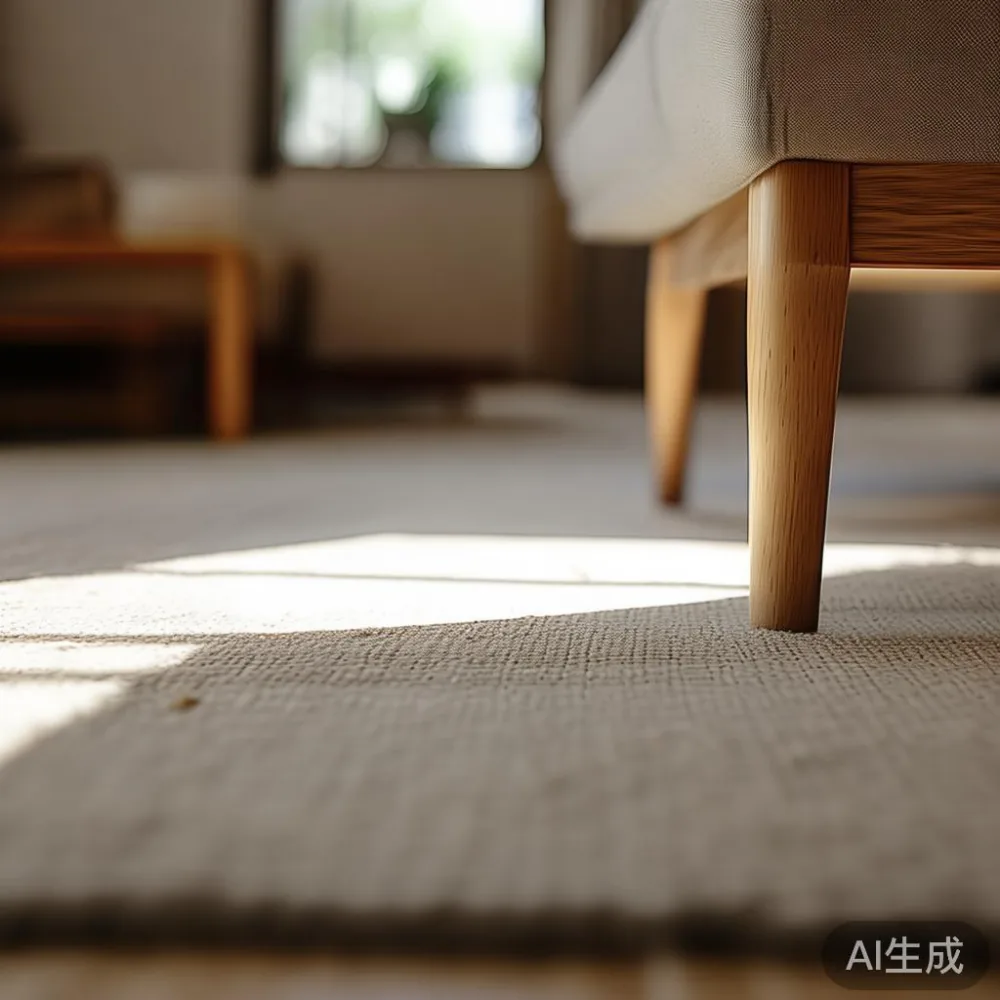
Is French nightstand furniture worth it?
Yes — French nightstand furniture is worth it in a small bedroom because the silhouette does the visual lifting the room cannot. A slim French-style nightstand at 45 cm wide, 40 cm deep, and 55 cm tall gives you a drawer, a shelf, and a leg line that reads light against the floor, while a chunky American-style box of the same capacity looks 20 percent heavier on a plan. The trick is the proportions: tapered legs in beech or ash, a single drawer with a brass pull, and a top in oak veneer or marble under 12 mm keep the unit under 18 kg, so two of them are easy to shift when you redecorate. In my own room I run a pair of French nightstands at S$420 each instead of one wide low table at S$650, and the symmetry tricks the eye into reading the bed as wider than it is. MIDHILL carries this exact profile in their Foshan workshop, and the lifetime refinishing promise means I can sand out a water-ring in year four without paying a single SGD.
Which light-luxury style works best under 70 sqm?
Post-modern light luxury is the safest pick for compact Singapore homes because it mixes curved silhouettes with slim metal accents, so each piece carries presence without volume. A post-modern curved-back armchair at 78 cm deep reads as sculptural against a white wall, and the 12 mm gold or brushed-brass base adds warmth that a colder Scandinavian line cannot. Pair that with a marble table — a 90 cm round top in Carrara-look sintered stone on a powder-coated steel base weighs roughly 28 kg, fits through any HDB door, and resists the curry spills that show up in every Tiong Bahru rental. French light luxury leans more on linen, cane, and pale beech, which is forgiving in flats with limited natural light; American light luxury tends toward darker walnut and thicker cushioning, which can swallow a small living room if you are not careful. My rule of thumb: choose one style per room, not one style for the whole flat.
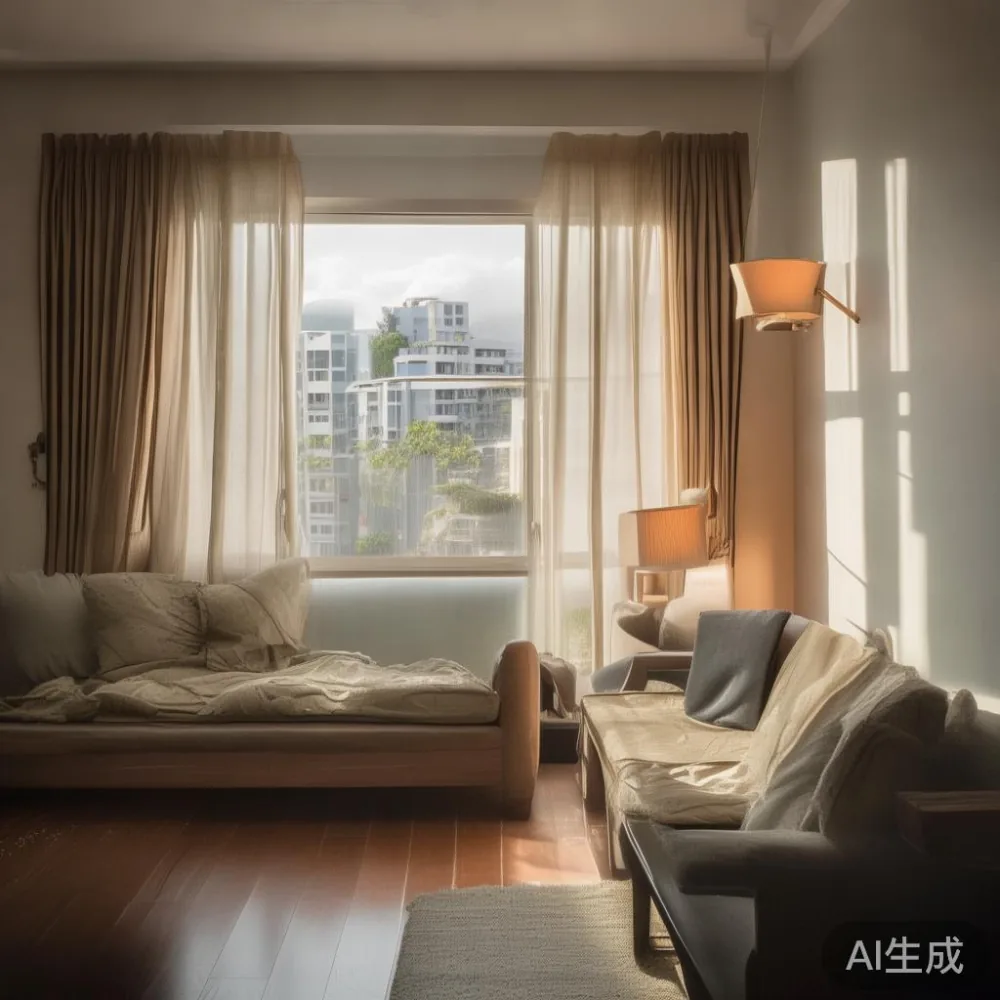
How do I keep an upholstered bed frame from swallowing the bedroom?
Pick a bed frame under 35 cm in total headboard height if your ceiling sits at 2.6 m, and under 45 cm if you have the newer 2.8 m Punggol or Canberra ceilings. A queen upholstered bed frame at 152 cm wide by 206 cm long occupies roughly 3.1 sqm of floor, which is about 18 percent of a 17 sqm HDB master bedroom — a sensible ratio. Go for a linen-blend cover in a washable slip rather than a fixed bouclé, because the slip can come off every fortnight and go into a 40-degree wash, which is the single most important fabric care habit you can build. Foam density matters too: a headboard at 25 kg per cubic metre will hold its shape for six years; anything below 20 kg starts to dimple by year two. The wardrobe opposite should be no deeper than 58 cm so the two pieces do not form a tunnel; this is where the 90 cm corridor minimum starts to feel tight if you ignore it.
What layout mistakes cost Singapore renters the most space?
Pushing every piece against the wall is the single most common layout mistake, and it actually makes a small room read smaller because it removes the visual depth that mid-floor furniture creates. Pull the solid wood sofa 12–15 cm off the wall, float a marble table 20 cm in front of it, and the living room gains a sense of layers that flattens when everything is wall-hugging. The second mistake is ignoring the 90 cm corridor rule for HDB — leave at least 90 cm between any two pieces if you want two people to pass each other carrying laundry baskets. The third is over-ordering storage: a four-door wardrobe at 240 cm wide swallows 1.5 sqm of wall, while two 120 cm wardrobes with a 20 cm gap give you the same hanging length and a sightline through to the window. The fourth is buying a dining table before measuring the lift, which is exactly how my colleague ended up with a window hoist bill.
Can I really fit a chaise lounge into a small HDB living room?
Yes, if you pick a compact chaise and place it against the longest wall. A beige walnut chaise lounge at 160 cm long by 75 cm deep takes up about 1.2 sqm, roughly the same footprint as a two-seater armchair, but it replaces both a chair and an ottoman in one footprint. The walnut frame adds warmth that an all-oak room lacks, and the beige fabric hides the lint that black linen shows under a ceiling fan. Position it perpendicular to the sofa so you can lie across it without blocking the walkway to the kitchen, and keep a 60 cm clearance to the dining table for chair pull-out. In my own 18 sqm living room, swapping a standard armchair for a beige walnut chaise lounge freed up enough wall length for a 120 cm bookshelf, which now holds the records I had been storing under the bed.
What fabric choices age best in Singapore humidity?
Performance linen blends and tightly woven cottons age best because they breathe and release moisture rather than trapping it. Pure linen wrinkles within a week in an air-conditioned HDB flat, which is fine if you want the lived-in look and less fine if you want a sharp silhouette for resale photos. A linen-cotton blend at 60/40 splits the difference, and a removable slip goes into a cold wash on a 30-minute cycle for under S$0.40 of electricity and water. Avoid bonded leather on dining chairs in a ground-floor Bedok unit — the humidity will lift the backing within eighteen months. For the bed frame, a brushed cotton velvet in a muted sage or oat tone hides dust better than cream and is easier to spot-clean than a flat weave. MIDHILL sends a fabric care card with every upholstered piece, which I keep taped inside the wardrobe door so the helper sees it during the monthly clean.
How much should I budget for a complete small-apartment set in SGD?
A complete set for a 65 sqm two-bedder, including a three-seater solid wood sofa, a queen bed frame, a six-seater dining table, a four-door wardrobe, two nightstands, a marble table, and a chaise, sits between S$6,800 and S$9,200 depending on fabric grade and marble spec. That works out to roughly S$105–S$140 per square metre of floor area, which compares well against the S$180–S$220 per square metre that local ID firms quote for package furniture. Add S$350–S$500 for professional installation if your block requires a cargo lift booking at S$40 per trip, and another S$120–S$200 for two fabric care kits and a rotation set of slipcovers. Free shipping kicks in above US$350, which is roughly S$475, so most full-apartment orders clear that threshold without any nudging. GST at 9 percent applies on top, and the 14-day return window is long enough to live with a piece before you commit.
Where should I test fabric before I commit?
Test fabric at the showroom floor with three checks before you sign anything. First, press your palm into the cushion for ten seconds, release, and time how long the foam takes to bounce back — anything slower than four seconds is too soft for daily seating. Second, rub a white cotton cloth across the surface for twenty strokes; if colour transfers, walk away. Third, ask for a 10 cm by 10 cm swatch, take it home, and tape it to the wall where the piece will sit; check it under morning light, afternoon light, and under your bedroom's downlight at 2700K. Singapore showrooms in Tai Seng and Eunos tend to use 4000K cool white, which flatters linen but lies about velvet. A swatch on your own wall removes the guesswork and costs nothing. I keep a folder of every swatch I have tested over the years, and it has saved me from three bad purchases since 2022.
What about warranty and what happens after year three?
A 10-year structural warranty on the frame and a lifetime refinishing promise on the wood are the two numbers that protect you after year three. Structural means the joints, the dowels, and the load-bearing rails — the parts that fail first on cheaper flat-pack pieces. Lifetime refinishing means sanding, re-staining, and re-sealing the wood at cost, which usually runs S$180–S$260 per piece depending on size. After year three, fabric is your responsibility: expect to re-cover a well-used sofa at year six for about S$420 if you keep the foam, or replace the foam and cover together for S$650–S$780. MIDHILL offers both services through their Foshan workshop, and the round-trip shipping from Singapore works out to roughly S$95 per piece on a consolidated container. The math is straightforward: spend a little more on day one, and your cost per year over a decade stays below S$150 per major piece.
A short checklist before you click pay
Run through these seven points before you confirm any order for a small Singapore apartment. Measure every door, lift, and corridor turn in centimetres, not inches. Weigh each piece against your floor's loading limit — HDB guidelines cap at 150 kg per square metre for static furniture, and a marble dining table with six chairs can hit 220 kg in one corner. Confirm the corridor clearance stays above 90 cm after placement, not just on paper. Check that every upholstered piece has a removable, washable cover or a fabric care card from the maker. Verify the warranty in writing, with both frame and fabric terms spelled out. Plan the lift booking at least five working days ahead for blocks that require a cargo lift. And finally, photograph the empty room from the door at eye height — that single image will tell you more about crowding than any floor plan ever will.