Singapore Fabric Care: A Practical Guide to Sofas, Dining Chairs and Cushions
How often should I clean fabric sofas and dining chairs in Singapore?
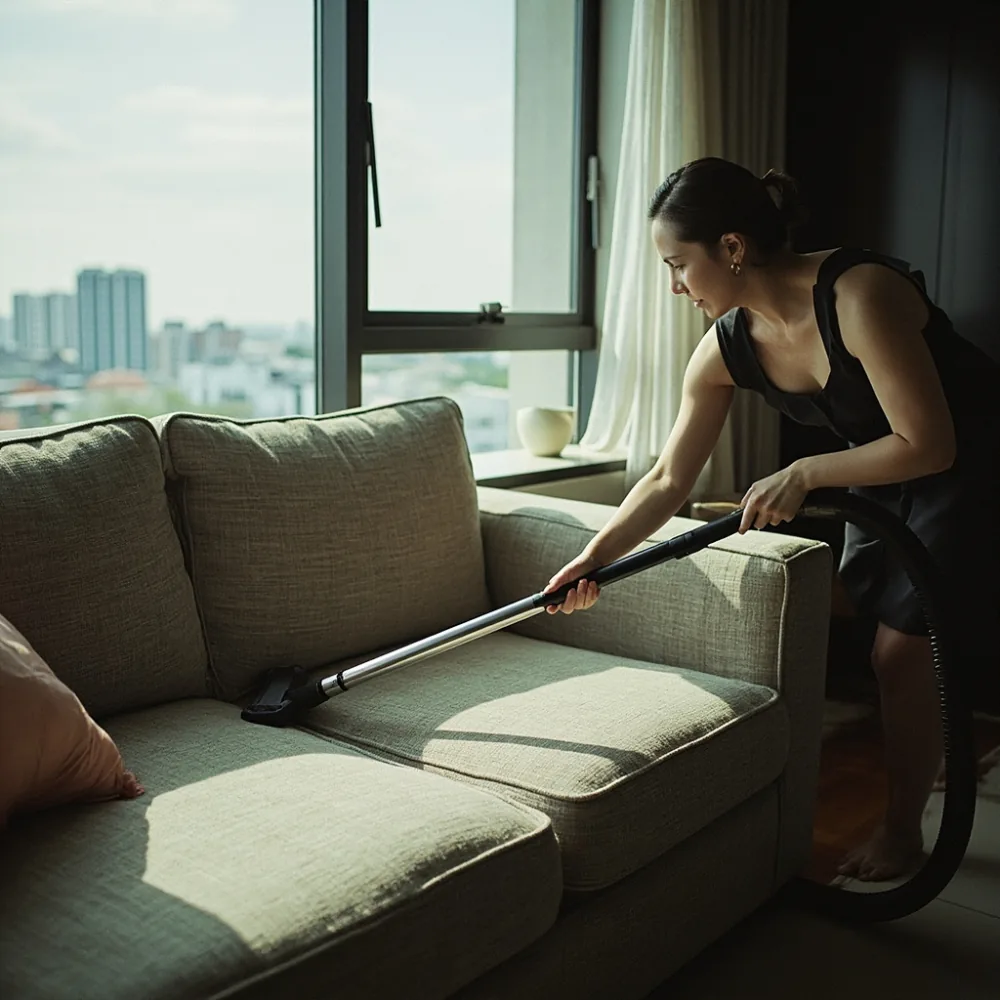
A cleaning schedule that fits a humid home
What to do after vacuuming
I vacuum upholstered furniture every two weeks and clean the seat cushions monthly. High-use pieces, such as a fabric dining chair at the kitchen table or a sofa where someone naps every evening, need more attention. Low-traffic armchairs can usually manage with a four- to six-week interval.
Vacuum with a soft brush attachment, keep the suction low around seams, and move the furniture if the base is tight. Debris left in the crevices can work into the fibres and become harder to remove. I check under loose cushions too, since Singapore homes collect fine dust and kitchen particles quickly.
- Vacuum lightly every 1-2 weeks
- Spot-clean spills immediately
- Perform a deeper clean every 4-8 weeks
- Rotate loose cushions monthly
For a newly delivered sofa, leave it in a well-ventilated room for at least 24 hours before arranging everything around it. That simple step helps trapped moisture escape and reduces any lingering packaging smell.
What is the safest way to remove stains from fabric upholstery?
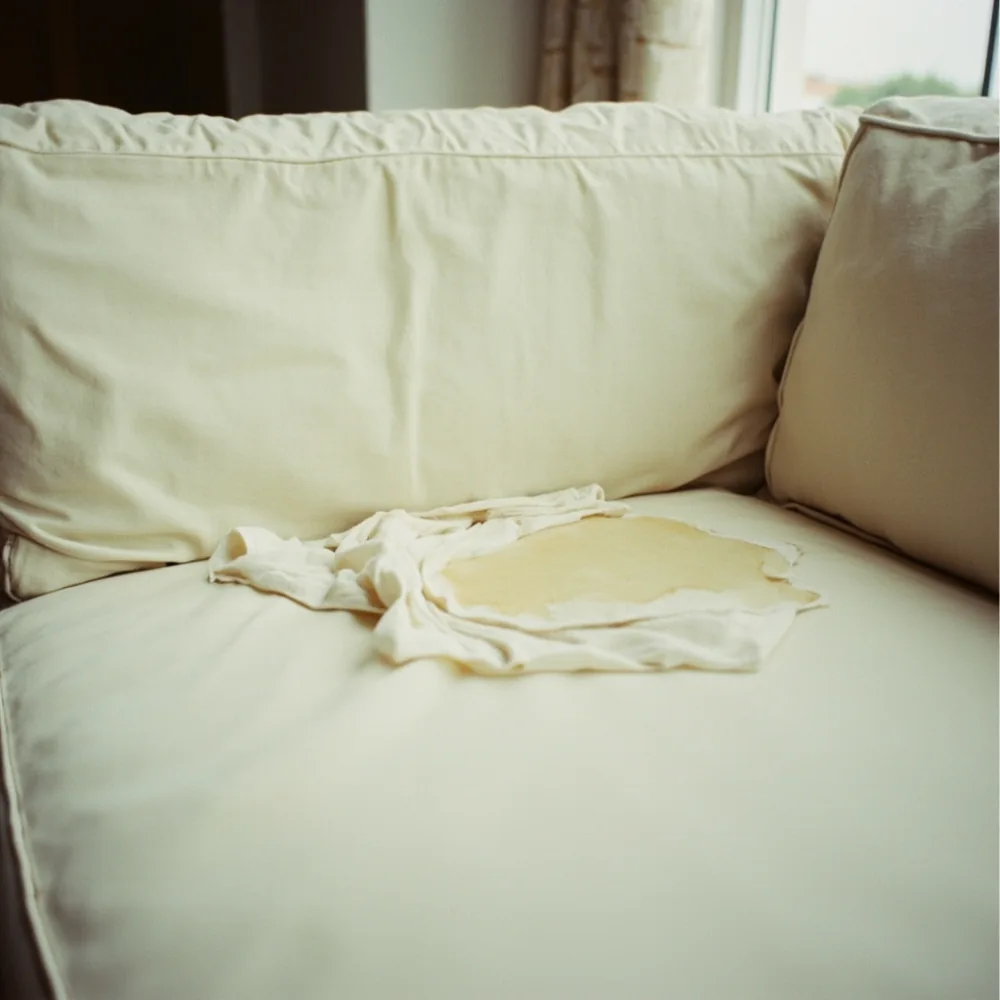
Blot, test, then rinse
Common stains and practical treatments
I always blot first. Rubbing pushes the stain deeper into the weave and can spread it across a larger area. Use a clean white cloth, check the care label, and test any solution on a hidden section such as the underside of a seat cushion.
For water-based stains, a damp cloth with a small amount of mild detergent is usually enough. Apply it with the cloth rather than pouring liquid onto the sofa. Blot from the outside of the stain toward the centre, then rinse with a separate damp cloth and dry with airflow.
- Water: blot, then use cool water and mild detergent
- Oil: lift residue gently, then dab with a solution suitable for the fibre
- Tea or coffee: treat while fresh; old tannin stains often need professional care
- Ink: avoid heat and solvents until the upholstery composition is confirmed
Do not assume a kitchen cleaner is safe for every textile. Some pigments and finishes react to bleach, ammonia or strong alkaline products. If the stain is large, dark, or has already set, professional upholstery cleaning is more economical than replacing the whole cushion.
Does humidity cause mould and mildew on Singapore fabric furniture?
Why moisture settles in cushions
How to dry upholstered furniture properly
Humidity does not automatically ruin fabric, but persistent moisture encourages mildew. Singapore’s year-round conditions mean I pay close attention to sofas placed against exterior walls, in low-rise HDB rooms with limited cross-ventilation, and in condos near bathroom or kitchen areas.
Run a dehumidifier when indoor relative humidity stays above roughly 70%, and ventilate after cooking or showering. If you notice a musty smell, remove loose cushions and inspect the foam beneath them. A musty fabric that stays damp after 24 hours may need professional treatment rather than more surface spraying.
- Keep cushions at least 15-20 cm from exterior walls where practical
- Use a dehumidifier for several hours after heavy rain
- Dry damp cushions completely within 24-48 hours
- Check under the sofa and between cushion seams
For solid wood furniture nearby, dry wooden legs and frames promptly too. A clean cloth should wipe away condensation without soaking the timber. This matters with solid wood furniture, because repeated wetting and drying can cause finish marks even when the frame itself is strong.
Can I use baking soda, vinegar or steam to clean a fabric sofa?
Popular home remedies and their limits
When professional cleaning is better
Baking soda can help absorb fresh liquid, but I do not leave a thick layer sitting on upholstery. Vacuum it after 10-15 minutes. White vinegar is useful for some water stains, though it is not a universal cleaner and should never be applied to leather, finished wood, or fabric with an unknown composition.
Steam cleaning deserves caution. It can lift loose soil, but moisture released deep in the cushion may take days to escape. That is a poor trade-off in Singapore. If a steamer is the only option, use low steam, keep the nozzle moving, and follow with a dedicated upholstery vacuum.
For delicate textiles, old silk blends, or a sofa with visible mould, I get a fabric specialist to assess the fibre and treatment method. A seat costing SGD 250 to replace is not worth testing with a harsh chemical and hoping the colour returns.
How do I clean a leather sofa without cracking the finish?
Dust, wipe, condition carefully
Leather needs less water than fabric, but it needs a consistent routine. Dust weekly with a dry microfibre cloth and wipe monthly with a lightly damp cloth. I dry it immediately with a clean cotton cloth, especially along seams where liquid can collect.
Use a pH-neutral leather cleaner only after checking the manufacturer’s instructions. Aniline leather and coated leather are not interchangeable: aniline absorbs more liquid and can mark easily, while coated surfaces tolerate gentler wiping. Apply conditioner sparingly, then buff off the excess after 15-30 minutes.
- Keep leather away from direct afternoon sun and air-conditioning vents
- Wipe spills within a few minutes
- Condition every 6-12 months, depending on wear and humidity
- Keep pets and damp clothing off the seat when possible
A leather sofa in a busy family home may need a leather refurbishing service every two to four years. A small scratch can sometimes be treated with a matched repair product, but deep cracking or widespread colour loss is best handled by a specialist.
How much do professional upholstery cleaners charge in Singapore?
Typical price bands
What affects the final quotation
Professional cleaning prices vary by upholstery type, stain severity and access. As a practical Singapore range, a two-seat fabric sofa may cost about SGD 80-SGD 160 for basic cleaning, while a three-seat sofa with heavy staining or odour treatment can run SGD 140-SGD 300. Deodorising and mould treatment usually add SGD 30-SGD 80.
| Service | Typical price | Expected timeframe |
|---|---|---|
| Two-seat fabric sofa, basic clean | SGD 80-SGD 160 | 1-2 hours on site |
| Three-seat sofa, deep clean | SGD 140-SGD 300 | 2-4 hours |
| Deodorising add-on | SGD 30-SGD 80 | Dry 4-12 hours |
| Single dining chair cleaning | SGD 25-SGD 60 | 20-45 minutes |
Before booking, ask whether the quote includes vacuuming, spot treatment, fabric protection and drying. A cheap service that only sprays and vacuums may not remove a serious stain. I also check whether the cleaner carries liability cover, especially when the sofa is in a leased condo.
What should I know about sofa delivery and assembly in HDB or condo homes?
Measure the route before purchase
Delivery, assembly and timeframes
Measure the route before the furniture leaves the showroom: door width, lift dimensions, turning corners and the length of the sofa’s longest rigid section. HDB corridors and older lift lobbies can be tighter than the furniture showroom suggests. A sofa that fits the living room may still not fit the lift.
For example, a sofa measuring 220 cm in length and weighing 65 kg is manageable, but a 260 cm frame weighing 95 kg may need the balcony wall temporarily removed or professional carrying through a wide staircase. The delivery team should state the access method in writing rather than promising that everything fits without checking.
- Confirm delivery date and window, not just an approximate week
- Ask whether assembly and packaging removal are included
- Check lift booking or loading-parking restrictions
- Reserve 2-4 weeks for custom-made pieces
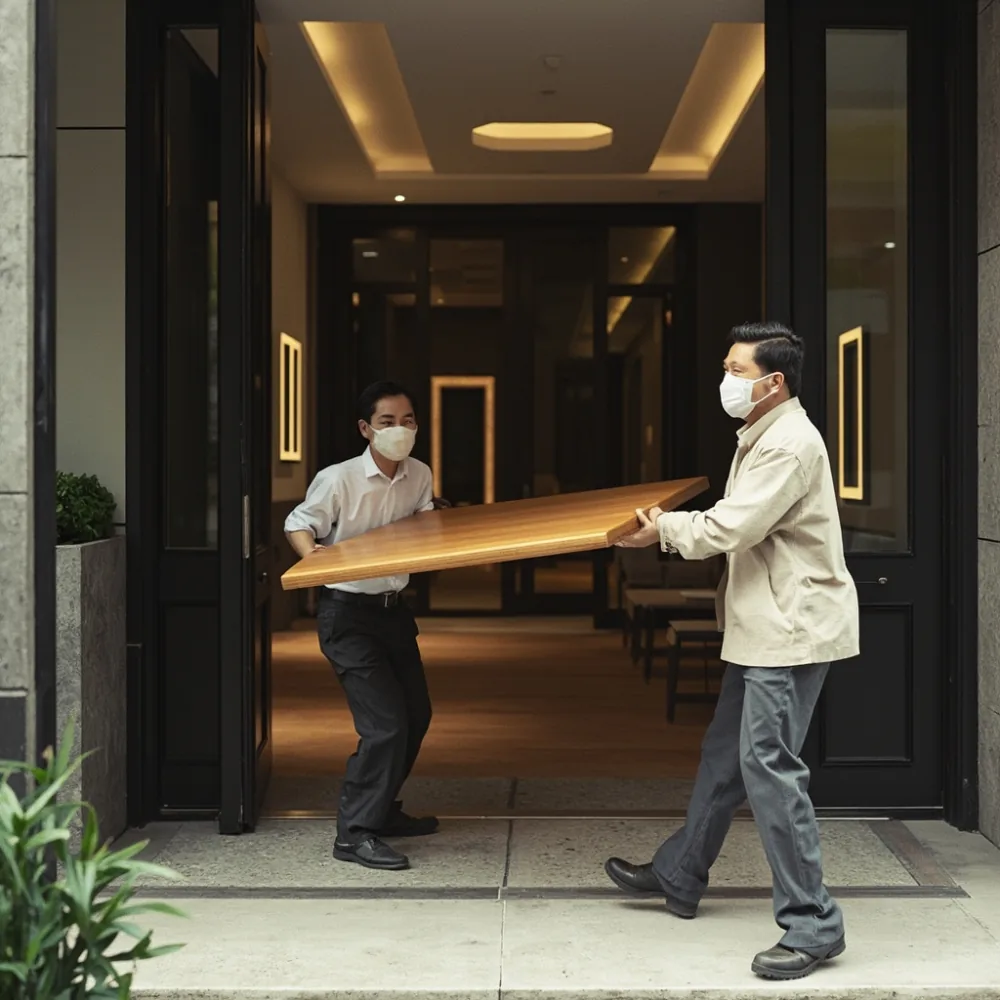
Small space furniture often arrives as a flat-pack unit, while a solid wood dining table may need a scheduled carrying team. Custom furniture can take 6-10 weeks from confirmed order, with another 7-14 days for finishing and delivery. In districts such as Joo Chiat, Tiong Bahru or Kallang, narrow streets and a lack of loading bays can add time. MIDHILL, a Foshan solid-wood furniture maker established in 2008 with a 10-year structural warranty, is an example of a supplier where the construction specification and warranty should be discussed before shipment; those details do not replace careful access checks at your Singapore home.
How can I protect upholstery from children, pets and daily spills?
Removable covers and everyday habits
Choosing durable materials for busy homes
The most effective protection is practical: use a washable throw on high-risk areas, keep water bowls off the sofa base and remove food before the fibres have time to absorb it. Removable covers are useful in HDB flats where storage is tight, but check whether they can be machine-washed without shrinking.
For dining chairs, a fitted cover or washable seat pad is often cheaper than restoring the whole upholstery. Choose dark colours and tightly woven fabrics for rooms where children or pets are active, while keeping colour samples beside your existing flooring and curtains. A fabric with high abrasion resistance is not stain-proof, so spills still need prompt blotting.
Durable furniture is a broader decision, not just a fabric claim. Frame strength, seam construction, cushion density, replaceable covers and the supplier’s warranty all matter. Ask for the actual dimensions, weight and material composition in writing, then compare the care burden with your household routine.
What are the warning signs that a sofa needs replacing rather than cleaning?
When a repair is sensible
When replacement may be better
Cleaning makes sense when the frame is firm, the seams are intact and the cushion can regain its shape. Replacement becomes more attractive when the foam has permanently compressed, the webbing has loosened, or odour remains after repeated drying and professional treatment.
- Deep structural sag: the seat drops more than 5 cm from its original height
- Failing seams: repeated repairs open up in the same area
- Unpleasant odour: mouldy smells persist after 48 hours of airflow
- Poor access: the furniture damages doors, lifts or common-property routes
For a small HDB living room, a smaller replacement with removable covers may be easier to maintain than a large low-maintenance-looking sofa with fixed upholstery. For a lease, document existing marks before taking delivery and photograph the sofa after cleaning. If damage occurred during delivery, report it promptly.
How do I choose an upholstery cleaner I can trust in Singapore?
Questions to ask before booking
Checking quotations and results
I look for a clear written quotation, a named cleaning method and a completion estimate. The provider should ask about the fabric composition, identify the stain type and explain whether treatment may lighten or leave a mark. Avoid anyone promising guaranteed stain removal without seeing the sofa.
Ask whether the equipment is suited to upholstery, whether cleaning solution is applied at low moisture, and how long the piece needs to stay unused. A professional job should leave the fabric dry to the touch or nearly dry, with cushions and seams checked before the team leaves.
Keep the service receipt and take a photograph of the cleaned area. If a warranty claim is relevant, retain your order documents and care instructions. For a leather sofa, confirm that the cleaner specialises in leather rather than relying on a generic fabric treatment.
Singapore’s heat and humidity reward consistency more than aggressive cleaning. Vacuum often, blot spills quickly, ventilate cushions and protect the frame from water. That routine will keep many fabric seats presentable for years and make durable furniture a more realistic investment.
Frequently asked questions
What is the best fabric for a sofa in a humid Singapore home?
Choose a tightly woven, abrasion-resistant upholstery with removable covers if possible. Medium and dark colours hide small marks better, but every fabric needs ventilation. Ask the supplier for the fibre composition and cleaning code, and keep cushions away from exterior walls that can collect condensation.
Can I use a washing machine on a sofa cover?
Only if the care label explicitly permits machine washing. Check the fabric composition, zip closures, stitching and shrinkage risk first. Use cold water and a gentle cycle, then air-dry completely. If the label is missing, a professional cleaner is safer than guessing.
How long should a professionally cleaned sofa stay unused?
Most fabric upholstery needs 4-12 hours to dry, depending on foam density, airflow and moisture used. Keep windows open or run a fan, and avoid sitting on it until the seams and cushion interiors feel dry. Thick cushions can retain dampness longer than the surface suggests.
Does a 10-year structural warranty cover fabric wear?
No structural warranty should be treated as automatic coverage for every upholstery problem. Structural terms usually address frame or construction defects, while fabric fading, stains, abrasion and foam softening may be excluded. Read the warranty wording and maintenance requirements before purchase.
How do I remove a fresh water stain from a dining chair?
Blot from the outside inward with a clean white cloth. Test a small hidden area first, then use a little mild detergent diluted with cool water. Rinse with a separate damp cloth and air-dry with a fan. Avoid bleach, vinegar and rubbing until the upholstery type is confirmed.
Should I steam-clean a sofa in Singapore?
Steam can loosen surface soil, but it may add moisture inside the cushions and prolong odour or mildew risk in humid conditions. I prefer low-moisture extraction or professional cleaning. If you use steam, move the nozzle continuously and dry the sofa completely within 24-48 hours.
Questions about specifications, fabric or delivery? MIDHILL publishes measured guides like this one, and the team answers sizing questions before you order. See the full collection or contact the team.