Living with Wood Furniture in Southeast Asia: A Practical Guide to Humidity, HDB Logistics, and Long-Term Care
I still remember the afternoon I stepped into a fourth-floor HDB flat in Bedok last month, where the owner had proudly placed a brand-new solid wood sofa near the window facing the afternoon sun. Three months later, the panels had begun to cup, the apprentice a 4 mm gap opened where the seat met the arm, and a faint white film had crept across the unfinished underside. The sofa was not defective. The flat sat at 82% relative humidity for most evenings, and the wood was simply responding to the air. That single visit is the reason this guide exists.
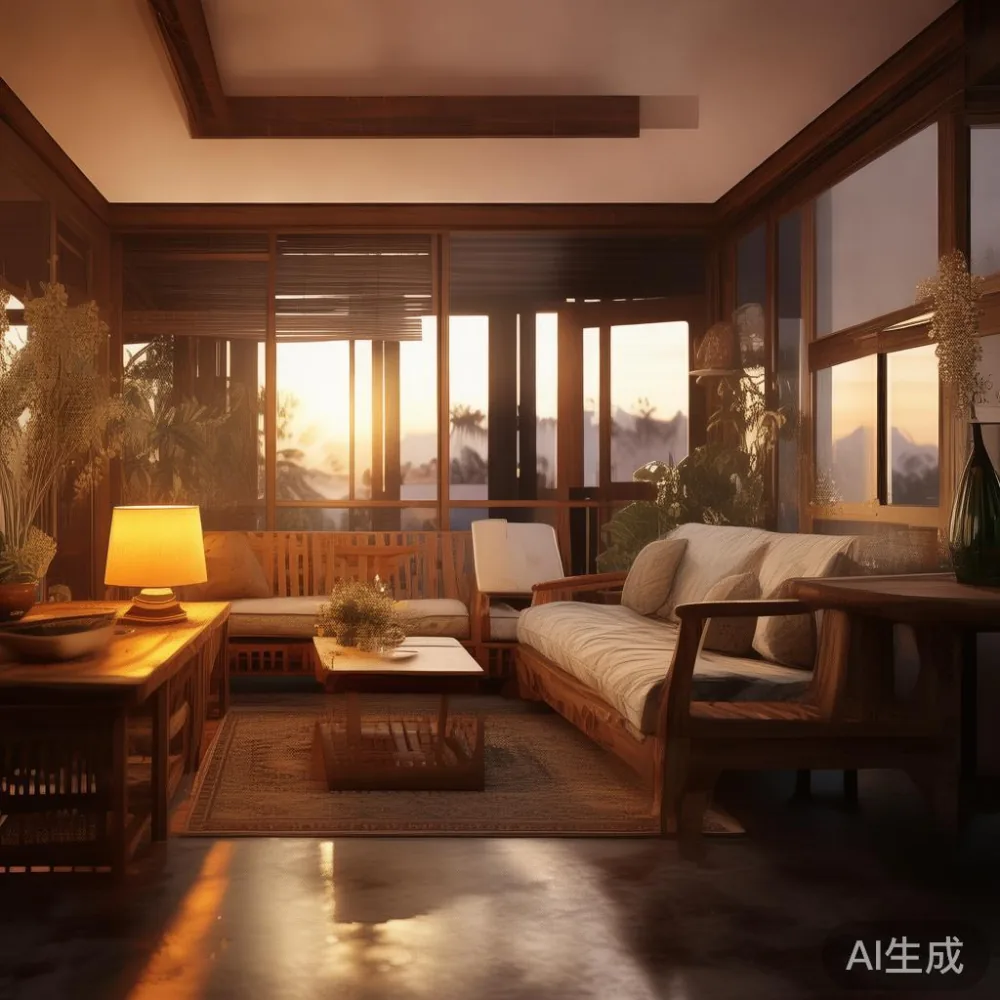
Southeast Asia is one of the kindest and one of the harshest places on earth to own wood furniture. Temperatures of 28 to 32 °C year-round feel pleasant to us, but combined with humidity that swings from 60% on a dry February afternoon to 95% during a December monsoon, they put solid wood through real stress. Singapore in particular sits right on the equator, with monthly mean relative humidity rarely dropping below 74%. If you have just bought — or are about to buy — a solid wood sofa, a bed frame, a dining table, a wardrobe, or a nightstand for your HDB or condo, what follows will help you understand what is happening inside the timber, and what you can do about it without turning your home into a museum.
How does tropical humidity actually damage wood furniture?
Wood is hygroscopic. It absorbs and releases moisture until it reaches equilibrium with the surrounding air, and as it does, it expands and contracts. A solid oak plank 180 cm long can move as much as 6 mm between a dry week (55% RH) and a humid week (90% RH). That movement shows up as cupping on wide tabletops, gaps in mortise-and-tenon joinery, sticky drawers, and mould on wardrobes that sit too close to an exterior wall.
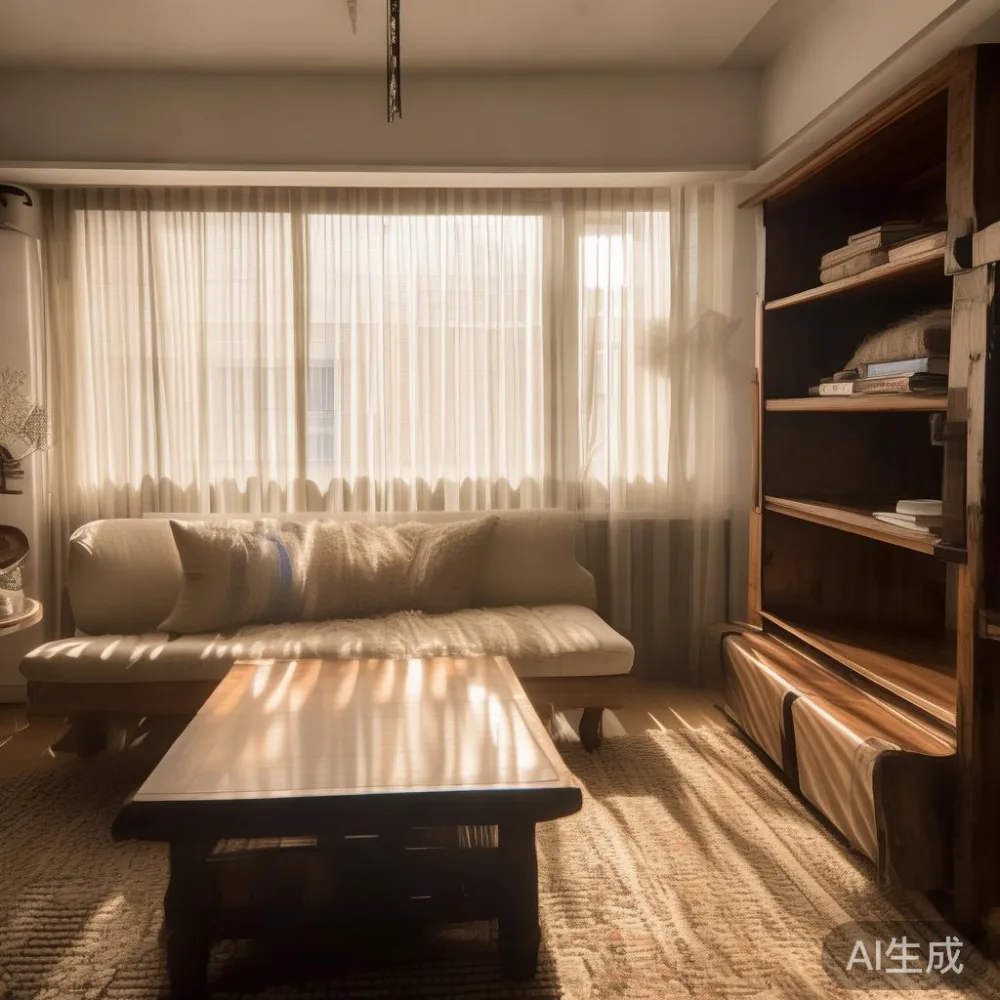
Three mechanisms drive the damage in Singapore homes specifically. Daily breathing happens when air-conditioners run for 8 hours and stop for 16 hours, swinging room humidity by 15 to 25 percentage points. Seasonal monsoon cycles push ambient humidity above 90% for weeks at a stretch. And microclimates — the wall behind a refrigerator, the closed PVC toilet door after a hot shower, the corridor-facing side of a condo, where the aircon is always on — create uneven moisture content inside the same piece. A marble table top sitting on a solid wood base is particularly sensitive, because the stone does not move while the wood underneath does, so the joints take the strain.
What humidity level is safe for a solid wood sofa or bed frame in Singapore?
Aim for a stable 50% to 65% relative humidity inside the room, with swings of no more than 10 percentage points in a 24-hour period. The number that matters more than ambient RH is the moisture content of the wood itself, and a healthy target is 8% to 12%. Anything above 15% and you are inviting mould; anything below 6% and undershaded cracking starts. A SGD 25 digital hygrometer from any neighbourhood electronics shop in Tampines or Bugis is the single most useful tool you can buy.
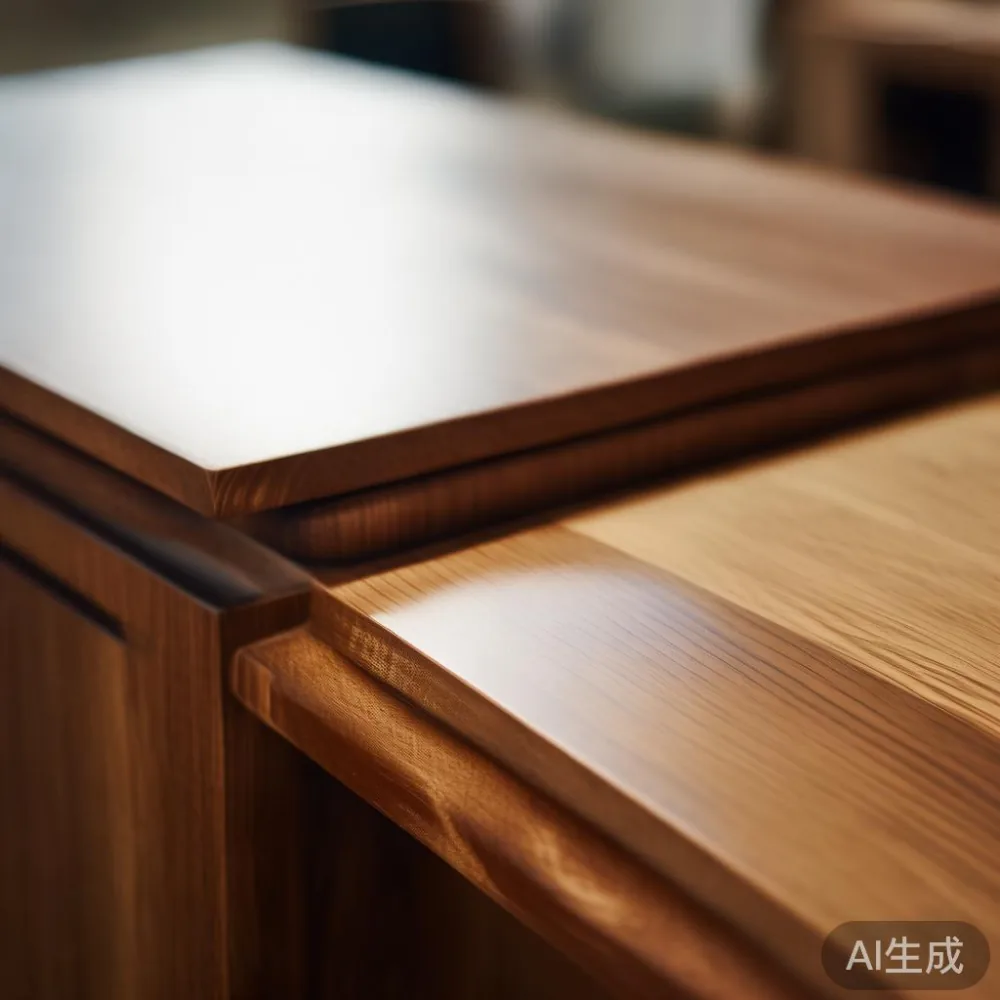
For an HDB three-room flat of about 690 sq ft, a typical 9,000 BTU inverter air-conditioner running on dry cycle will pull room RH down by roughly 20 percentage points within 90 minutes. The trick is not to over-condition. Set your aircon to 25 to 27 °C with dehumidification on for the first month after delivery, then let the room re-stabilise naturally. Fabric care routines matter here too: a fabric sofa cushion that is allowed to stay damp will transfer moisture into the wooden frame underneath. Rotate the cushions weekly and let them air out for an hour under a ceiling fan.
What is the difference between French provincial dressing table and modern furniture?
French provincial dressing tables use solid hardwood frames (often beech or oak) with hand-carved details, cabriole legs, and a heavier visual weight, while modern furniture uses engineered panels, metal accents, and clean lines to express a lighter, post-modern light luxury aesthetic. Both will respond to humidity, but the French provincial piece, with its larger continuous wood spans and decorative carvings that interrupt the grain, shows movement more dramatically and needs more stable room humidity to stay flat.
When you pair either style with a fabric seat cushion or an upholstered stool, you are combining two materials with very different breathing rates. The fabric stays roughly the same size, while the wood frame moves. That is why a fabric care routine that includes weekly vacuuming, prompt blotting of spills, and monthly rotation of the cushion pays off twice: it protects the textile and it keeps moisture away from the wood frame underneath. A light-luxury modern dresser with marble table top accents is the most forgiving choice for a humid master bedroom, because the smaller solid wood components and the engineered base reduce movement.
How do I get a 200 kg wardrobe into your HDB lift?
Measure the lift opening before you order. Standard Singapore HDB passenger lifts are 1.1 m wide by 2.1 m deep with a door opening of 0.9 m, and most carry 630 to 1,000 kg. A three-door wardrobe typically weighs between 120 and 180 kg fully assembled, but with packaging it can hit 220 kg, putting it right at the edge of what a single lift trip can handle. Corridors, four-person HDB corridors are usually 1.2 to 1.5 m wide, which sounds plenty until you add the 30° turn at the staircase landing.
Three practical rules: (1) request the manufacturer to deliver flat-packed in two or three cartons no heavier than 70 kg each, which keeps each carton under two-person carry limits; (2) ask for the wardrobe to be split into the carcass and the doors modules so the heaviest single box is under 90 kg; (3) confirm with the delivery team whether they will charge for a second trip if the lift is occupied. A reliable supplier will quote an estimated delivery window of 14 to 35 days from order, and many will include a free stair-climb surcharge waiver for properties above the fourth floor, which is common in Punggol new builds. Check whether the price already includes 9% GST, because a SGD 2,400 wardrobe becomes SGD 2,616 at the till.
How long does delivery take to Tampines, Bedok, or Punggol from a Foshan factory?
Sea-freight from Guangdong to Singapore takes 5 to 8 days under normal conditions, plus 2 to 4 days for customs clearance and local trucking. From order confirmation, a realistic door-to-door timeline is 14 to 35 days. Two pieces of context help: Foshan is roughly 2,600 nautical miles from Singapore, and the Pearl River Delta export cluster ships container furniture to Jurong and Tuas daily. A queen bed for HDB flat in a standard three-room unit is usually the easiest to schedule because it ships in two manageable cartons.
Production lead time in the factory is the bigger variable, not the shipping lane. A stocked dining table can leave the warehouse in 7 days. A custom wardrobe in a specific finish takes 25 to 40 days. A custom marble table with a specific stone vein pattern takes 35 to 60 days because the stone is quarried, cut, and matched before the wood base is built around it. When you confirm your order, ask for the production phase to be split into three milestones — frame complete, finishing complete, packing complete — and ask the supplier to send photos at each one. This is standard with experienced Foshan exporters who ship to 15 or more countries, and it is one of the quieter signs that you are dealing with a workshop rather than a trading company.
Will air-conditioning alone protect a solid wood dining table?
No. Air-conditioning lowers average humidity, yet it cannot eliminate the daily swings that drive cupping and joint failure. The more useful target is stability: keep the gap between the highest and lowest RH reading of the day under 10 percentage points. In a Singapore condo, this means running the aircon on dry mode during the day, letting it rest in the evening, and using a ceiling fan overnight. Avoid placing a solid wood dining table directly under the aircon vent, because cold dry air falling on warm humid wood creates surface checking (small cracks) on the top.
For ongoing fabric care on the chairs around it, vacuum the seats weekly with a soft brush, blot spills within 60 seconds, and avoid steam cleaning. A SGD 18 dehumidifier box (calcium chloride-based) tucked under each chair stack reduces localised humidity by 5 to 8 percentage points and needs recharging every 4 to 6 weeks. Place a felt pad under every leg so the wood does not transfer moisture to or from the tile floor. And once a year, lightly wax the underside and the hidden side panels with a paste wax, which slows moisture exchange without changing the appearance of the visible surface. These are the same fabric care habits we recommend for upholstered pieces and the same habits that double the lifespan of the wood underneath.
What should I check on arrival and during the first 30 days?
Within 24 hours of delivery, check the moisture content of the wood with a pin-type meter (SGD 30 to SGD 50 from a hardware shop). Anything between 8% and 12% is healthy for Singapore. Photograph every panel, every drawer face, and every joint. Open and close every drawer 10 times to confirm alignment. Do not place the piece against an external wall for the first 14 days, because new walls off-gas moisture from plaster and paint.
In the second 14 days, run your aircon on dry mode for at least 8 hours a day and let the piece acclimatise in the room it will live in. After day 30, normal use is fine. This is also when fabric care habits matter most for upholstered items: a fabric headboard on a solid wood bed frame, a fabric seat on a solid wood dining chair, a fabric cushion on a solid wood sofa. Brush the fabric weekly with a soft horsehair brush, vacuum on low suction with an upholstery attachment, and keep the room at 50 to 60% RH so the fabric does not become a hidden moisture reservoir against the wood.
Are warranties realistic for wood furniture used in Singapore?
A 10-year structural warranty that covers frame breakage, joint failure, and severe warping is meaningful in tropical conditions because most catastrophic failures show up between year 3 and year 7. A lifetime refinishing service is useful for surface damage, because Singaporean furniture tends to need a refresh at year 6 to 8 from UV exposure and micro-scratches rather than structural failure. Free shipping on orders over a threshold (in our case US$350, roughly SGD 475 at today’s rates) is meaningful for HDB buyers who would otherwise pay SGD 80 to SGD 150 in local delivery fees. A 14-day return window is standard, and it should be long enough to spot moisture-related issues in a Singapore flat.
What you want to read carefully is the small print. Does the warranty cover joint failure caused by humidity, or only manufacturing defects? Does refinishing include return shipping both ways? What happens if a single cabinet door swells beyond 3 mm — replacement, credit, or refund? Foshan factories that export to 15 or more countries tend to have clear answers to all three questions because they have learned the hard way. Local importers sometimes do not. This is one of the quieter reasons we lean toward buying directly from the workshop rather than through a local middleman, and it is also why a workshop that owns its own quality control team on the factory floor tends to handle Singapore claims faster than a trading office that has to forward photos back to the production line.
Quick checklist for your first year with a solid wood piece in Singapore
Buy a SGD 25 hygrometer. Target 50 to 65% RH and under 10 percentage points of daily swing. Keep all pieces 10 cm away from external walls for the first 14 days. Run the aircon on dry mode for the first month. Vacuum and brush all fabric weekly, and blot any spill within 60 seconds. Wax hidden surfaces once a year. Photograph everything on arrival. Keep the original packaging for 30 days in case a return is needed. Lift delivery constraints: cartons under 70 kg, carcass split from doors, and confirmed access through HDB lift and stairwell. Total realistic budget for a queen bed for HDB flat plus delivery, including 9% GST, sits between SGD 1,800 and SGD 3,200 for solid wood, which is a different conversation than the SGD 600 to SGD 1,200 particleboard range but a different conversation about lifespan too.
One last thought. Last month, when I visited the Bedok flat again, the owner had moved the same sofa 1.2 m away from the window, added a dehumidifier box under each cushion, and was running the aircon on dry mode for 6 hours a day. The cupping had not fully reversed — once wood moves, some of that movement is permanent — yet the gap had closed from 4 mm to under 1 mm, and the white mould was gone. The piece was still solid, still beautiful, and still hers. That is the realistic outcome with good habits: not a museum, just a home that breathes with its climate.