Styling a Small Singapore Apartment Without Making It Feel Crowded
Last month I visited a 65 sqm three-room HDB flat in Punggol with a client who owned two cats, a treadmill, and a serious collection of ceramic vases. Her brief was unusually clear: keep every piece, lose the clutter, and stop the sofa from swallowing the living room. The lift in her block measures 1.1 m wide by 1.4 m deep, the corridor outside her unit is 1.2 m wide, and her door opening is only 0.9 m. Every centimetre mattered. We spent eight hours measuring, moving, and re-styling, and the flat ended up feeling roughly 25 percent larger to walk through even though we did not knock down a single wall. Most of the wins came from furniture choices and, surprisingly, from paying closer attention to fabric care — because fresh, well-maintained upholstery reads visually as "more space." This article is everything we did, plus the rules I now give every Tampines, Bedok, and Punggol client who rings the number on my sample swatches.
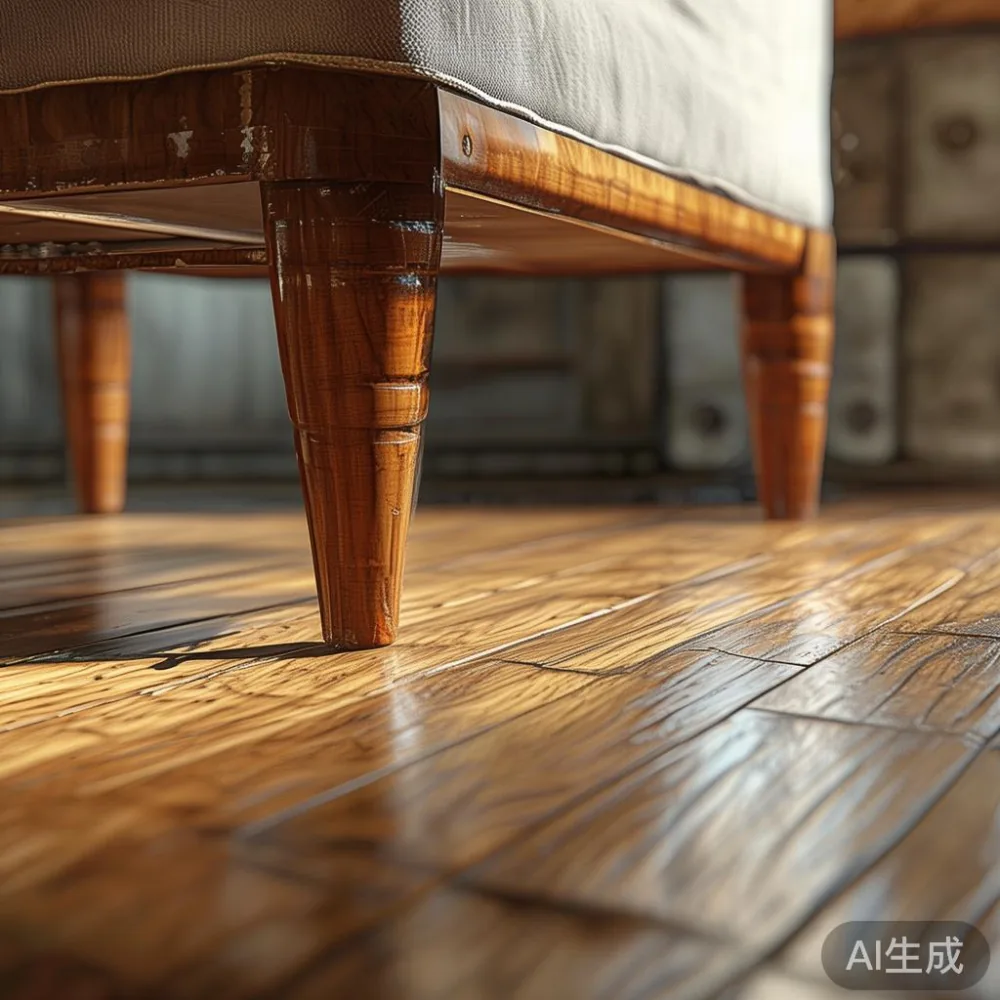
Why does fabric care matter so much when a small flat already feels tight?
Sagging cushions, pilled linen, and greyed cotton absorb light instead of bouncing it back. A lumpy 2-seater solid wood sofa in a 4 by 3 m living room can make the whole HDB feel like a storage unit. I learned this the hard way at a Bedok condo staging job in March: we swapped a faded 7-year-old 3-seater for a tighter, mid-century solid wood sofa upholstered in a performance weave, and the room visually expanded by what felt like half a metre of breathing space along the wall. The new covers held their shape after a simple weekly brush-down, and that crisp silhouette was the single biggest contributor to the sense of openness.
Good fabric care is not about obsessive laundering. It is about three habits: rotate cushions monthly so the foam recovers evenly, vacuum upholstery weekly on a low suction with an upholstery nozzle, and blot — never rub — spills within 60 seconds. For most Singapore households dealing with 80 percent average humidity, I also recommend a dehumidifier set to 55 percent RH. That single number keeps mould spores dormant and keeps linen from going limp and dragging your room down with it.

Measure twice, buy once: the 60 cm rule that prevents corridor disasters
Singapore HDB corridors run between 1.2 m and 1.5 m wide. A standard 2.4 m solid wood dining table will not corner around a 90-degree turn if the corridor narrows below 1.3 m. Before you buy anything, measure your lift door, your front door, and the internal corners from the corridor into the living room. A piece of painter's tape on the floor at the tightest point costs nothing and prevents a S$200 redelivery fee.
The same logic applies to height. A 1.95 m wardrobe fits through most HDB door frames, but a 2.1 m French provincial wardrobe will not clear the lintel on a 1970s-era block in Bedok. I keep a 2 m bamboo pole in my car for exactly this check. Anything over 2 m needs to be assembled in-room, which is fine for flat-pack but a real problem for pre-assembled pieces. If you are ordering something like a MIDHILL light luxury wardrobe, ask the supplier in advance whether it ships knocked-down or fully built — Foshan factories like MIDHILL typically knock everything down to under 1.9 m per carton, which clears a standard 2.1 m HDB doorway once you tip the box on its side.
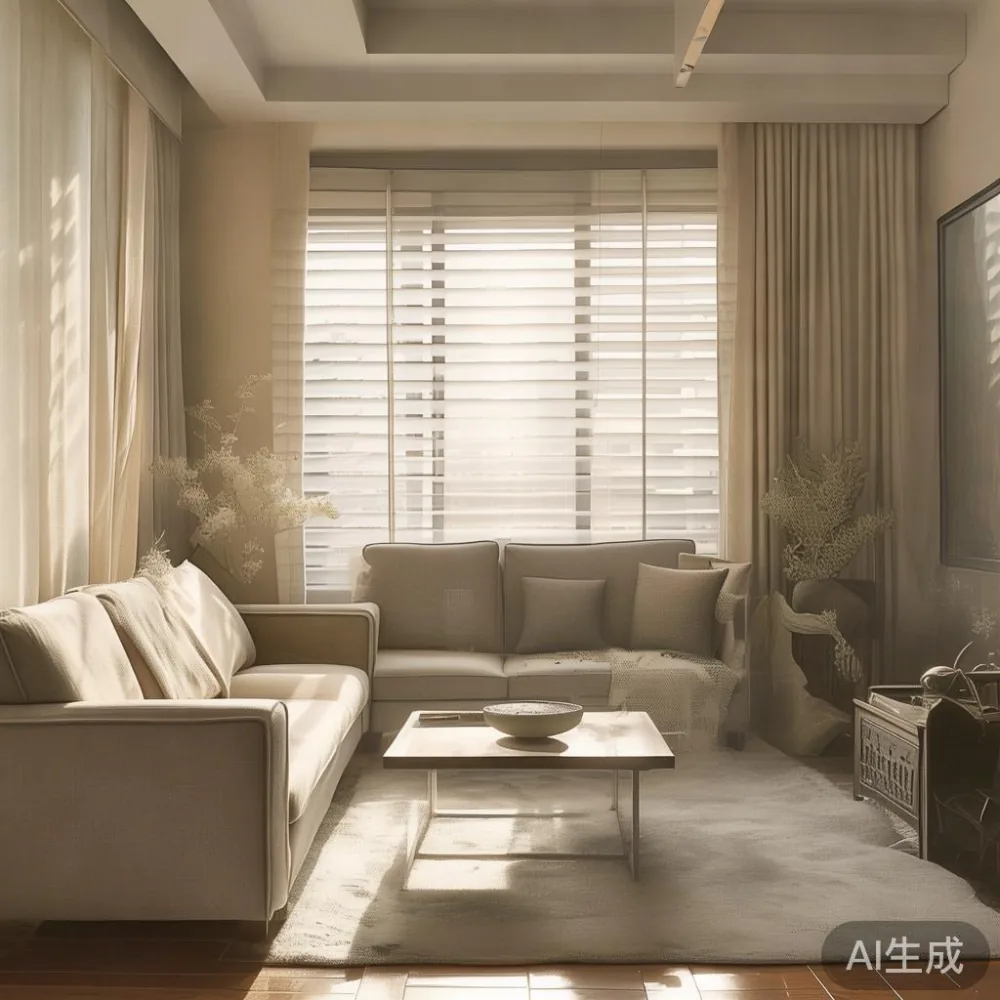
What is the smartest way to anchor a small living room without a bulky coffee table?
Skip the oversized rectangular coffee table. A round marble table, 70 cm in diameter, seats two people for coffee and disappears visually because there are no sharp corners fighting the wall. In the Punggol flat, we replaced a 1.2 m rectangular coffee table with a 70 cm Carrara-look marble table with a slim brass base. The floor area that opened up was roughly 0.6 sqm, which sounds tiny until you try to walk through it in socks at 11 p.m. — the difference is enormous.
For clients who entertain, I suggest a pair of nesting marble tables instead of one fixed surface. Stowed, they occupy 40 by 40 cm; pulled apart for four guests, they spread to 80 cm of surface. The trick is choosing tops that are cool to the touch and stain-resistant, since marble needs only a wipe with a damp microfibre cloth. Compare that to a wooden coffee table that demands coasters, wax, and quarterly oiling in Singapore's humidity — and you understand why a marble table is often the lower-maintenance piece in a small flat.
Choosing a bed frame that does not eat the bedroom
Most Singapore couples default to a queen bed frame at 152 by 188 cm. In a 9 sqm second bedroom, that frame consumes 31 percent of the floor. A king at 183 by 203 cm consumes 41 percent. I usually push clients toward a queen with a 5 cm slim solid wood platform base and a low-profile headboard no taller than 90 cm. Anything taller chops the wall visually and makes the ceiling feel lower.
If you want a storage bed, ask whether the drawers are on casters. A drawer that drags across laminate flooring sounds like a freight train at 6 a.m. Casters, ideally soft rubber, roll silently and protect your floor. For upholstery around the bed, a washable linen-cotton blend at 280 gsm is the sweet spot: heavy enough to drape, light enough to wash in a domestic 7 kg machine without shrinking more than 2 percent. Spot-clean the headboard every two weeks and you will never need a deep clean — that is what fabric care actually looks like in practice.
How to style French provincial wardrobe in room without overwhelming a small HDB?
French provincial furniture has a reputation for being heavy, but the trick is restraint. Pick one statement piece — usually the wardrobe — and let everything else go quiet. In a 10 sqm master bedroom, a 1.8 m wide French provincial wardrobe in a chalky off-white finish with brushed brass handles reads as furniture, not as a wall. The painted finish bounces light back into the room, which is the opposite of what dark wood does in a compact space.
Style it with three rules: keep the top of the wardrobe clear (no stacked suitcases or boxes), leave 30 cm of breathing room on each side if the layout allows, and anchor the space in front with a slim bench or a small oval marble table for evening bags. If you pair it with a simple linen-upholstered bed frame and one piece of art above the headboard, the room reads as calm rather than crowded. This is the same logic behind the broader French provincial for dining room idea: one hero piece, calm supporting cast, lots of negative space.
The dining zone: when a French provincial dining table actually fits
A French provincial dining table is wider than most Singaporeans expect. Standard widths run 95 to 105 cm, versus 80 cm for a typical Scandinavian-style piece. That extra 20 cm matters when you are hosting a steamboat night for six. But it also means a 1.6 m table needs at least 2.4 m of wall clearance to pull out chairs without scraping the wall. Measure before you fall in love with a product photo.
In open-concept HDB living-dining layouts, a French provincial dining table in a warm oak finish actually helps define the zone without a partition. Pair it with two upholstered end chairs and a backless bench on the other side; the bench tucks under the table by 15 cm when not in use and frees the corridor. I have specified oak pieces from Foshan suppliers for clients paying S$2,400 to S$3,800 all-in for a six-seater, delivered and GST-inclusive. The same brief from a Singapore high-street showroom typically lands between S$5,200 and S$7,000, so the sourcing route matters when you are budgeting for an entire flat.
Nightstands, wardrobes, and the 30 cm rule
A nightstand wider than 50 cm will choke the walkway between your bed and the wardrobe. In a typical Singapore bedroom with the bed centred on a 3.2 m wall, that means two nightstands of 45 cm each, leaving 110 cm of central floor for you to make the bed. Drop to one nightstand if you share the room with a partner and the second person does not need a surface — many of my clients in Punggol four-room flats have made that swap happily.
For wardrobes, anything deeper than 60 cm eats too much floor in a small bedroom. Look for 55 cm deep units with internal drawers that pull out fully so you do not lose the back 5 cm to unreachable space. Sliding doors save another 8 to 10 cm of swing clearance versus hinged doors. If you are browsing luxury Italian light luxury furniture catalogues, those wardrobes tend to run 58 cm deep with soft-close hinges — slim, refined, and perfectly proportioned to a Singapore bedroom corridor.
Post-modern light luxury, explained for a 70 sqm flat
Post-modern light luxury is a styling language, not a price bracket. It mixes curved silhouettes, brushed brass, smoked glass, and one or two unexpected finishes per room. In a small flat it works because each piece pulls double duty as art and as furniture. A curved velvet accent chair in a corner reads as sculpture. A marble table doubles as a side surface and a visual anchor. A solid wood bed frame with rounded edges softens the geometry of the room.
The American light luxury approach runs warmer and more oversized — think deep sofas, chunky travertine, wide-plank oak. It suits larger condos and landed homes in the S$2 million-plus bracket but tends to overwhelm a 70 sqm HDB. French light luxury, by contrast, sits beautifully in compact Singapore layouts: slim profiles, painted finishes, brass details, and a restraint that lets the room breathe. If you want to lean into one of these aesthetics without committing to a full re-style, start with a single accent piece — a marble table, a curved chair, or a slim sideboard — and let the rest of the room stay quiet.
Floor, fabric, and the Singapore humidity question
Singapore sits at roughly 1.3 degrees north of the equator. Average humidity runs 78 to 82 percent. That number decides everything about fabric care in a small flat. Cotton and linen absorb ambient moisture and slowly relax, which is why your curtains droop and your slipcovers stretch. Synthetic blends at 30 percent or higher hold their shape better but can feel clammy against skin. My default for upholstery in small Singapore homes is a 70 percent cotton, 20 percent linen, 10 percent synthetic blend — it breathes, it drapes, and it tolerates a weekly vacuum without pilling.
Washable covers are not optional anymore. Look for zipped, removable cushion covers that you can drop into a domestic washing machine at 30 degrees Celsius. Air-dry flat — never tumble dry — to keep the weave from shrinking unevenly. Rotate the covers between two sets so each one lasts longer; that simple habit adds two to three years to the visible life of a solid wood sofa. If you are browsing for sale vintage furniture, ask specifically about the foam density inside the cushions. Anything below 32 kg/m³ will sag within three years regardless of how well you care for the cover.
What does a realistic Singapore budget look like for a fully styled 70 sqm flat?
For a furnished three-room HDB at 65 to 70 sqm, including a solid wood sofa, a queen bed frame, a six-seater dining table, a 1.8 m wardrobe, two nightstands, and one marble table, my clients typically land between S$6,800 and S$11,500 all-in, delivered and GST-inclusive. The spread depends on whether they source from Foshan factories like MIDHILL or buy local retail. Delivery runs 25 to 40 days from China to a Singapore door, and most suppliers now offer free shipping above US$350 (about S$475) per order, which is easy to hit on a single dining set. Returns sit at 14 days for unopened cartons, and a 10-year structural warranty on solid wood frames is now standard among the better Foshan exporters.
Add roughly S$400 to S$900 for in-home assembly if you cannot manage flat-pack yourself, and another S$250 to S$600 for stair-carry fees in walk-up blocks without lifts. MIDHILL ships knock-down to keep each carton under 30 kg so a single delivery man can handle a flat-pack wardrobe up to the third floor. If you have specific questions about sizing or fabric specifications, the MIDHILL team can be reached at +86 188 2788 2512 during China business hours, which is 8 a.m. to 6 p.m. SGT — perfect for a lunchtime call from a Tampines office.
Small flat checklist before you click order
Run through this list before paying a single cent: measure lift door and front door, measure every internal corner, confirm each carton is under 30 kg and under 1.95 m tall, check the corridor width on your floor against the assembled depth of your largest piece, and verify the warranty terms in writing. For fabrics, request a swatch before you order a full sofa — most Foshan factories ship swatches for under S$15 including courier. Touch the fabric, scrunch it in your hand, and see how quickly the creases drop out. That five-minute test tells you more than any product photo.
Finally, plan fabric care from day one. Keep a small vacuum, a microfibre cloth, and a bottle of pH-neutral upholstery cleaner by the sofa. Brush down the dining chair seats every Sunday. Rotate bed pillows weekly. None of this takes more than ten minutes a week, and the result is a flat that stays calm, clean, and visually open for years. The Punggol client I mentioned at the start still sends me a photo of her living room every few months — same marble table, same solid wood sofa, same two cats, and a room that still feels quietly spacious.