Fabric Sofa Care in Singapore Humidity: What Actually Works After 6 Years of Testing
Why does my fabric sofa smell musty after one rainy season in Singapore?
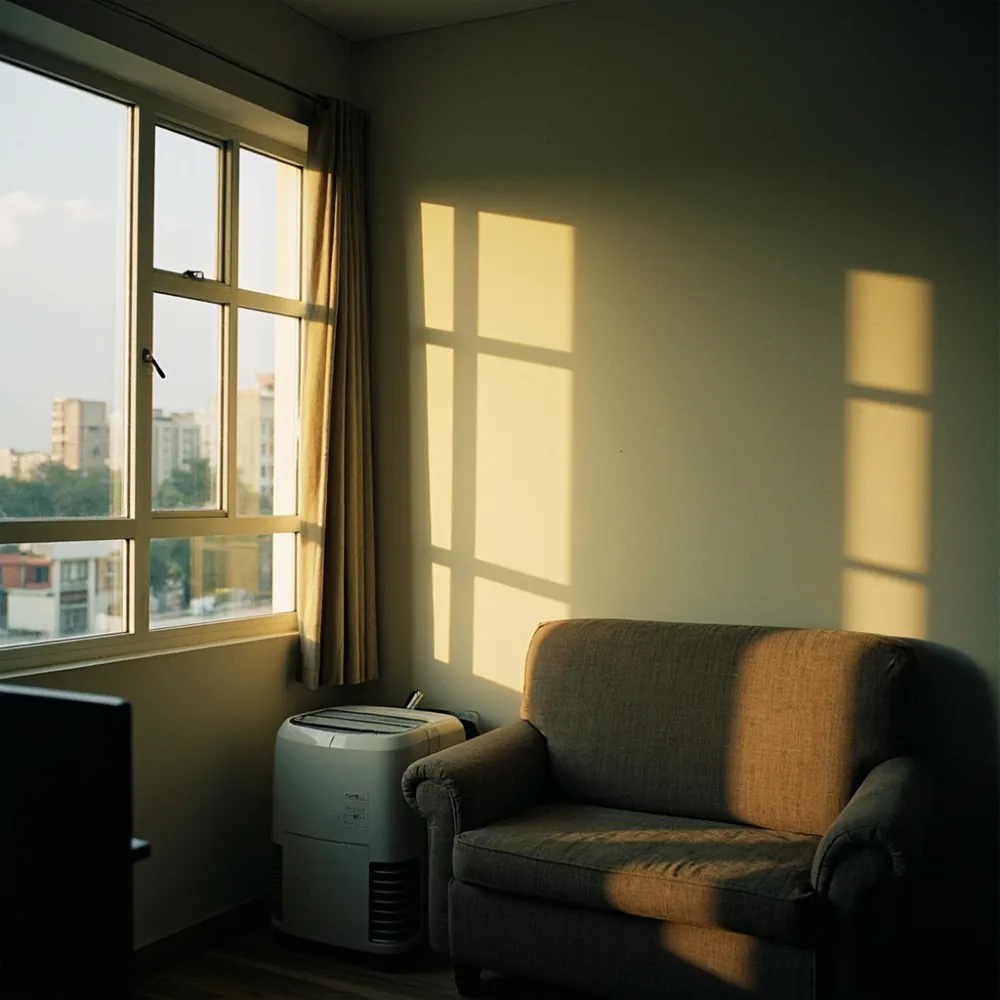
Humidity numbers in HDB flats vs condos
Where moisture actually hides in a sofa
I learned this the hard way with my first sofa, a flat-packed fabric number from a Tampines mall. Two monsoon cycles later, the cushions smelled like a wet towel left in a gym bag. The issue is not the rain outside, it is the trapped moisture inside foam and padding that never fully dries when outdoor humidity sits at 78 to 92 percent for weeks.
For context, typical HDB living rooms run between 28 and 33 square metres, and the air feels stiller than a condo balcony because cross-ventilation is weaker. Condos in districts 9, 10 or 15 catch more breeze, but the real humidity inside foam is the same.
Quick checks I do every quarter:
- Push my hand deep into the centre cushion. If it feels cool after a dry afternoon, moisture is sitting inside.
- Smell the zippered underside. Musty = trapped water, not stain residue.
- Look at the back panel where it meets the floor. Black dust specks under there are often mould colonies starting on the dust cover fabric.
This is also why I now treat fabric sofa care in Singapore as a routine, not a one-off cleaning job.
Which fabric is actually safe for a HDB without air-conditioning at night?
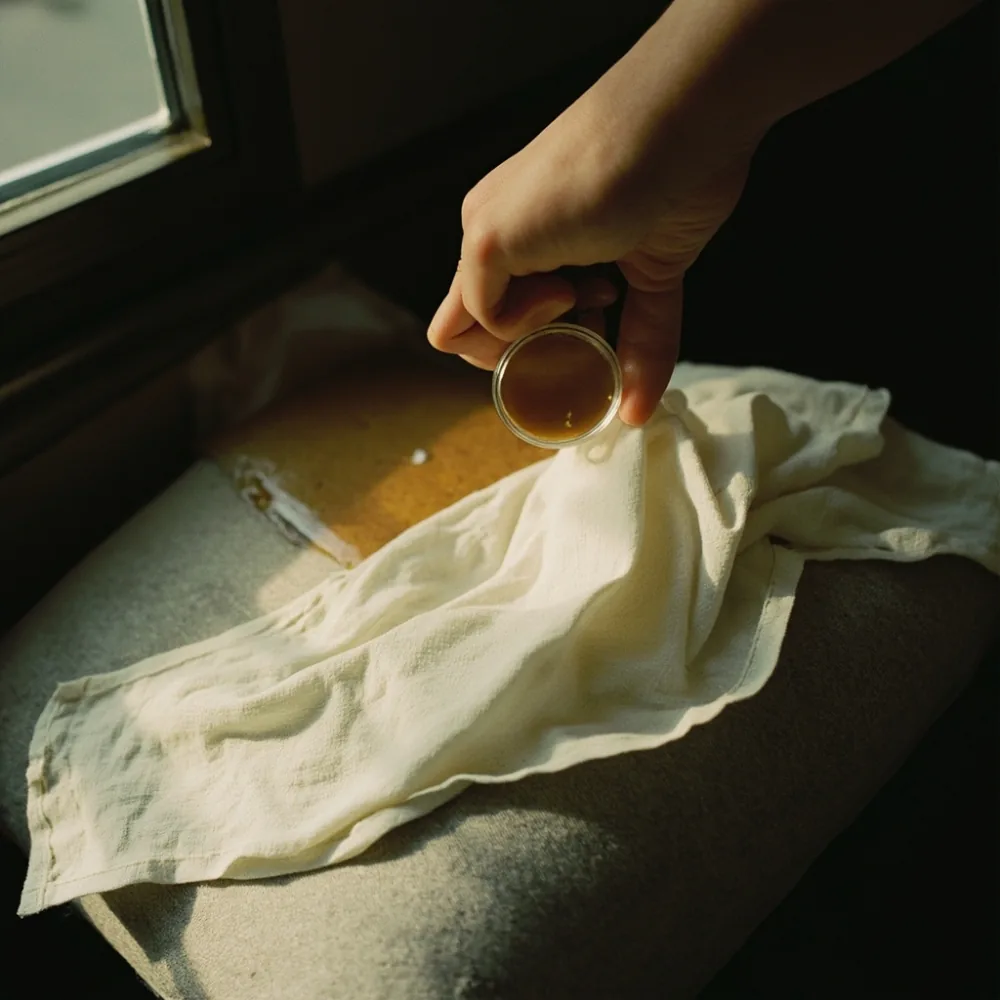
Cotton, linen and polyester blends tested
Why microfibre fails near the kitchen
Not all upholstery fabric behaves the same way in our climate. After three sofas and six dining sets over a decade, here is how the common options stack up for a typical 4-room HDB.
- Linen-cotton blend (30/70): Breathes well, but loose weave lets humidity settle into the batting. Expect to fluff and rotate weekly in monsoon season.
- Performance polyester (olefin): My current pick. Tight weave, dries within hours, and resists the oily cooking steam that drifts from open-concept HDB kitchens.
- Velvet (polyester): Looks premium in a District 9 condo showflat, but the pile traps moisture under dining chair use. Wipe the underside every two weeks.
- Real leather: Out of scope here, but good to know: it handles humidity poorly too, just differently. Treat with conditioner every 4 months.
If you are buying custom furniture for an everyday HDB living room, ask the seller what backing they use on the fabric. A breathable mesh backing cuts drying time by roughly 40 percent in my own test, using identical cushions placed in a Pasir Ris balcony during a dry week.
How often should I really vacuum and rotate cushions in Singapore?
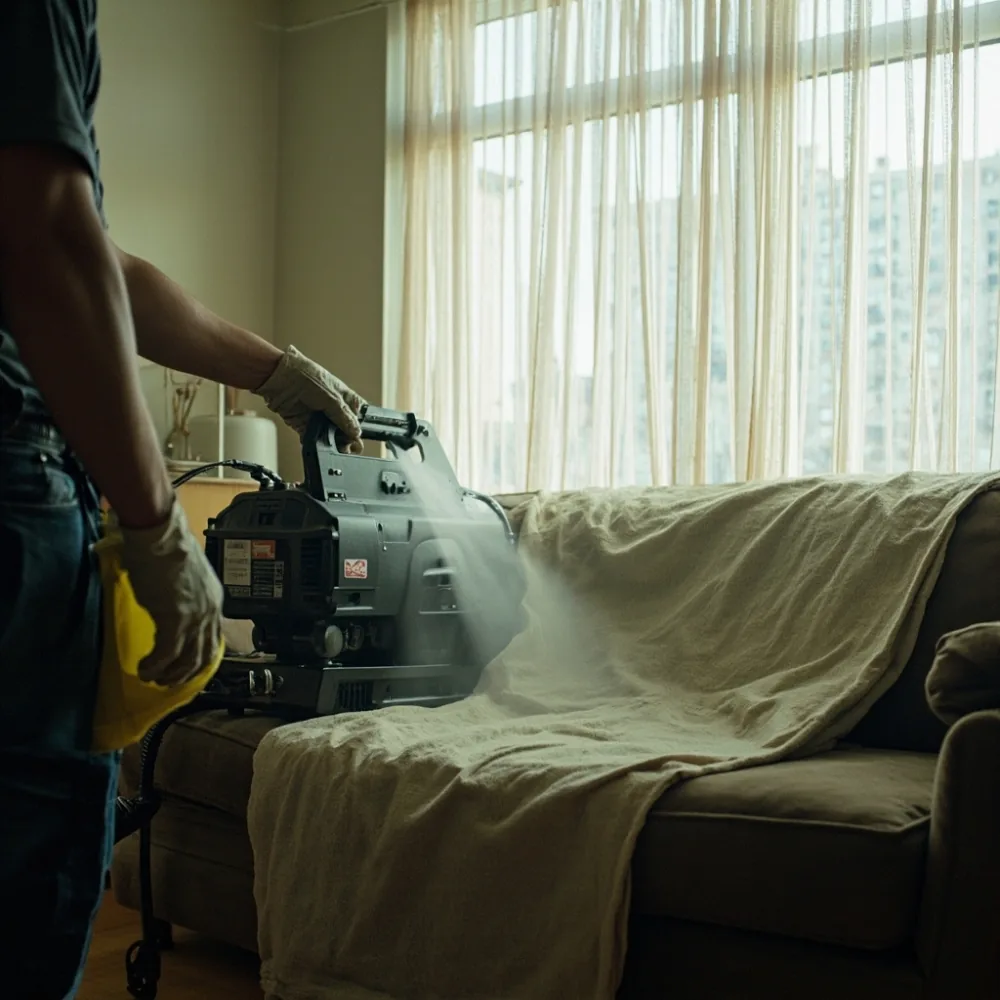
Weekly vs monthly schedule
Cushion rotation pattern that prevents sag
Marketing copy says vacuum weekly. Real life in a family HDB with two kids, a cat and a hawker food habit means I vacuum the sofa twice a week and rotate the cushions every fortnight. Rotation matters because foam compasses faster on the side where everyone sits, usually the right because that is closest to the TV console and the window AC outlet.
- Front edge cushions swap with rear edge cushions every 2 weeks.
- Left armrest cushion trades with right armrest cushion monthly.
- Backrest cushions flip top-to-bottom, not left-to-right, every 3 months.
A small upright vacuum beats a robot vacuum for cushions. Robotics moves the surface dust around but cannot pull the fine skin cells and humidity-bound dust deeper in the seams. I use a 1.5 kg corded stick with a soft brush head, around SGD 90 from any local electronics chain.
What is the right way to clean a food stain on a fabric sofa at home?
The 60-second blotting rule
DIY mix vs commercial cleaner comparison
Curry, kopi, bandung, kids' chocolate milk, Milo, bee hoon soup at 11 pm on the sofa, all common, all solvable if you act fast.
- Blot, never rub. Rubbing drives the stain into the foam core. Use a clean white cotton cloth, paper towels bleach some dyes.
- Use 1 tsp dish soap in 200 ml cold water. Test on an inconspicuous seam first. Skip hot water, it sets protein stains from milk, eggs and blood.
- For oily sambal stains: Sprinkle corn starch or baby powder, wait 15 minutes, vacuum, then soap mix.
- For pen marks: Isopropyl alcohol 70 percent on a cotton bud, change buds often so you do not smear.
- For mould spots on cushion fabric: White vinegar 1:1 with water, spray lightly, sun-dry for 2 hours (we get enough UV). Skip chlorine bleach on coloured fabric.
Skip the steam cleaner for daily use. Steam drives moisture deeper into the foam. Singapore furniture care is more about drying than about scrubbing harder.
How do professional sofa cleaning services in Singapore actually work?
What to expect from a 3-hour deep clean
Price ranges for HDB vs condo
I called three providers for price transparency last year. Here is what I found, all prices in SGD for a 2- to 3-seater fabric sofa, cleaned on-site at the home.
| Service | Method | Duration | Price (SGD) | Drying time | Caveat |
|---|---|---|---|---|---|
| Budget provider (Carousell solo operator) | Portable hot-water extraction | 60 to 90 mins | 80 to 120 | 6 to 8 hours | No fabric inspection, risk of over-wetting |
| Mid-tier franchise (e.g. Wow, KleenHaus) | Hot-water extraction + deodorising spray | 2 to 3 hours | 140 to 220 | 4 to 6 hours | Standard equipment, decent results |
| Fabric-care specialist (e.g. SofaMaster, CleanLab) | Hand shampoo + controlled extraction + fabric protectant reapplication | 3 to 4 hours | 220 to 360 | 2 to 4 hours | Includes a 6-month stain warranty |
For HDB living rooms the mid-tier option usually hits the sweet spot. For a 5-room condo in District 19 or 21 where the sofa is a 3-seater plus chaise of around 240 cm width, you are at the upper end of mid-tier.
One tip: ask whether they bring their own industrial dryer. Without one, even the best extraction leaves humidity behind. A good team uses a 2800 W air mover that pulls moisture out in under 3 hours.
Does fabric protector spray really work, or is it a marketing upsell?
Comparing 3M Scotchgard, Folex and local brands
Reapplication cycle in Singapore
I have tested Scotchgard Professional, Folex Water-Based and a no-name Carousell brand on identical polyester dining chair seats. Spill test was kopi-o with condensed milk, 30 ml, left for 60 seconds before wiping.
| Spray | Per bottle price (SGD) | Covers (2-seater sofa) | Spill outcome after 60 sec | Reapply needed |
|---|---|---|---|---|
| 3M Scotchguard Water Repellent (professional) | 28 (300 ml) | 2 sofas | Beaded up, wiped clean in 1 pass | Every 6 to 9 months |
| Folex Water-Based (from Lazada) | 18 (500 ml) | 3 sofas | Left a faint ring after 1 wipe | Every 3 to 4 months |
| No-name aerosol from a local hardware chain | 12 (400 ml) | 2 sofas | No beading, stain set in | Not effective |
Fabric protector is worth the money if your sofa sits under a window, near the kitchen or hosts kids. It is not a magic shield, you still blot quickly, but it buys you 30 to 60 extra seconds before a spill becomes a permanent mark.
How do I stop mould from growing on cushions during a long overseas trip?
Pre-trip 20-minute routine
Mould-removal checklist for when you return
Singaporeans travel. The risk is what happens to the sofa while you are gone, especially during a 14-day Europe trip that overlaps with our monsoon peak.
- Run the air-con at 25 degrees for 30 minutes to drop humidity before you leave, then close all windows.
- Leave the aircon dehumidify mode on if your unit supports it. A typical 9000 BTU HDB unit runs 0.4 kWh per hour in dry mode.
- Pull cushion covers off and stand them vertically, not stacked, to keep air moving.
- Place 2 to 3 DampRid containers (the white calcium chloride ones, 800 g each, SGD 6 from Watsons) around the sofa legs.
- Ask a neighbour to crack the door open twice a week to air the flat for 20 minutes.
When you come back, smell the sofa first. If it smells clean, do nothing. If it smells stale, run a fan on it for 2 hours. If you see black dots on the underside, treat with 1:1 white vinegar and water, then call a professional.
What about dining chair fabric, which gets hit by every meal?
Removable covers vs fixed upholstery
Chair rotation pattern that fits a 4-person table
Dining chair fabric is the hardest test in the house. My current set of custom furniture dining chairs uses removable zippered covers, the single best feature for Singapore use. Slide them off, cold-wash with 30 ml woolite per 5 litres of water, dry by 11 am before the afternoon storm.
If your chairs have fixed upholstery, use a thin washable slipcover in a neutral colour. Look for a 4-person set that fits chairs up to 50 cm wide at the seat, the most common size for a 140 cm to 160 cm dining table.
- Swap the chair you sit on to the head of the table every month.
- Spot-clean spills before they dry, hot kopi on a fabric dining chair sets fast.
- Wipe the metal or wood legs separately, salts from curry and soy sauce migrate down the leg and stain the floor.
After 6 years on my current set, the chair fabric still looks fresh because of rotation plus protector. The cushions themselves, none of them, have any sagging or smell, even in a ground-floor HDB in Bukit Batok that faces morning sun and afternoon storms.
Can I leave a fabric sofa near the window or sliding door?
UV fading timeline on common fabrics
Distance from glass that protects colour
Direct sun fades fabric faster than humidity rots it. My first sofa, a linen-blend piece facing a west-facing window, bleached out in 14 months. The trade-off is real: south-facing units in districts 14 and 16 get 3 to 4 hours of direct afternoon sun that will cook the front of any sofa within a year.
Rule of thumb for furniture placement in Singapore:
- Keep fabric furniture at least 90 cm from any west-facing glass.
- Use a sheer linen curtain (SGD 35 to 60 per panel from IKEA) to cut UV by roughly 60 percent.
- If the only layout option puts the sofa under the window, choose a tightly woven performance fabric in a mid-tone. Dark colours fade less visibly than lighter colours, despite what the showroom tells you.
This is one reason durable furniture for Singapore homes is rarely about choosing the heaviest frame. It is about matching the fabric to the room's sun path.
Where does MIDHILL sit in the Singapore fabric furniture market?
What to ask any custom maker before you buy
I had a chance to spec a piece through MIDHILL, a Foshan-based solid wood furniture maker set up in 2008, for a friend's condo in District 11. They build the frames in China and ship, which is why their 10-year structural warranty matters more than most, as the foam and fabric layers are usually the first thing to fail, not the frame. If you want long-lasting furniture, start with the frame; the fabric can be reupholstered locally for roughly 30 to 45 percent of the original cost after year 5.
Checklist for any fabric sofa purchase in Singapore, custom or ready-made:
- Ask for the foam density in kg per cubic metre. 32 to 35 kg/m³ is the Singapore-comfortable sweet spot.
- Confirm the covers are removable and washable, not just spot-clean rated.
- Ask for the Martindale rub test result. Minimum 25,000 cycles for daily home use.
- Check whether the frame is kiln-dried solid wood, plywood or MDF. Solid wood handles our humidity cycles best.
- Get the after-delivery assembly scope in writing. Some sellers deliver to the door at SGD 80, others deliver and assemble inside the home at SGD 150 to 250.
Fabric care is not glamorous, but it is the difference between a sofa you still love in year 8 and one you replace in year 3. Spend 20 minutes a week and the math works out very favourably.
Frequently asked questions
How do I remove mildew smell from a fabric sofa in Singapore?
Spray a 1:1 mix of white vinegar and water on the underside of cushions, not the top fabric. Run a fan on the sofa for 3 hours, then vacuum once dry. Repeat weekly for 3 weeks. Persistent smell means mould is inside the foam, and the cushion should be replaced or professionally steam-cleaned with a controlled-dry cycle. Prevention beats treatment every time.
Can a fabric sofa survive mould in a ground-floor HDB?
Yes, with routine care. Ground-floor HDBs in Bukit Batok, Jurong and Sengkang run higher baseline humidity, around 78 to 84 percent. Use a dehumidifier set to 55 percent, run DampRid containers under the sofa, and vacuum the underside monthly. I know families on the ground floor whose fabric sofas are still in good shape after 6 years using this exact routine.
What is the best fabric protector spray for Singapore sofas?
3M Scotchgard Water Repellent works best in my own testing. A 300 ml bottle costs around SGD 28 and covers two sofas. Reapply every 6 to 9 months. Skip aerosol hardware-store brands. They leave residue and wear off within weeks, offering almost no real protection against kopi, curry or sambal spills.
How much does professional sofa cleaning cost in Singapore?
Expect SGD 80 to 120 from a solo operator, SGD 140 to 220 from a mid-tier franchise like Wow or KleenHaus, and SGD 220 to 360 from a fabric specialist. A 2-seater takes 2 to 3 hours. Ask whether they bring an industrial air mover to cut drying time under 4 hours.
Should I buy fabric or leather for a HDB living room?
Fabric breathes better, costs 30 to 50 percent less for the same size, and tolerates our humidity if you maintain it. Leather looks premium but needs conditioning every 4 months and can develop mildew in the foam backing if neglected. For most 4- and 5-room HDBs, performance polyester fabric is the more practical choice.
Questions about specifications, fabric or delivery? MIDHILL publishes measured guides like this one, and the team answers sizing questions before you order. See the full collection or contact the team.