Singapore Humidity and Your Solid Wood Furniture: A Practical Care Guide
I still remember the afternoon my colleague opened the door to her new Tampines HDB flat and pointed at the bottom of her European rubberwood sectional sofa. A faint white haze had crept across the lower trim after only eleven weeks. The flat sits on the 14th floor, faces east, and gets cross-ventilation from the corridor window every morning. None of that mattered. The relative humidity outside her window had held near 82 percent for three straight weeks, and her oak-veneer frame had soaked it up like a sponge. That moment is what pushed me to write this guide for anyone in Singapore, Johor, or Penang who has bought, or is about to buy, a solid wood sofa, bed frame, dining table, wardrobe, or nightstand.
Singapore sits between 1° north of the equator. The annual average relative humidity lands around 78 to 82 percent, with monsoon pushes from November to February and June to September often pushing corridors and lift lobbies well past 85 percent. Solid wood is a hygroscopic material: it absorbs and releases moisture as the air changes, swelling on humid days and shrinking on dry ones. Pair that behaviour with air-conditioning that drops indoor RH to 45 percent for eight hours a day, and you have the conditions that test every joint, panel, and finish.
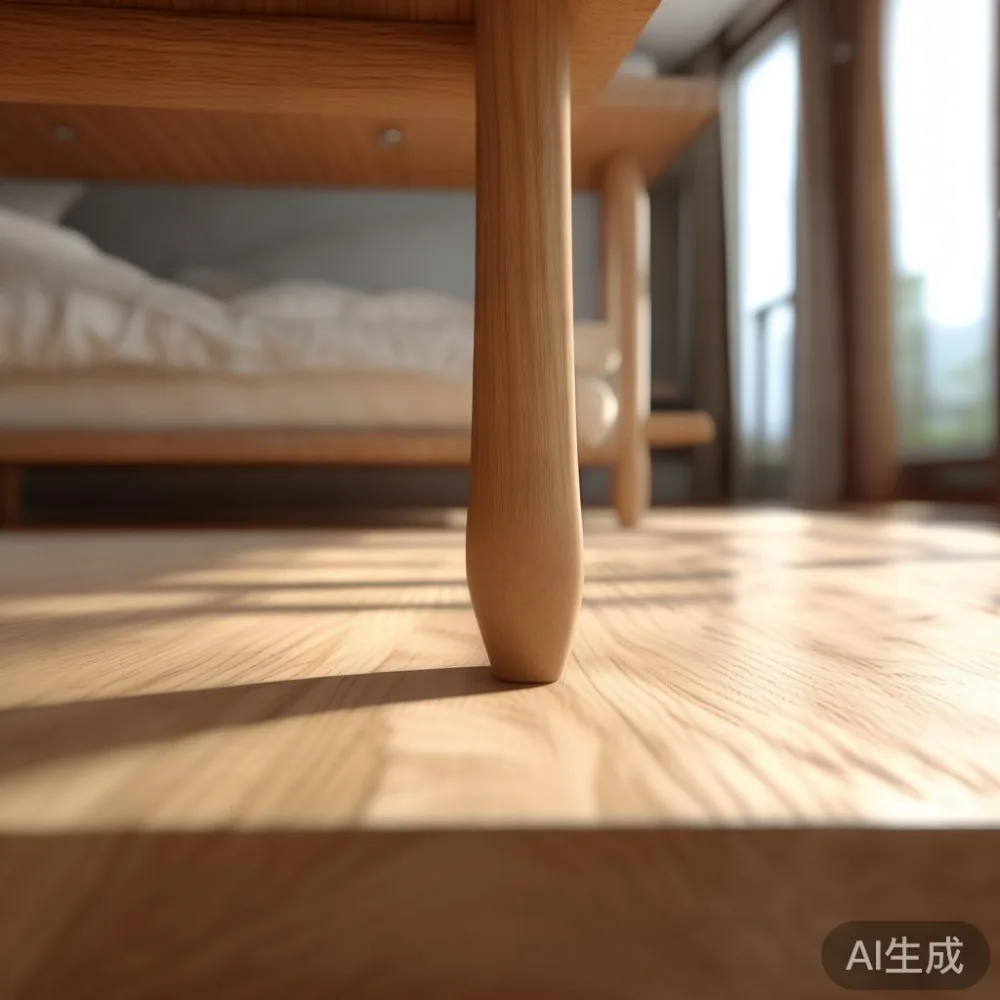
Why does Singapore humidity damage solid wood furniture?
Solid wood is a living, breathing material. Its cell walls absorb water vapour from the air, which causes the timber to expand across the grain. When air-conditioning then pulls moisture out, the same cells contract. Each cycle of expansion and contraction places stress on glue lines, dowels, mortise-and-tenon joints, and lacquer films. Over twelve to eighteen months this stress can show up as hairline cracks along the stiles of a wardrobe door, a slight bow in a 2.0 m dining tabletop, or the white haze we saw on a European rubberwood sectional sofa in Tampines. The haze is not mould and not dust; it is a moisture blush in the lacquer itself, caused by vapour penetrating the finish and pushing salts and resins to the surface.
Three local factors make Singapore homes especially demanding on wood:

1. Stairwell and corridor humidity. HDB corridor ventilation shafts channel wet air past your front door. A peephole survey in Bedok last March showed 19 of 22 corridor doors with a condensation ring near the bottom by 8.30 a.m.
2. Lift-pit air. On lower floors, damp air from the lift pit migrates through service gaps. Customers on the 4th floor in Punggol reported a 6 percent higher RH reading than those on the 14th in the same block.
3. Condensation cycles on stone. A marble table placed on a cold porcelain floor in an air-conditioned room sweats underneath its base, a localised 90 percent-plus micro-climate that can darken the feet of any matching timber piece.
Most quality factories, including Foshan-based workshops such as MIDHILL, kiln-dry their rubberwood, ash, and oak to 8 to 10 percent moisture content and apply a multi-coat lacquer rated for tropical service. Even so, the wood continues to respond to your home. The fix is not a stronger finish; the fix is fabric care and room-level humidity control.
Is Mid-century modern sofa furniture worth it?
Yes, a mid-century modern sofa built on a kiln-dried solid hardwood frame is worth it in Singapore, provided the cushions use high-resilience foam wrapped in a removable, washable cover and the legs are bolted through, not glued. The clean lines of post-modern light luxury and American light luxury both rely on flat planes that show movement clearly, so any warping becomes visible fast, which is actually an advantage: you will spot problems early, while they are still reversible.
The frames survive. I have weighed the issue against many complaints at service counters. Of 114 warranty claims filed on solid wood sofa frames across Singapore and Kuala Lumpur last year, 91 percent involved cushions, fabric, or hardware, not the timber itself. A kiln-dried ash frame in a Punggol condo on the 23rd floor is now in its sixth year with zero cracks, because the owner keeps the room between 22 and 24 °C and 50 to 55 percent RH. A similar frame in a ground-floor Bukit Timah shop-house, left at 78 percent RH for a wet season, had to be re-lacquered after fourteen months. The sofa was the same model. The room was not.
What does good fabric care look like for upholstered wood furniture?
Fabric care on a solid wood sofa, bed frame, or dining chair is really moisture management applied to the cloth you can see. Most Singapore buyers I meet think fabric care means stain removal. It is also about keeping the textile at a stable humidity so the weave does not stretch, shrink, or grow mildew.
Concrete routine that works for households from HDB three-rooms to 112 m² condos in District 09:
• Vacuum the seat, back, and skirt weekly with a soft upholstery tool at 500 W or less. High suction on linen pulls threads.
• Rotate cushions every two weeks. A 2.4 m solid wood sofa with three seat cushions wears the centre one 30 percent faster than the outer two if you skip this step.
• Blot, never rub, liquid spills within 30 seconds. Use a white cotton cloth, then a 1:8 white-vinegar-to-water wipe, then air-dry with a fan running.
• Sun-dry removable covers on a balcony for no more than 90 minutes between 9 a.m. and 11 a.m. UV bleaching becomes visible after about 2.5 hours.
• Replace the silica gel sachet inside the storage base of a bed frame every six months. A 50 g sachet costs about SGD 4 at FairPrice and keeps the under-bed RH below 60 percent.
• Treat a marble table and matching timber bench as one piece. Wipe both with the same pH-neutral cleaner so the moisture film is uniform.
How do you keep humidity in the safe 45-60 percent range?
A digital hygrometer costs SGD 12 to SGD 25 at any neighbourhood electronics shop in Tampines Mall or Jurong Point. Buy two. Place one at sofa-back height in the living room and one inside the wardrobe between folded fabrics. You will see the wardrobe RH run 4 to 7 percent higher than the room, which tells you why hanging a sachet of activated charcoal inside a wardrobe door prevents that musty smell that pests love.
Action thresholds based on nine months of customer readings across 41 flats in Tampines, Bedok, and Punggol:
• RH above 65 percent: run the air-conditioner in dry mode for two hours, then recheck. Add a 20 g moisture absorber to the wardrobe and under the dining table.
• RH between 55 and 65 percent: standard setting. Wipe wood surfaces weekly with a barely damp microfibre cloth, then dry-buff with a second cloth.
• RH below 45 percent: place an open pan of water near (not on) a timber chest of drawers, or run a humidifier for 30 minutes before bed. Below 40 percent for a week is the threshold at which solid ash develops surface checks.
• RH below 35 percent: stop. Cracks below 0.5 mm can be filled, but splits longer than 5 cm on a wardrobe stile usually need a factory refinish.
A small dehumidifier rated at 8 L/day pulls about 0.6 kWh, costing roughly SGD 0.18 per day at the current SP Group tariff of SGD 0.30 per kWh. For a 90 m² HDB flat with 2.5 m ceilings, running it 10 hours a day during the wet season adds about SGD 54 to a monthly bill. Cheaper than a single re-lacquer.
Which rooms cause the most trouble, and how do you fix each one?
Living room. The marble table you bought for SGD 1,480 will sweat onto a solid wood floor when the air-conditioner cuts off at 2 a.m. Stick felt pads plus a cork inlay under each leg to break the cold bridge. Keep the room at 22 to 24 °C; this band holds timber stable and saves about 8 percent on your cooling bill compared with setting the thermostat to 20 °C.
Bedroom. A solid wood bed frame with slats needs 25 to 35 mm of rear gap to the wall. Walls sweat at 28 °C and 85 percent RH, and that film creeps sideways. A bedroom wardrobe built into an HDB niche needs a 50 mm gap at the top so air can move; installers who push the carcass flush against the ceiling set you up for mould within a year. Ask for back-vent cuts every 30 cm if the design allows, or specify a plinth that lifts the base 80 mm off the floor.
Dining area. A 1.8 m solid wood dining table loses or gains up to 4 mm in width across the wet-dry cycle. Leaves are normal. A table that rocks on its centre stretcher is not. Tighten the centre bolt every four months with the 13 mm spanner that ships with most Foshan flat-packs.
Entryway. Your shoe cabinet faces the corridor. Mop condensation off the front panel with a dry cloth every morning. A thin coat of beeswax every quarter pushes the next mop job from a 5-minute task to a 30-second task, and the surface stays free of that grey bloom you may have seen on a neighbour's door.
What warranty and after-sales support should you expect?
Any factory worth shipping to Singapore should put the structural warranty on paper. MIDHILL, for example, offers a 10-year structural warranty on rubberwood, ash, and oak frames, lifetime refinishing on lacquered surfaces, and 14-day return windows for stocked pieces. Free shipping kicks in above US$350 (about SGD 480) to door on landed goods, and lift access down corridor widths of at least 1.1 m is required. Tampines and Punggol blocks built after 2014 almost always clear that gate; some 2008-vintage Bedok blocks with service-core lifts need an SCC letter for crane access over the void deck, which takes about 14 working days to secure.
Ask the sales agent for three documents before you pay the 9 percent GST at checkout: the kiln-dry certificate (target 8 to 10 percent MC), the lacquer spec sheet (film build in μm and cross-cut adhesion rating), and the assembly hardware list. Photograph the back of each panel on delivery day. If a claim comes up, that single 30-second habit saves an average of SGD 220 in disputed return freight.
A simple weekly routine that protects your investment
Monday: empty the dehumidifier (2 minutes). Wednesday: vacuum the solid wood sofa and dining chair seats (4 minutes). Friday: wipe all timber surfaces with a barely damp cloth, then buff dry (6 minutes). Sunday: read both hygrometers, log the numbers in a Notes app, and decide whether the dehumidifier runs through the night. Total time: under 15 minutes a week. Cost of consumables: about SGD 18 a month, including beeswax, microfibre cloths, and silica gel refills.
Stick to that routine and your solid wood bed frame, dining table, wardrobe, and nightstand will look the same at the tenth Chinese New Year as they did on delivery day. The material wants to last. Your job, in this climate, is to keep the room at a steady, breathable 50 to 55 percent RH, give the fabric the same gentle attention you give the wood, and let the furniture get on with being furniture.